 Pin It
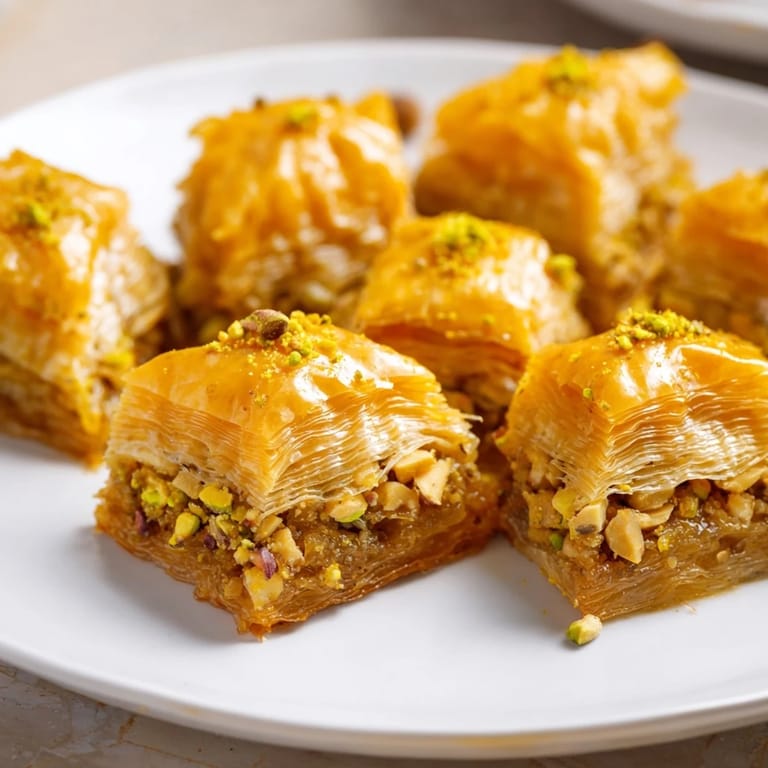
 My grandmother's kitchen in Istanbul always smelled like honey and cinnamon when she made baklava, and I'd sit cross-legged on her tile floor watching her hands move with impossible speed through those paper-thin sheets. She never wrote anything down, just knew when the phyllo was dry enough, how much butter was too much, and exactly which moment to pour the hot syrup over the hot pastry so it would soak in without making it soggy. I spent years trying to recreate that magic, and one afternoon—after a few sticky failures and one batch that came out like candy-coated cardboard—I finally understood her rhythm. It wasn't about precision; it was about patience and listening to what the pastry was telling you.
I made this for my roommate's birthday once, and she literally closed her eyes on the first bite—I thought I'd done something wrong until she opened them again and asked if I could make it every week. That's when I realized baklava isn't just a dessert; it's a gesture, a way of saying you spent time thinking about someone else's happiness.
Ingredients
- Walnuts, finely chopped (1½ cups): The backbone of your filling—use fresh ones if you can, because stale nuts make the whole thing taste old and flat.
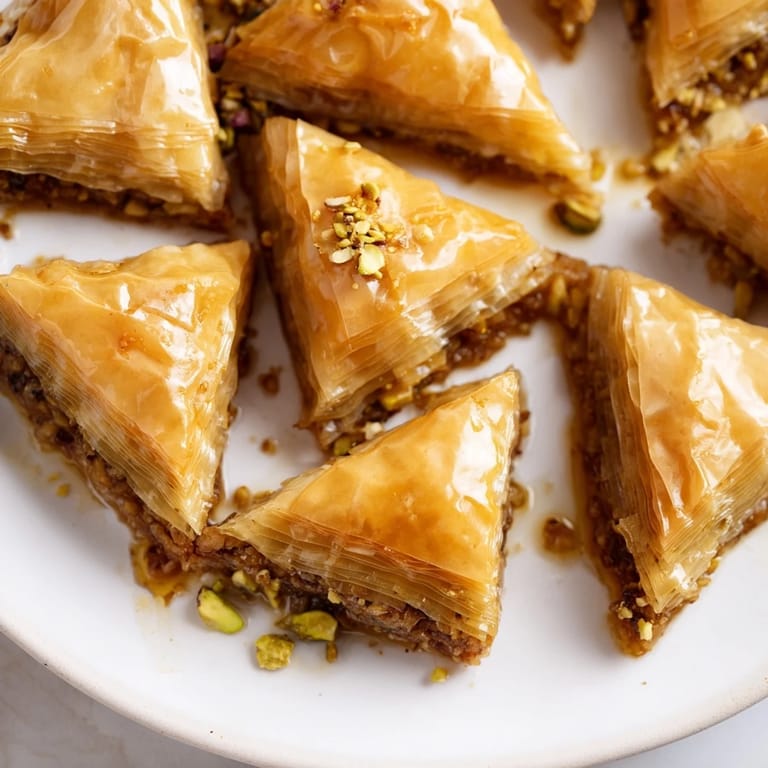
- Pistachios, finely chopped (1 cup): These add a subtle earthiness and that pretty pale green color; they're not just for decoration.
- Almonds, finely chopped (½ cup): They balance the richness and add a delicate sweetness that keeps everything from feeling heavy.
- Granulated sugar (½ cup): This goes in the nut mixture to boost flavor without making it cloying.
- Ground cinnamon (1 tsp): The spice that makes everything smell like home; don't skip it or use the old tin from the back of the cabinet.
- Phyllo dough, thawed (1 lb): The star of the show—handle it gently and keep it covered, or you'll end up with crispy, unusable sheets.
- Unsalted butter, melted (1 cup): This is what makes the magic happen; every layer needs to taste buttery and golden.
- Honey (1 cup): Real honey, not the squeeze bear—taste it first to make sure it's good honey.
- Water (1 cup): This dilutes the honey just enough so it soaks into the pastry instead of just coating it.
- Granulated sugar (1 cup): For the syrup, which sweetens it further and helps it set into a light syrup rather than thick glaze.
- Lemon juice (1 tbsp): A tiny amount of brightness that cuts through all the richness and makes you want another piece.
- Lemon zest (1 strip): Adds floral notes that make people wonder what that subtle something is.
- Cinnamon stick (1): It flavors the syrup gently as it simmers, then comes out before serving.
Tired of Takeout? 🥡
Get 10 meals you can make faster than delivery arrives. Seriously.
One email. No spam. Unsubscribe anytime.
Instructions
- Get your oven and pan ready:
- Heat your oven to 350°F and brush a 9x13 inch baking dish generously with butter so the edges don't stick and brown too dark. This step matters more than you'd think.
- Make your nut filling:
- Toss together your chopped walnuts, pistachios, and almonds with the sugar and cinnamon in a bowl. The mixture should smell intoxicating—if it doesn't smell amazing, your baklava won't taste amazing.
- Ready your phyllo:
- Unroll your thawed phyllo dough and immediately cover it with a slightly damp towel, then drape a dry towel on top. This sounds fussy, but it's the difference between workable sheets and phyllo confetti.
- Layer the first phyllo base:
- Place one sheet of phyllo in your buttered dish and brush it lightly with melted butter—not so much that it pools, just enough to coat it. Repeat this buttering and layering eight times to create your base layer.
- Add the first nut layer:
- Sprinkle exactly one-third of your nut mixture over the phyllo base, spreading it evenly but not packing it down. You want the layers to stay distinct, not compressed into a brick.
- Build the middle section:
- Layer and butter five more phyllo sheets, then sprinkle another third of the nuts over the top. You're creating a sandwich where every layer matters.
- Add the final nut layer:
- Repeat with five more buttered phyllo sheets and the remaining nuts, so you have three distinct nut layers with phyllo between them. This structure is what gives baklava its elegance.
- Finish with the top layer:
- Layer your remaining phyllo sheets (about eight to ten of them) on top, buttering each one meticulously. This is your golden crown, so make it count.
- Score your pieces:
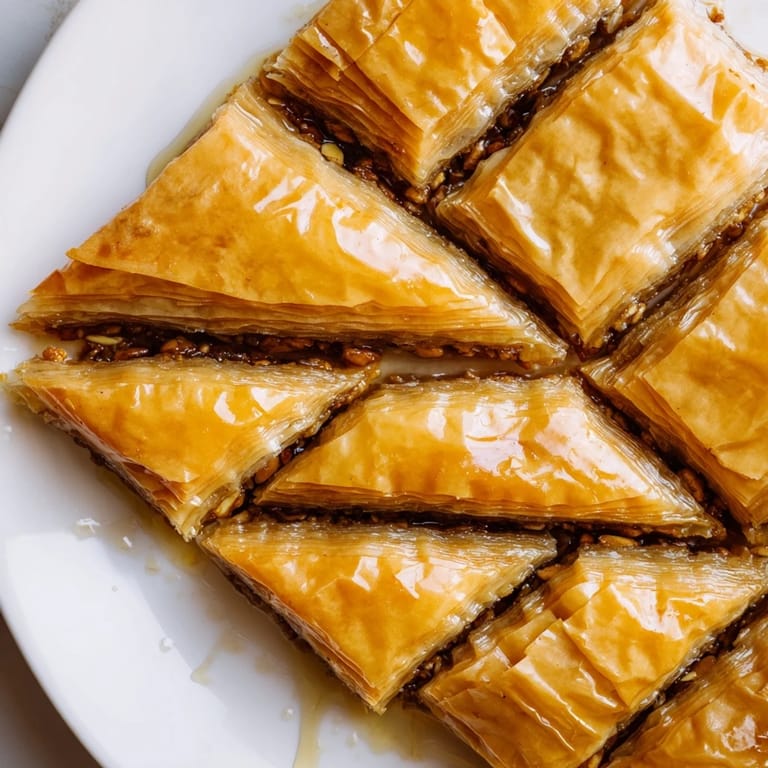
- With a sharp knife, cut the baklava into diamonds or squares before it bakes—trying to cut hot baklava is a losing battle. Use a light, confident motion rather than sawing, which will tear the layers.
- Bake until golden:
- Slide it into your preheated oven for 45 minutes until it's deep golden brown and smells like butter and honey. You'll know it's done when the top is crisp and the edges are pulling slightly away from the pan.
- Make your syrup while it bakes:
- Combine the honey, water, sugar, lemon juice, zest, and cinnamon stick in a saucepan and bring it to a boil. Let it simmer gently for ten minutes, then remove from heat and fish out the zest and cinnamon stick.
- The syrup soak:
- The moment your baklava comes out of the oven, slowly pour the warm syrup evenly over the entire hot pastry. This is the magic moment—the heat opens up the layers so the syrup seeps all the way through instead of just sitting on top.
- Let it rest and soak:
- Leave your baklava completely untouched for at least four hours, preferably overnight, so every layer gets properly saturated with syrup. This patience is what separates good baklava from transcendent baklava.
 Pin It
 There's something about watching someone discover baklava for the first time—the surprise that something so delicate can be so satisfying, the way their fingers get sticky with honey and they don't even care. It's the kind of dessert that makes people slow down and actually taste what they're eating instead of just finishing it.
The Syrup is Everything
Don't be tempted to skip the syrup or make it thicker—that balance of honey, water, and sugar is what transforms phyllo from a vehicle for nuts into an actual experience. The lemon juice and zest add just enough brightness to keep it from feeling cloying, and the cinnamon stick perfumes the whole thing without being heavy-handed. I learned this the hard way by making a version with too much honey that turned into hard candy, and another with too little syrup that tasted like dry, nutty paper. The recipe as written is the answer.
Storage and Serving
Keep your finished baklava covered at room temperature for up to a week—it actually stays fresher longer than you'd expect because the syrup acts as a preservative. Serve it with strong Turkish coffee or black tea, which cuts through the richness and makes you want to eat one more piece than you actually should.
Making It Your Own
Once you've mastered the basic recipe, you can experiment without losing the soul of the dish.
- Try substituting some of the honey with orange blossom water for a floral, more delicate sweetness that's still recognizable as baklava.
- Experiment with different nut combinations—pine nuts, hazelnuts, or macadamias all work, though the classic trio is classic for a reason.
- Some people add rose water to their syrup, which is beautiful if you like that flavor, but start with the original until you trust your instincts.
 Pin It
 Baklava is one of those recipes that rewards patience and precision, but also forgives small mistakes because everything is so buttery and delicious that it's hard to fail completely. Once you've made it once, you'll understand why people have been making it the same way for centuries.
Questions & Answers
- → What nuts are used in the filling?
The filling includes finely chopped walnuts, pistachios, and almonds for a rich, crunchy texture.
- → How is the honey syrup prepared?
The syrup is made by boiling honey, water, sugar, lemon juice, lemon zest, and cinnamon stick, then simmering to blend the flavors.
- → Can I store this after baking?
Yes, keep the baklava covered at room temperature for up to one week to maintain freshness.
- → What’s the best way to cut baklava before baking?
Use a sharp knife to cut the layered pastry into diamond or square shapes before baking for easy serving.
- → How long should baklava soak in the syrup?
Allow the baked pastry to soak in the honey syrup for at least 4 hours to absorb the flavors fully.