 Pin It
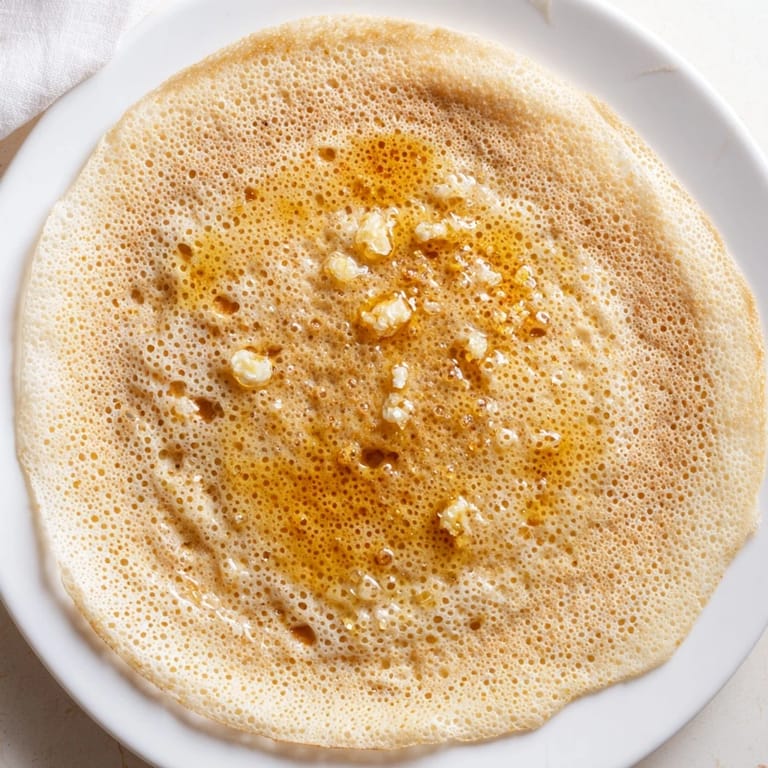
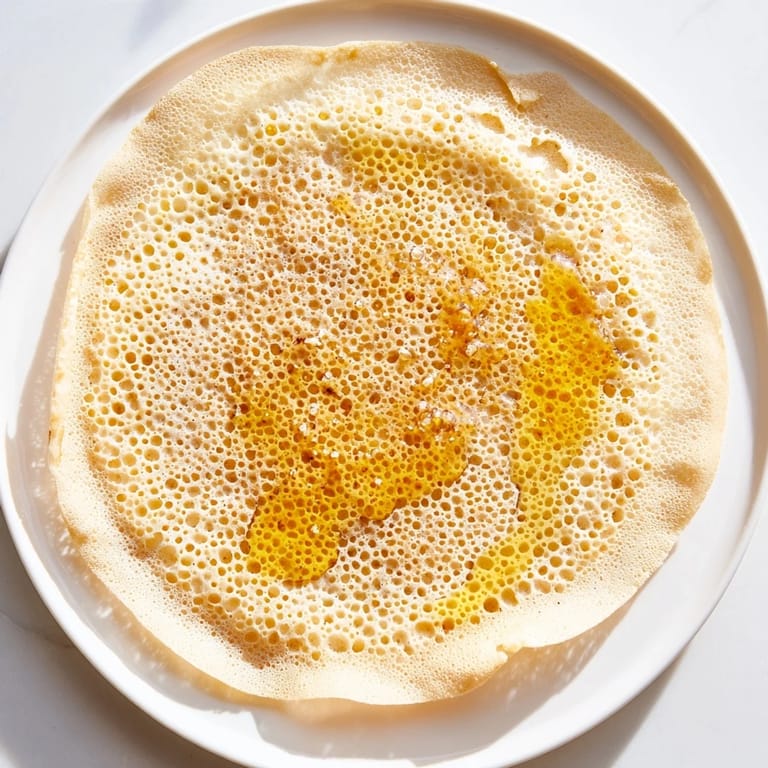
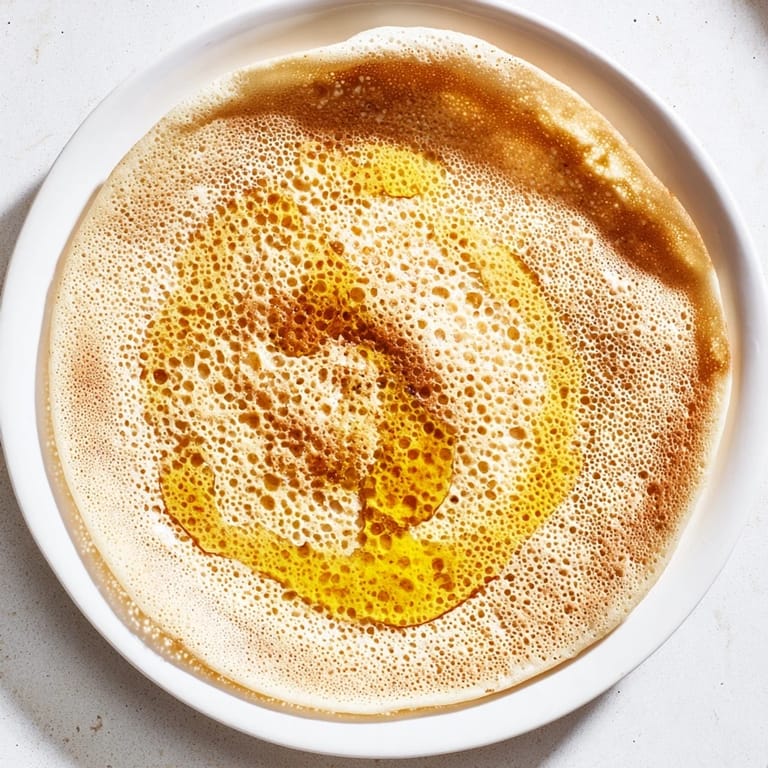
 The first time I made baghrir, I wasn't expecting much—just following a friend's casual description of "Moroccan pancakes that look weird but taste amazing." What emerged from my skillet was pure magic: golden discs riddled with thousands of tiny holes, like delicate lace. When I drizzled the warm honey-butter mixture over them, it pooled into those pockets and made them glisten. I've made them dozens of times since, and that moment of watching the surface transform from smooth batter to honeycomb texture still feels like a small kitchen victory.
I made these for my sister one Sunday morning when she was visiting, and she stood at the stove watching the batter bubble up into that lacy pattern. She kept saying "How is that even happening?" with this amazed look, and honestly, I felt like a culinary genius even though all I was doing was pouring batter and waiting. She ate four of them, and now whenever she visits, that's the first thing she requests.
Ingredients
- Fine semolina: This is the star that creates that signature honeycomb texture—it's coarser than regular flour and interacts beautifully with the yeast, trapping steam and creating those perfect little holes.
- All-purpose flour: Provides structure and helps bind everything together; don't skip it even though semolina gets the glory.
- Warm water: Temperature matters here—too cold and the yeast won't wake up, too hot and you'll kill it, so aim for that Goldilocks zone around 110°F.
- Active dry yeast: Just a teaspoon, but it's the entire reason this works; the fermentation creates those bubbles as the batter rests.
- Baking powder: A small amount adds extra lift and helps create even more of that honeycomb structure you're after.
- Unsalted butter and honey: The finishing touch that transforms these from interesting to unforgettable—use good honey if you can, it makes a real difference.
Tired of Takeout? 🥡
Get 10 meals you can make faster than delivery arrives. Seriously.
One email. No spam. Unsubscribe anytime.
Instructions
- Mix your dry ingredients:
- Combine the semolina, flour, sugar, yeast, baking powder, and salt in a large bowl—this is the foundation, so make sure everything is evenly distributed.
- Create the batter:
- Slowly pour in the warm water while whisking constantly to avoid lumps; the texture should be smooth and pourable, like thick pancake batter.
- Let time do the work:
- Cover the bowl and leave it on your counter for 30 minutes—you'll notice small bubbles forming on the surface, which means the yeast is doing its job and your batter is ready to become magic.
- Heat your pan:
- Place your nonstick skillet over medium heat and let it warm through; resist the urge to add butter or oil—baghrir doesn't need it and won't cook properly if you do.
- Pour and swirl:
- Pour about ¼ cup of batter into the center of the pan and gently swirl it to spread into a thin, even layer—it should cover most of the pan but doesn't need to be perfectly uniform.
- Watch the transformation:
- Cook for 2 to 3 minutes without flipping—you'll see the surface bubble up and small holes form as the moisture escapes, creating that iconic honeycomb texture, and the top will gradually dry out and lighten in color.
- Transfer and repeat:
- Once the top is set and dry, transfer the baghrir to a plate and continue with the remaining batter, stirring the mix occasionally since the heavier semolina can settle.
- Make the finishing sauce:
- In a small saucepan over low heat, combine butter and honey and stir gently until they're melted and mingled together into a warm, silky mixture.
- Serve with warmth:
- Arrange your baghrir on a plate while they're still warm and drizzle generously with the honey-butter—it will seep into those holes and make every bite feel like you're eating something special.
 Pin It
 There's something about watching someone bite into a baghrir for the first time that never gets old. That moment when they feel the delicate crispness give way to the tender interior, and the honey seeps into every honeycomb pocket—it's like you've handed them a small, edible miracle.
The Secret of the Honeycomb
The lacy texture isn't a mystery once you understand what's happening: the yeast ferments the batter, creating carbon dioxide bubbles that rise to the surface. As the crepe cooks, those bubbles burst and leave behind tiny holes. The semolina is crucial here because its texture helps these bubbles form in that perfect, delicate way. I once tried making these with only all-purpose flour out of desperation, and they came out flat and forgettable—that's when I truly understood why the recipe calls for semolina specifically.
Timing and Temperature Matter
The 30-minute rest isn't arbitrary—it's giving the yeast time to activate and populate your batter with tiny bubbles. If you rush it, the crepes will be denser and you'll miss some of that signature lightness. Similarly, the medium heat on your pan is important; too hot and the bottom will brown before the honeycomb forms, too cool and you'll just have a bland crepe. I've made these in different kitchens with different stoves, and once I stopped overthinking the heat level and just cooked until I saw the holes forming, everything clicked.
Serving and Variations
Baghrir is best eaten warm, straight off the pan, but I've also reheated them gently in a low oven the next morning and they're still lovely. Some people sprinkle chopped almonds or pistachios over them before the honey, which adds a delightful crunch. You can also serve them with jam, or even just plain butter if you're feeling minimalist. The beauty of baghrir is how versatile it becomes once you master the basic technique.
- Make a big batch and freeze them between parchment layers—they reheat beautifully.
- If you have guests with nut allergies, skip the toppings and let the honey-butter shine on its own.
- Prepare your honey-butter mixture just before serving so it's hot and flows like liquid gold.
 Pin It
 There's something deeply satisfying about making baghrir, like you're holding onto a tradition even if you're not Moroccan. Every time I pull one from the pan and watch that honey pool into the honeycomb, it feels like a small, delicious piece of magic.
Questions & Answers
- → What gives Baghrir its honeycomb texture?
The texture comes from the yeast fermentation and resting of the batter, which creates bubbles that form the characteristic holes when cooked.
- → Can I use regular flour instead of semolina?
Semolina provides a distinct texture, but blending it with all-purpose flour creates the right lightness and structure for Baghrir.
- → Why is the batter not flipped during cooking?
Baghrir is cooked only on one side to preserve the delicate honeycomb surface formed by the bubbles; flipping would disrupt this texture.
- → How should Baghrir be served traditionally?
They are typically served warm, generously drizzled with melted butter and honey for a balance of rich and sweet flavors.
- → What if my batter is too thick after resting?
Simply add a tablespoon or two of water to reach a pourable consistency before cooking.