 Pin It
 The first time I actually understood what it meant to stretch dough was standing in my aunt's kitchen in Marrakech, watching her hands move across an oiled surface with such ease that the pastry grew thin enough to read through. Msemen seemed impossible until I realized it wasn't about strength—it was about patience and trust in the dough. Now whenever I make these golden squares, I'm transported back to that warm morning, the smell of butter and honey hanging in the air, and the sound of her voice saying, you have to feel when it's ready.
I brought these to a potluck once without telling anyone what they were, just set them on the table still warm in a cloth napkin. Someone bit into one, closed their eyes, and said, where did you even buy these? That's when I knew I had to master the recipe—the look on their face when I said I made them was worth every sticky fingernail.
Ingredients
- All-purpose flour: The foundation of your dough, and the amount matters more than you'd think—too much and you'll fight with the pastry, too little and it tears as you stretch it.
- Fine semolina: This is the secret layer, giving the msemen its delicate, almost granular texture that shatters when you bite into it.
- Sugar and salt: Small amounts that balance each other and wake up the flavor of the dough itself.
- Warm water: Not hot enough to kill the yeast, not cold enough to drag out the kneading—if you have a thermometer, aim for around 110°F.
- Instant yeast (optional): I skip it sometimes, and the msemen is still perfect, but adding it gives a slightly airier crumb if you're feeling fancy.
- Vegetable oil: Use something neutral that won't overpower the pastry—this is the workhorse that keeps everything from sticking.
- Melted butter: Brushed between layers, it creates those crispy, flaky pockets that make msemen irresistible.
- Honey: Warmed honey soaks into the hot pastry in a way that cold honey never can—it's the difference between good and unforgettable.
Tired of Takeout? 🥡
Get 10 meals you can make faster than delivery arrives. Seriously.
One email. No spam. Unsubscribe anytime.
Instructions
- Mix and knead the dough:
- Combine your dry ingredients in a large bowl, then add warm water slowly while mixing with your hands or a wooden spoon until you have a shaggy mass. Knead for a full 10 minutes—your arms will feel it, but the dough will transform from rough to silky and alive under your hands. This is the part where you build the gluten structure that makes msemen chewy on the inside.
- Rest and divide:
- Cover the dough and let it sit for 15 minutes while you catch your breath. Divide it into 8 equal pieces and roll each one into a smooth ball, using oiled hands so nothing sticks.
- Stretch and fold:
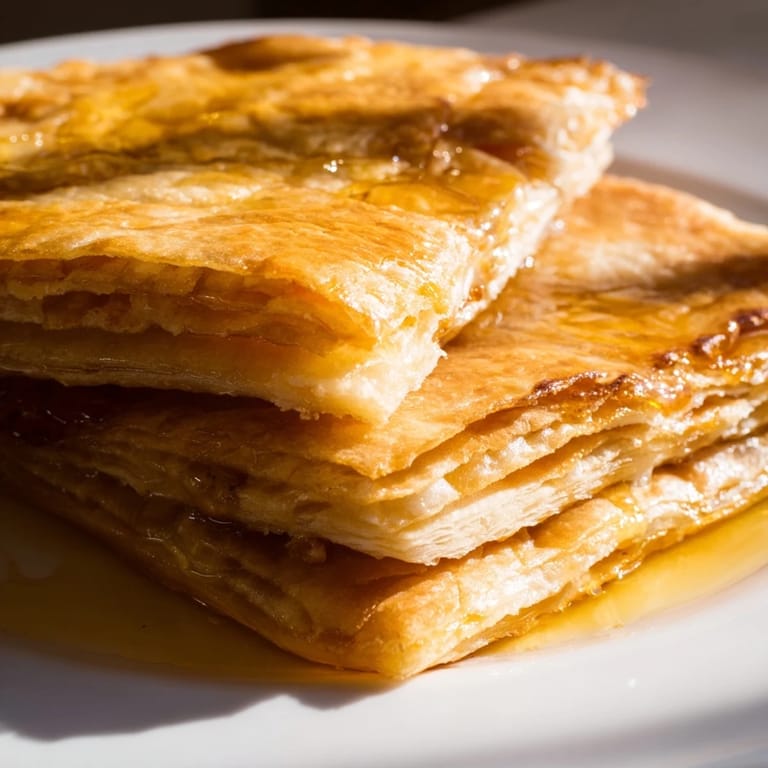
- This is the meditation part. Take one dough ball, oil your work surface generously, and use your oiled hands to flatten and stretch the dough outward, gently rotating as you go, until it's so thin you can almost see your hand through it. Don't tear it—if you do, just pinch it back together. Brush the thin circle with melted butter, sprinkle semolina across it, then fold the edges toward the center to form a rough square, brushing and sprinkling as you fold.
- Rest the formed pastries:
- Let your folded squares sit for 5 minutes—this gives the gluten time to relax so they don't try to shrink away from you when they hit the heat.
- Pan-fry to golden:
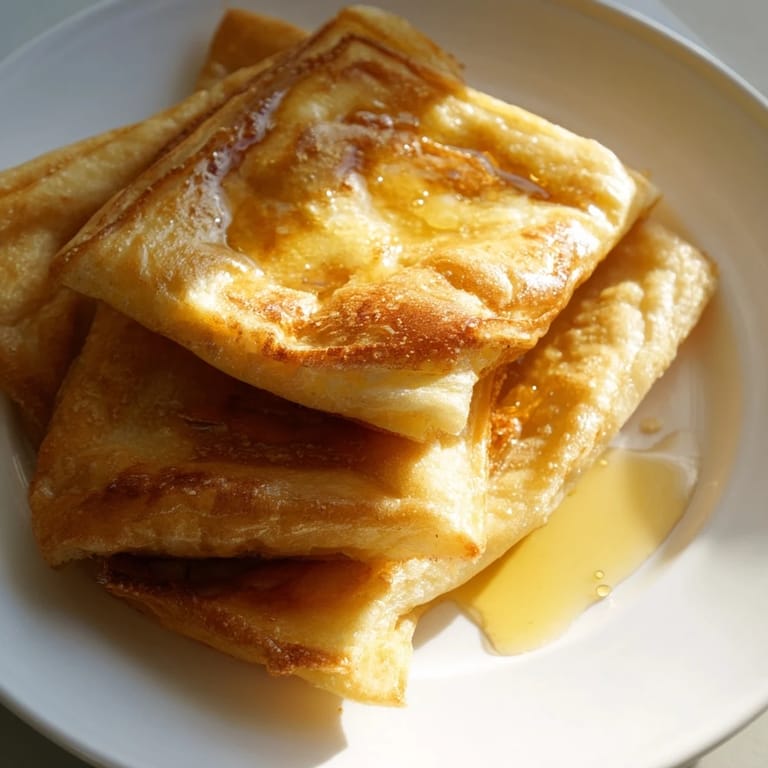
- Heat your skillet over medium heat with a light brush of oil. Place each square in the pan and gently flatten it to about a quarter-inch thick using the back of a spatula. Fry for 2 to 3 minutes on each side until the surface is spotted with golden brown and you can see steam escaping from the layers—that's when you know it's flaky inside.
- Serve warm with honey:
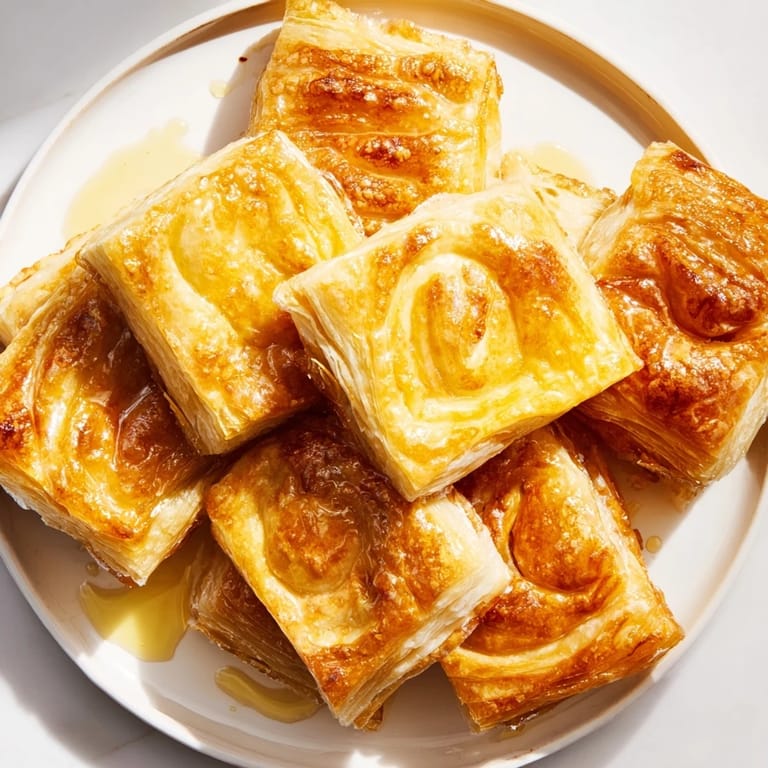
- Transfer your msemen to a plate while it's still hot and drizzle generously with warm honey so it soaks into the pastry. Eat it while the butter is still singing.
 Pin It
 These pastries have a way of bringing people together in the most unexpected moments. I've watched my neighbor, who usually keeps to himself, come alive eating one of these with a cup of strong coffee, suddenly telling stories about his childhood. There's something about food that's both crispy and tender, simple and intricate, that opens people up.
The Art of Stretching Dough
The stretching technique is where msemen becomes almost meditative. Unlike pizza dough that you throw and spin, msemen is coaxed outward with the flat of your hand, a process that teaches you to read how the dough wants to move. The first few times I tried, I was too aggressive, trying to force it thin all at once, and the dough would tear in defiant little holes. Then I watched a baker work in slow motion—lift, stretch a bit, rotate a quarter turn, lift, stretch, rotate—and something clicked. Now I actually look forward to this step because it's one of the few moments in cooking where you can't rush, and somehow that's liberating.
Why Honey Makes All the Difference
The honey isn't just a topping; it's a final transformation. Cold honey sits on top of warm pastry and tastes like an afterthought, but warm honey sinks in immediately, creating pockets of sweetness within the layers. I learned this the hard way when I drizzled cold honey from the jar and wondered why everyone was polite instead of amazed. Now I always warm the honey gently in a small pan, and it changes everything about the eating experience.
Variations and Extensions
Once you master the basic msemen, the variations start to reveal themselves. Amlou—a spread made from almond paste, honey, and oil—is the traditional pairing that turns msemen into something even more luxurious. A pinch of cinnamon in the dough adds warmth without overwhelming the delicate pastry, and orange blossom water creates a floral note that lingers. Even a simple spread of fresh jam works beautifully if you want something lighter for afternoon tea.
- Amlou creates a complete breakfast that feels indulgent but is actually quite simple to prepare at home.
- Cinnamon should be added sparingly so it enhances rather than dominates the subtle flavors of the dough and butter.
- Leftover msemen reheats perfectly in a dry skillet, crisping back up to nearly fresh-baked quality.
 Pin It
 Msemen taught me that some of the most satisfying foods aren't about complexity—they're about understanding a few simple ingredients well enough to coax out their best selves. Every time I make these, I'm a little bit grateful for that morning in my aunt's kitchen, and a little bit proud that I finally got it right.
Questions & Answers
- → What ingredients make Msemen flaky and tender?
The combination of all-purpose flour, fine semolina, and butter brushed between layers creates Msemen's signature flakiness and tenderness.
- → How should I shape the dough for Msemen?
Flatten each dough ball into a thin circle, brush with melted butter and sprinkle semolina before folding the sides into a square, repeating layers for texture.
- → What is the best method to cook Msemen?
Pan-frying the shaped squares in a lightly oiled skillet over medium heat until golden brown ensures a crisp exterior and cooked layers inside.
- → Can Msemen be stored and reheated later?
Yes, leftover Msemen can be reheated in a skillet or toaster to regain crispness and warmth before serving.
- → Are there common variations to enhance the flavor?
Adding a pinch of cinnamon or orange blossom water to the dough or serving alongside almond-honey spread (amlou) offers fragrant and rich flavor twists.
- → Is yeast necessary in the dough mixture?
Using instant yeast is optional and helps lighten the texture, but Msemen can be made without it for a denser result.