 Pin It
 The first time I watched my grandmother shape kahk, her weathered hands moved with such certainty that I couldn't tell where the dough ended and the filling began. She'd pinch and roll without measuring, creating these perfect little orbs dusted in sesame seeds like snow on a winter morning. Years later, when I finally tried making them myself, I understood that those moments in her kitchen weren't just about technique—they were about patience, tradition, and the quiet confidence that comes from making something your family has treasured for generations.
I remember bringing a batch to a neighbor's house during Ramadan, nervous about whether I'd gotten the texture right. She took one bite, closed her eyes, and smiled in a way that told me everything—these weren't just cookies, they were a small bridge between our two kitchens. That's when I realized kahk isn't really about impressing people; it's about sharing something real.
Ingredients
- All-purpose flour: The backbone of a tender crumb; sift it if you have time, though I usually skip that step and just mix gently to keep the cookies light.
- Unsalted butter: Room temperature is non-negotiable here—cold butter won't cream properly, and the cookies won't have that signature delicate texture.
- Powdered sugar: Finer than granulated, it dissolves seamlessly into the butter and keeps the dough soft.
- Milk: Add it slowly and stop when your dough reaches a soft, slightly sticky state—too much and you'll end up with something more like dough you'd knead for bread.
- Baking powder: Just a touch for rise; kahk should be tender, not fluffy.
- Vanilla extract: A subtle warmth that lets the butter and dates take center stage.
- Medjool dates: Soft, naturally sweet, and they cook down into a luscious paste without much fuss.
- Cinnamon and cardamom: Warm spices that echo through the filling; the cardamom is optional but worth hunting for if you can.
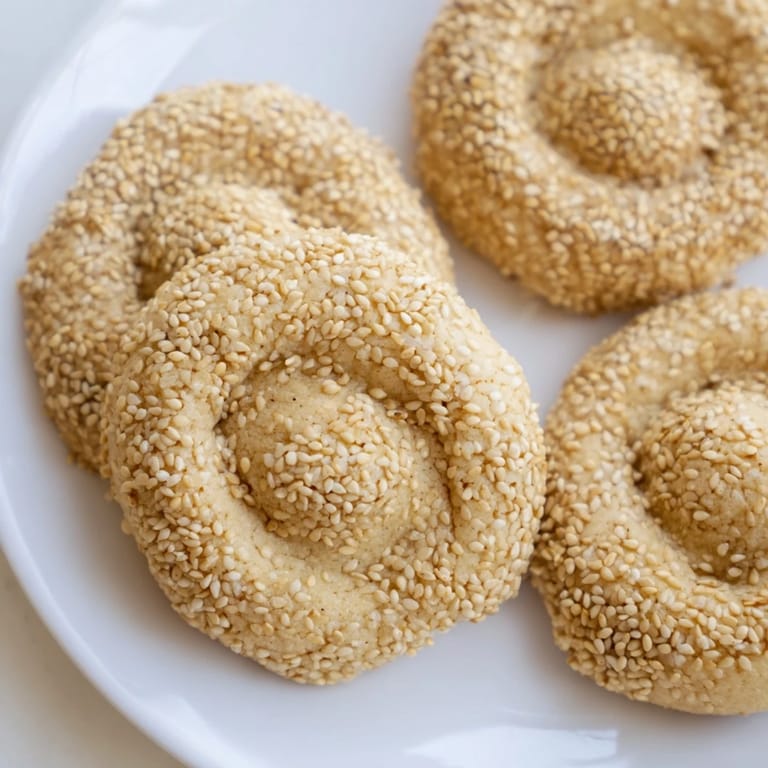
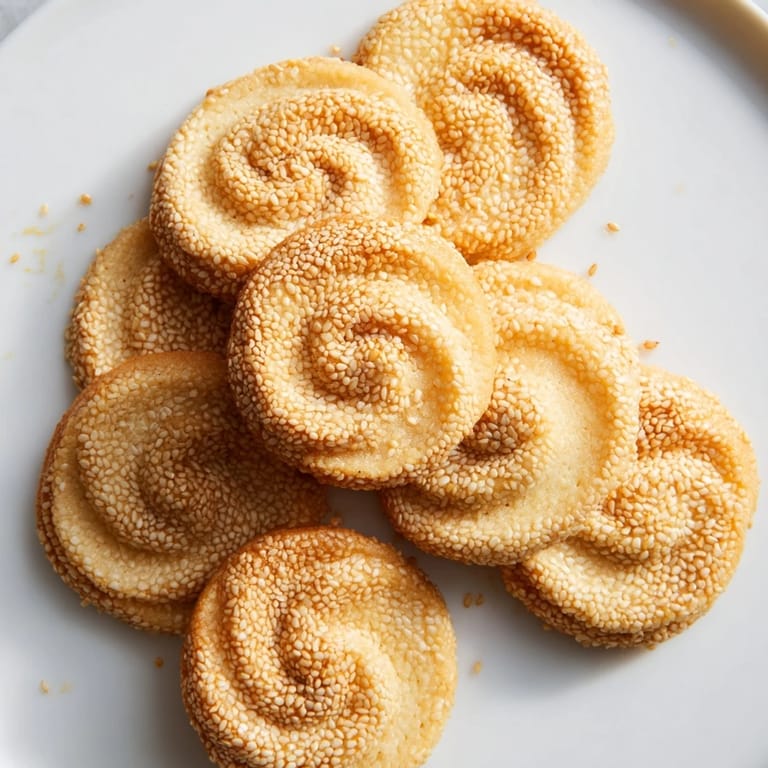
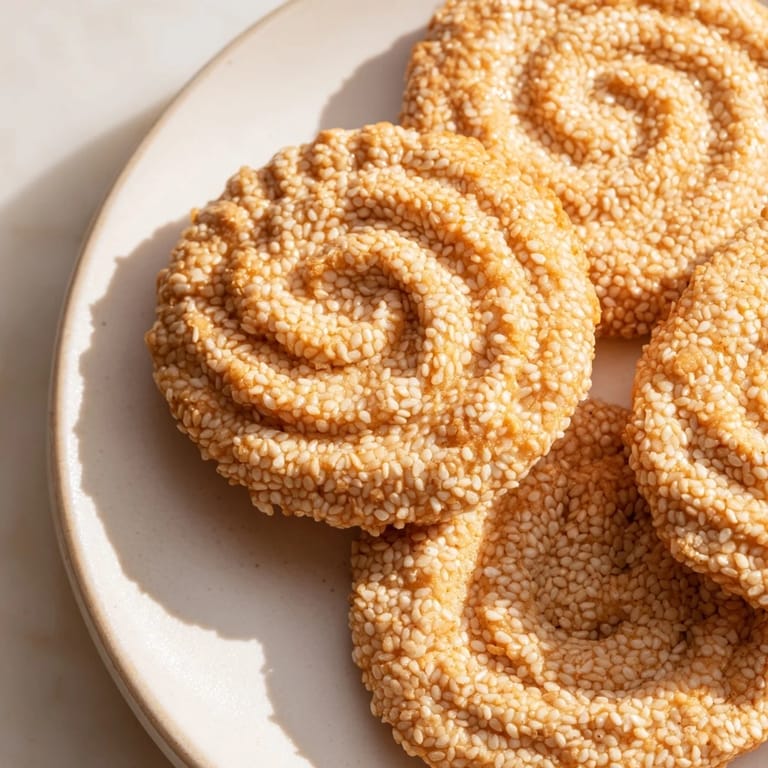
- Sesame seeds: Use untoasted ones; they'll turn a light golden color in the oven and add a gentle nutty finish.
Tired of Takeout? 🥡
Get 10 meals you can make faster than delivery arrives. Seriously.
One email. No spam. Unsubscribe anytime.
Instructions
- Cream the butter and sugar:
- Beat them together in a large bowl until the mixture looks light, pale, and almost fluffy—this usually takes a few minutes with an electric mixer, or about five with a whisk if you're feeling the work in your arms. The air you're beating in creates space for tenderness.
- Mix in the dry ingredients:
- Add vanilla first, then gradually mix in your flour, baking powder, and salt, stirring just until you don't see streaks of flour anymore. Over-mixing toughens the dough, so be gentle and trust that it's ready when it looks mostly combined.
- Add milk and knead gently:
- Pour in a tablespoon of milk and work it into the dough with your hands, adding more a tablespoon at a time until you have a soft, pliable mass that holds together but still feels slightly tacky. This is where feel matters more than exact measurements.
- Cook the date filling:
- Combine chopped dates and butter in a small saucepan over low heat, stirring frequently as the dates break down into a thick, glossy paste—this takes about five minutes. Stir in the cinnamon and cardamom, let it cool for a moment, and you're done.
- Portion and fill:
- Divide your dough into 24 pieces (a kitchen scale helps, but honestly, eyeballing it works fine). Flatten each piece in your palm, add a teaspoon of filling to the center, then fold the edges up and pinch to seal.
- Roll and coat:
- Gently shape each filled piece into a ball, then roll it through sesame seeds, pressing lightly so they stick. Don't worry about perfect coverage; these cookies should look homemade, not factory-produced.
- Press and decorate:
- Place each ball on your parchment-lined baking sheet and use the tines of a fork to gently flatten it slightly and create a crosshatch pattern—it's both pretty and practical, helping the cookie bake evenly.
- Bake until golden:
- Bake at 350°F for 18 to 20 minutes; the bottoms should turn a light golden brown while the tops stay pale. They'll continue to firm up as they cool, so don't overbake or they'll lose their tender crumb.
- Cool completely:
- Transfer them to a wire rack and let them sit until they're completely cool—this is harder than it sounds when they smell this good, but patience pays off in texture.
 Pin It
 I once brought a tin of these to a gathering where I didn't know many people, and I watched three generations of a Palestinian family pass them around the table, each person recognizing something in the taste that connected them to their own kitchen. That's the real magic of kahk—it's not fancy or complicated, but it carries memory and belonging in every bite.
The Art of the Perfect Texture
Kahk lives in a tender middle ground that takes a little practice to understand. The dough should be softer than typical shortbread but not as wet as a cake batter; think of it as somewhere between a biscuit and a sugar cookie. I learned this the hard way after my first batch came out dense and heavy, and I realized I'd been too cautious with the milk. Now I add it gradually and stop as soon as the dough comes together, sometimes using slightly less than the recipe calls for, especially on humid days when flour already holds moisture.
Making Ahead and Storing
These cookies actually taste better the next day once the flavors have settled and the texture has set. I often make the dough and filling the evening before, then shape and bake them in the morning—it breaks up the work and means you're not standing at the oven late into the night. Stored in an airtight container at room temperature, they'll last about a week, though they rarely last that long in my house.
Serving and Variations
Kahk is meant to be eaten slowly, preferably with someone else and a hot beverage that lets you pause between bites. The traditional pairing is strong coffee or mint tea, which cuts through the richness and makes each cookie taste even more special. If you want to experiment, try adding finely chopped walnuts or pistachios to the date filling, or swap out some of the dates for fig paste for a slightly different flavor profile that still feels authentic to Palestinian baking traditions.
- Serve them warm from the oven for the most tender crumb, though they're wonderful at room temperature too.
- If you want to make them ahead for a gathering, bake them a day or two early and store them in an airtight container—they travel well and taste great.
- A small batch wrapped in parchment and tied with string makes a thoughtful gift that says you spent your afternoon thinking of someone.
 Pin It
 Every time I make kahk, I'm baking a small conversation with my grandmother and with everyone who's ever made these cookies before me. That kind of tradition doesn't need to be perfect; it just needs to be made with a little care and shared with people who'll appreciate it.
Questions & Answers
- → What ingredients give Kahk its tender texture?
Softened butter combined with flour and milk creates a pliable dough that bakes to a tender consistency.
- → How is the sweet date filling prepared?
Chopped dates are simmered gently with butter and spices like cinnamon and cardamom until a smooth, paste-like filling forms.
- → Why are sesame seeds used for coating?
Sesame seeds add a nutty flavor and a slight crunch, enhancing both texture and appearance of the baked pieces.
- → What baking temperature and time ensure perfect results?
Baking at 350°F (175°C) for 18–20 minutes produces golden bottoms and pale tops, maintaining a delicate texture.
- → Can Kahk include variations in the filling?
Yes, finely chopped walnuts can be added to the date filling for extra nuttiness and texture.
- → How should these cookies be stored?
Store in an airtight container at room temperature for up to one week to maintain freshness.