 Pin It
 The first time I tasted knafeh, I understood why my Lebanese grandmother kept the recipe locked in memory rather than on paper. The moment that shatteringly crisp phyllo gave way to warm, stretchy cheese, and the fragrant syrup soaked through everything at once, I realized this wasn't just dessert—it was an edible contradiction that somehow worked perfectly. Years later, I finally convinced her to walk me through it, and what struck me most wasn't the ingredients list but her insistence on one thing: the cheese must stretch, the pastry must crunch, and the syrup must be cold against the hot dessert. Every element fighting beautifully against the others.
I made this for my roommate's birthday dinner, watching her face when she bit into it and then immediately asked for seconds. She kept saying it tasted like a restaurant dessert, the kind that costs twenty dollars on a fancy menu, and I loved that she had no idea how straightforward it really is. That night taught me that knafeh isn't actually complicated—it just feels fancy because it looks dramatic and tastes indulgent.
Ingredients
- Akawi cheese: This is the traditional choice, slightly salty and designed to stretch beautifully when warm; if you can't find it, low-moisture mozzarella works, though the flavor will be milder and you'll want to add a pinch of salt to the cheese mixture.
- Ricotta cheese: This adds creaminess and prevents the filling from being rubbery; don't skip it even if you're tempted.
- Kataifi pastry: Those delicate shredded strands are what make the contrast possible; thaw it completely or it'll clump into an unusable mess.
- Unsalted butter: The gentle coating that makes each strand crisp and golden, so don't skim on quality here.
- Granulated sugar: The backbone of the syrup that will soak into the warm pastry and balance the salty cheese.
- Water: Just enough to dissolve the sugar and create the light syrup that defines knafeh.
- Lemon juice: A tiny brightness that keeps the syrup from feeling cloying; it's subtle but essential.
- Orange blossom water: The scent that makes people ask what you're cooking before they even see it; this is where the magic lives.
- Rose water: The companion to orange blossom, adding a floral depth that feels luxurious and distinctly Middle Eastern.
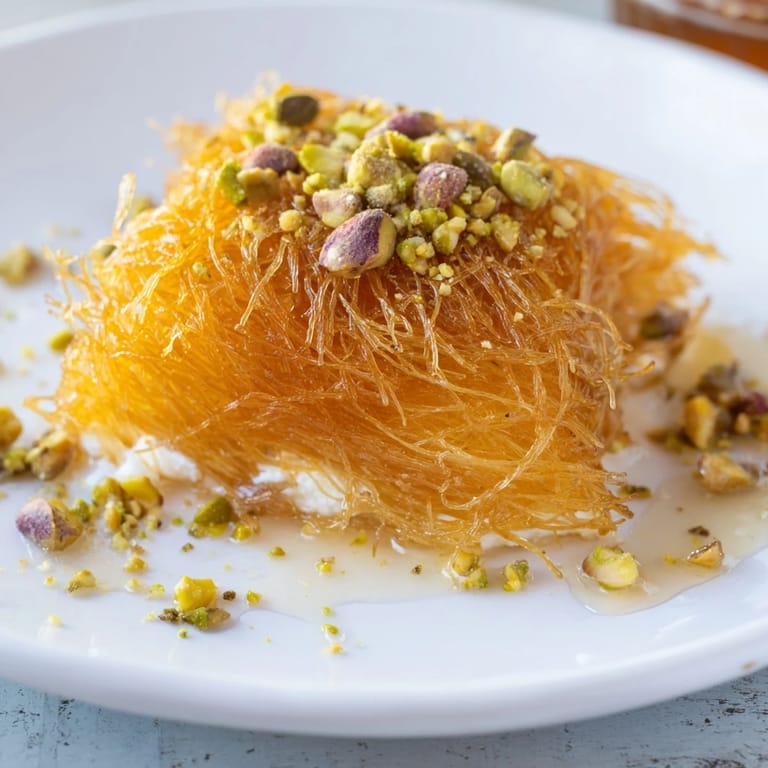
- Pistachios: The final garnish that catches light and adds a nutty contrast; buy them already chopped to save yourself ten minutes.
Tired of Takeout? 🥡
Get 10 meals you can make faster than delivery arrives. Seriously.
One email. No spam. Unsubscribe anytime.
Instructions
- Soak your cheese the night before:
- If using Akawi, this step is non-negotiable—place it in cold water and change the water every hour or so, or just let it soak overnight in the fridge and change it once in the morning. This removes the excess salt that would make the filling unpleasantly briny, and your knafeh will taste balanced instead of oversalted.
- Prepare your oven and dish:
- Preheat to 180°C (350°F) and grease your round baking dish with butter so the finished knafeh releases cleanly. This matters more than you might think when you're flipping the whole thing onto a platter.
- Mix the cheeses:
- Drain and pat the soaked Akawi (or mozzarella) completely dry, then shred or slice it thin and combine with ricotta in a bowl. The drier your cheese, the less watery the filling will be, and you'll taste the difference.
- Coat the kataifi with butter:
- Place the thawed shredded phyllo in a large bowl and pour the melted butter over it slowly, working gently with your fingers to separate the strands as you go. Every strand should glisten with butter; this is what creates that shatteringly crisp texture.
- Build the base layer:
- Spread half the buttered kataifi into the bottom of your prepared baking dish, pressing it down firmly to create an even, compact base. Don't be shy about pressing—you want it to hold together when you flip it.
- Add the cheese layer:
- Spread the cheese mixture evenly over the kataifi base, leaving just a tiny margin at the edges. The filling should be substantial but not so thick that it oozes out the sides when baking.
- Top with remaining pastry:
- Distribute the rest of the buttered kataifi over the cheese and press down gently but firmly so everything adheres without compressing it into a brick. You want structure, not density.
- Bake until golden:
- Place in the preheated oven for 30 to 35 minutes, until the top turns deep golden brown and looks crisp. Resist the urge to check it constantly—let the oven do its work.
- Make the syrup while it bakes:
- In a saucepan, combine sugar, water, and lemon juice and bring to a boil. Simmer for 8 to 10 minutes until it thickens slightly and coats the back of a spoon, then remove from heat and stir in the orange blossom and rose water while it's still warm. Let it cool completely—this is crucial, as cold syrup on hot knafeh creates that textural magic.
- The critical flip:
- Remove the knafeh from the oven and let it cool for just 2 to 3 minutes, then place your serving platter over the top and flip the entire thing in one confident motion. The cheese is still warm and pliable, which is exactly when it releases cleanly from the dish.
- Soak with syrup:
- Immediately pour half the cooled syrup evenly over the hot, just-flipped knafeh, letting it soak in and seep through the layers. The contrast between the warm pastry and cold syrup is when all those flavors come alive.
- Garnish and serve:
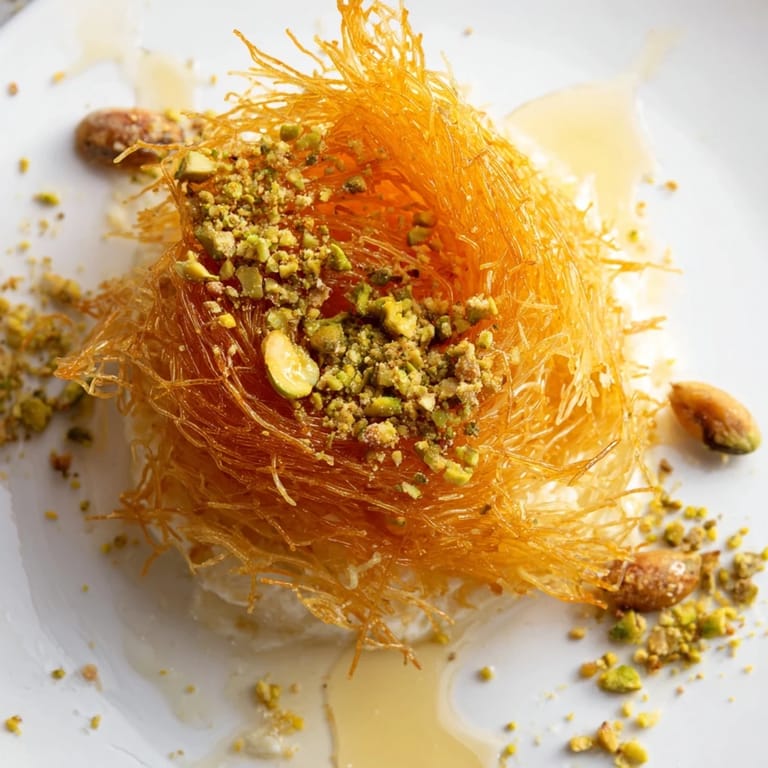
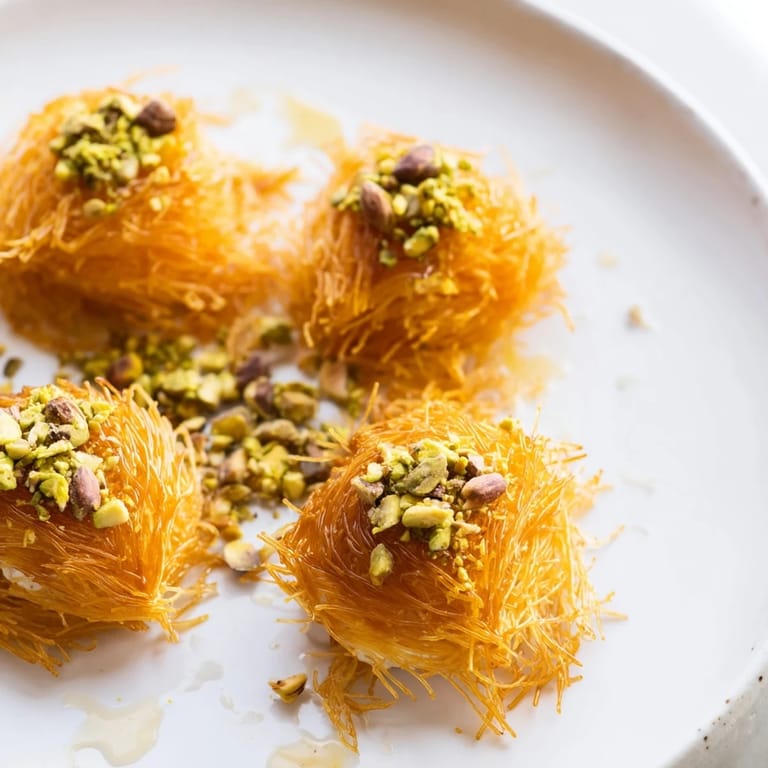
- Scatter the chopped pistachios over the top, drizzle with honey if you like the extra sweetness, and serve warm with the remaining syrup on the side. Eat it while the pastry is still crisp and the cheese still has that perfect stretch.
 Pin It
 My favorite moment came when my mother tasted what I'd made and got quiet for a moment, then said it reminded her of the knafeh from a bakery in Beirut she hadn't thought about in years. Suddenly this dessert wasn't just mine—it connected her to a place and a time, and I realized that's what food really does when you get it right. It becomes a bridge.
Why the Syrup Matters So Much
The syrup isn't an afterthought or a finishing flourish—it's the element that transforms knafeh from bread with cheese on top into something that tastes like celebration. The orange blossom and rose water aren't about being fancy; they're about creating a flavor profile that's unmistakably Lebanese, distinctly different from the buttery pastry and salty cheese beneath. When you pour that cool syrup over hot knafeh, the contrast creates a moment where everything is working at once: the pastry is still crackling, the cheese is still stretching, and the floral syrup is cutting through with brightness. Get this balance right and the whole dessert clicks into place.
Choosing Your Cheese
Akawi is the traditional cheese for a reason—it's designed to stretch when warm without separating into grease, and it has a subtle salt that complements the sweet syrup. That said, not everyone has access to it, and low-moisture mozzarella is a legitimate substitute that will work. The real key is understanding what you're doing: traditional Akawi creates a certain flavor and texture that's iconic, while mozzarella will give you the stretch without the salt and will taste a bit more neutral. Whichever you choose, don't skip the soaking and drying step; that's what prevents the filling from weeping moisture into the pastry and making everything soggy. Some people add a small amount of white cheese like feta or halloumi to either base cheese, which adds a bit more character and tang—this isn't traditional, but it's not wrong either.
Making It Yours and Serving It Right
Once you've made knafeh a few times, you'll start to trust your instincts about small variations. Some bakers brush their kataifi with more butter for extra richness, while others broil the top for an extra minute after baking to deepen the crunch and color. You could infuse your syrup with a splash of vanilla, or add a hint of cardamom if that's a flavor you love. The dessert is forgiving enough to handle minor tweaks, and adventurous enough that those tweaks usually work. Knafeh is best eaten warm, within a couple of hours of baking, when the pastry is still crisp and the cheese still has stretch. You can make it ahead and reheat it gently in a low oven, though you'll lose some of that textural contrast. Serve it with strong Turkish coffee or a cup of mint tea—the bitter or herbal flavor is exactly what knafeh needs to feel complete.
- If you can't find orange blossom water, use a bit of vanilla or skip it entirely and add extra rose water instead.
- Leftover knafeh can be wrapped and refrigerated for up to two days, then warmed at 150°C until crispy again, though fresh is always better.
- Make the syrup a day ahead if you want—it actually deepens in flavor and you'll have one less thing to manage on the day you bake.
 Pin It
 There's something about making knafeh that shifts how you think about cooking—it teaches you that opposites don't have to clash, that crisp and soft and stretchy and sweet can all live in one bite. Once you understand that, you've learned something that goes way beyond this one dessert.
Questions & Answers
- → What cheese can substitute Akawi?
Unsalted mozzarella works well as an alternative, offering similar texture and mild flavor when soaked and drained properly.
- → How is the crispy top achieved?
Coating the kataifi pastry in melted butter and baking until golden creates the crisp exterior, with an option to broil briefly for extra crunch.
- → What flavors are in the syrup?
The syrup combines sugar, lemon juice, with aromatic orange blossom and rose waters for a fragrant, floral sweetness.
- → Can this dish be prepared ahead of time?
It’s best served warm immediately after baking to preserve the crisp texture and stretchiness of the cheese filling.
- → What garnishes complement this dish?
Chopped pistachios add crunch and visual appeal, while a drizzle of honey enhances the floral sweetness.