 Pin It
 My neighbor Layla invited me over one autumn afternoon, and the moment I stepped into her kitchen, I was wrapped in the scent of honey and warm spices. She was making konafa, and I watched, mesmerized, as she pulled apart those delicate strands of kataifi like golden threads. Years later, I finally decided to try it myself, and that first crackling bite brought back every detail of that afternoon—the way her hands moved with such ease, the sound of the phyllo crisping in the oven, the almost immediate regret that I hadn't made a double batch.
I made this for my book club one winter, and what struck me wasn't just how quickly it disappeared—it was how people kept coming back to the pan, picking at the corners when they thought no one was looking. One friend actually asked for the recipe before she'd even finished her first piece, and I realized that konafa has this magic ability to make everyone feel like they're tasting something genuinely rare and cherished.
Ingredients
- Kataifi dough: This shredded phyllo is your backbone; thaw it gently at room temperature and resist the urge to rush it or it'll shatter unevenly.
- Unsalted butter: Use real butter, not oil—the richness matters here, and it's what creates those golden, crisp layers.
- Walnuts, pistachios, and almonds: Chop them finely and as close to baking time as you can; fresh-chopped nuts taste noticeably brighter.
- Cinnamon and cardamom: Don't skip the cardamom—it's whisper-quiet but changes everything, adding a gentle floral warmth beneath the spice.
- Honey syrup base: The sugar-water ratio is crucial; too much syrup and it becomes soggy, too little and it tastes dry.
- Rose water or orange blossom water: Optional but not really—even a teaspoon lifts this from delicious to unforgettable.
Tired of Takeout? 🥡
Get 10 meals you can make faster than delivery arrives. Seriously.
One email. No spam. Unsubscribe anytime.
Instructions
- Prep your pan and oven:
- Preheat to 180°C and butter your 23 cm pan generously. You're creating a golden stage for everything else.
- Loosen the kataifi carefully:
- Spend a minute gently separating those strands with your fingers; this makes them toast more evenly and prevents dense clumps in the final pastry.
- Layer the base:
- Spread half the kataifi into the pan and press gently to form an even layer. Drizzle with half the butter, feeling how it soaks into the strands.
- Mix and spread the filling:
- Combine walnuts, pistachios, almonds, sugar, cinnamon, and cardamom in a bowl. The mixture should be fragrant and chunky, not powdery.
- Top with the second kataifi layer:
- Add the remaining shredded phyllo, press lightly, and brush with the rest of the butter until every visible strand glistens.
- Bake until golden:
- Thirty to thirty-five minutes in a 180°C oven; you're listening for a subtle crackle and watching for a deep golden-brown color that says it's done.
- Make the honey syrup simultaneously:
- Combine sugar and water in a saucepan, bring to a boil, then let it bubble gently for seven to eight minutes. Add honey, lemon juice, and rose water or orange blossom water if using, then let it cool slightly.
- Pour syrup while hot:
- The moment the konafa leaves the oven, pour the syrup evenly over the entire surface. The pastry will absorb it like a sponge, creating pockets of sweetness throughout.
- Cool and cut:
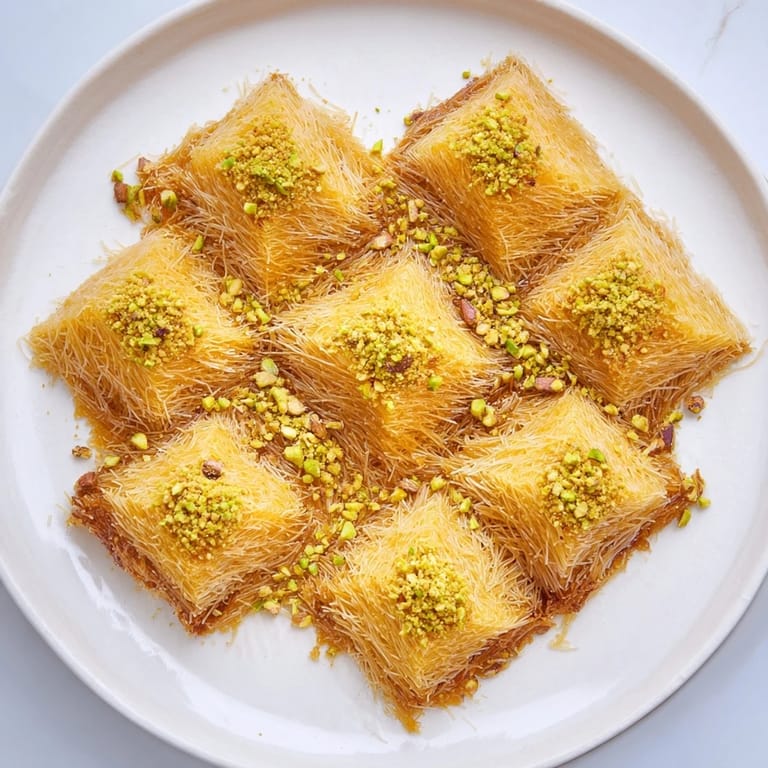
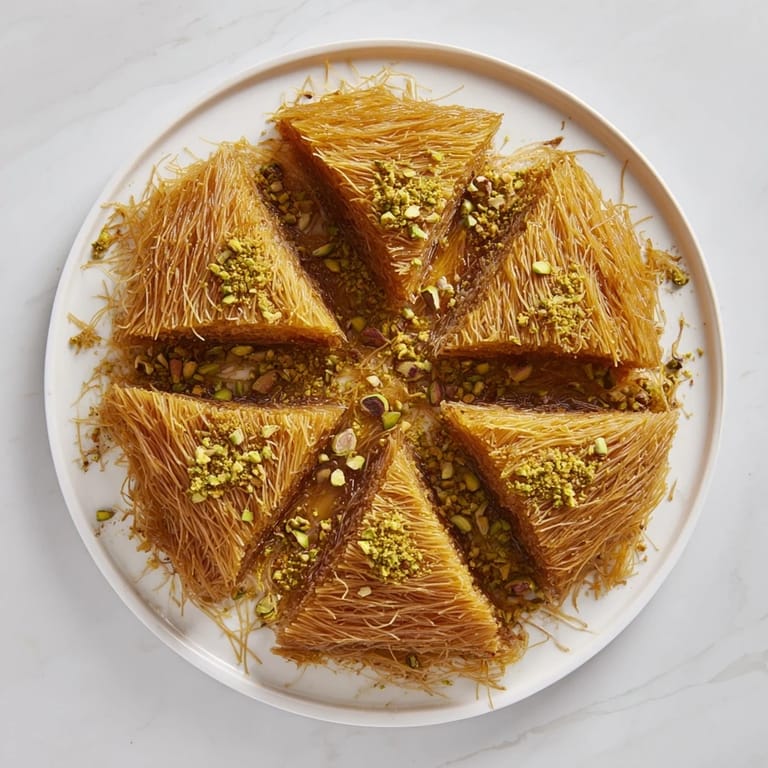
- Wait a full thirty minutes before slicing; this lets everything set. Cut into diamonds or squares using a sharp, wet knife to prevent shattering.
 Pin It
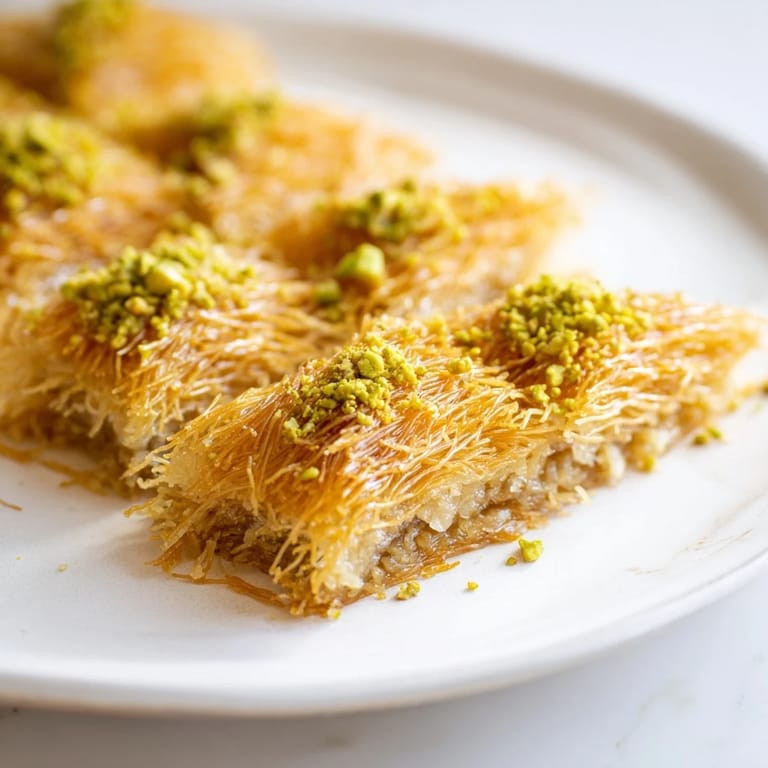
 There's a moment when you pull konafa from the oven and the entire kitchen fills with this golden, honeyed warmth—that's when you know you've made something that transcends the everyday. Watching someone close their eyes after that first bite, listening to the crunch, seeing the honey glisten: that's when dessert becomes memory.
The Art of Layering
The magic of konafa lives in its contrast. You're building texture against texture—the almost-paper-thin crispness of buttered kataifi against the yielding nuttiness of the filling, all of it bound together by the delicate sweetness of the syrup. The first layer needs enough butter to toast evenly; the second layer needs the same attention or you'll end up with one crispy side and one chewy side. I learned this by doing it wrong once, and now I treat each layer like I'm painting—deliberate, even, with no dry patches.
Working with Kataifi
Kataifi can intimidate you at first because those strands seem impossibly delicate. But here's what I discovered: once they thaw, they're tougher than they look. The real trick is not being too gentle and not being too rough—you're separating clumps with your fingertips, almost like you're fluffing hair. If you try to do it all at once, you'll tear it. If you're impatient, you'll create dense pockets. Give it a quiet minute at room temperature, then go strand by strand, and you'll understand why this pastry has been treasured in Middle Eastern kitchens for centuries.
Timing and Temperature
The oven temperature matters more than you might think. Too hot and the outside burns before the inside crisps; too cool and you'll wait forever while the butter just soaks in without toasting. Eighteen degrees Celsius is the sweet spot—it gives the pastry thirty-five minutes to turn from pale and soft to deep gold and shattering-crisp. The syrup timing is equally important: it needs to go onto hot pastry so it can seep in and be absorbed, not just sit on top like a glaze. This is one of those recipes where five minutes of attention in the moment means the difference between good and extraordinary.
- Use an oven thermometer if you can; ovens can vary by as much as ten degrees.
- When the konafa comes out, the syrup should still be warm but not boiling.
- Let it cool fully before serving; warm konafa will crumble, cold konafa slices like it was meant to.
 Pin It
 Konafa is one of those desserts that tastes like it took hours but actually rewards focus and presence more than time. Serve it at room temperature with strong coffee or tea, and watch how it brings people together in that quiet, contented way that only truly good food can.
Questions & Answers
- → What type of dough is used to create the layers?
Shredded kataifi dough, which is a thin, shredded phyllo pastry, forms the delicate, crisp layers of the dish.
- → Which nuts are best for the spiced filling?
A mix of finely chopped walnuts, pistachios, and almonds combined with cinnamon and cardamom creates a rich, aromatic filling.
- → How is the honey syrup prepared?
The syrup is made by boiling sugar and water, then simmering before adding honey, lemon juice, and optionally floral waters like rose or orange blossom.
- → What baking temperature ensures a crisp texture?
Baking at 180°C (350°F) for 30 to 35 minutes results in a golden, crispy finish without drying out the layers.
- → Are there any suggested variations to enhance richness?
Adding a layer of sweetened ricotta or clotted cream between kataifi layers enriches the texture and taste.
- → How can I present the final dish?
Allow it to cool and slice into diamonds or squares, serving at room temperature, optionally with fresh berries or whipped cream.