 Pin It
 There's a rhythm to stir-frying that I didn't understand until my neighbor handed me a wok one Saturday morning and asked me to help feed a crowd. The pork hits the hot oil with that aggressive sizzle, the vegetables tumble in with their bright colors, and suddenly your kitchen smells like a restaurant kitchen. That moment when the glossy teriyaki sauce coats everything and your wooden spoon catches the light—that's when you know you've got something special in five minutes flat.
I made this for my sister after she'd had a brutal day at work, and I remember her sitting at the counter with chopsticks in one hand, just eating straight from the skillet like a person who'd forgotten how to take things slow. The steam rose up and she closed her eyes for a second, and I realized that food doesn't have to be complicated to matter.
Ingredients
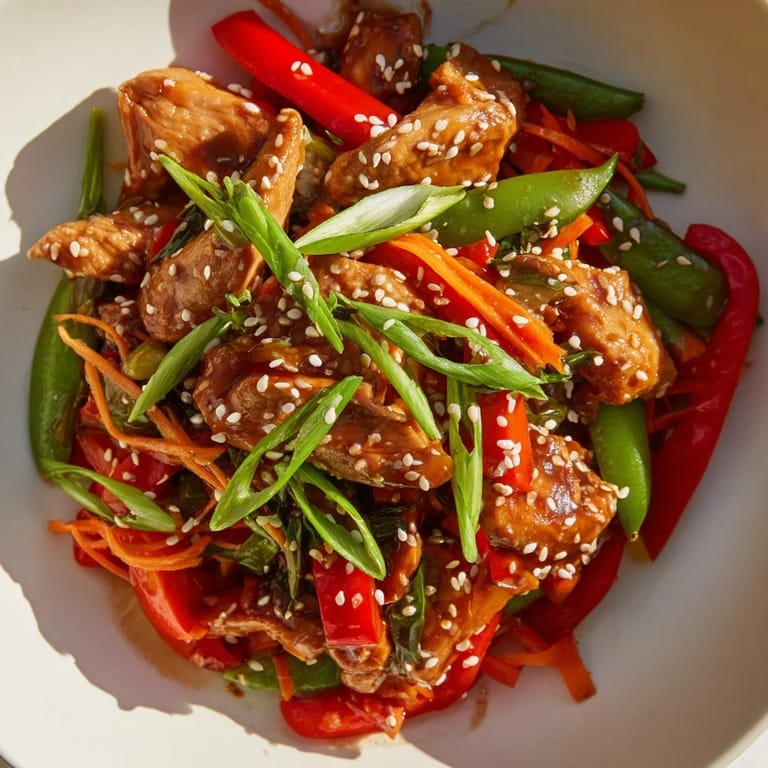
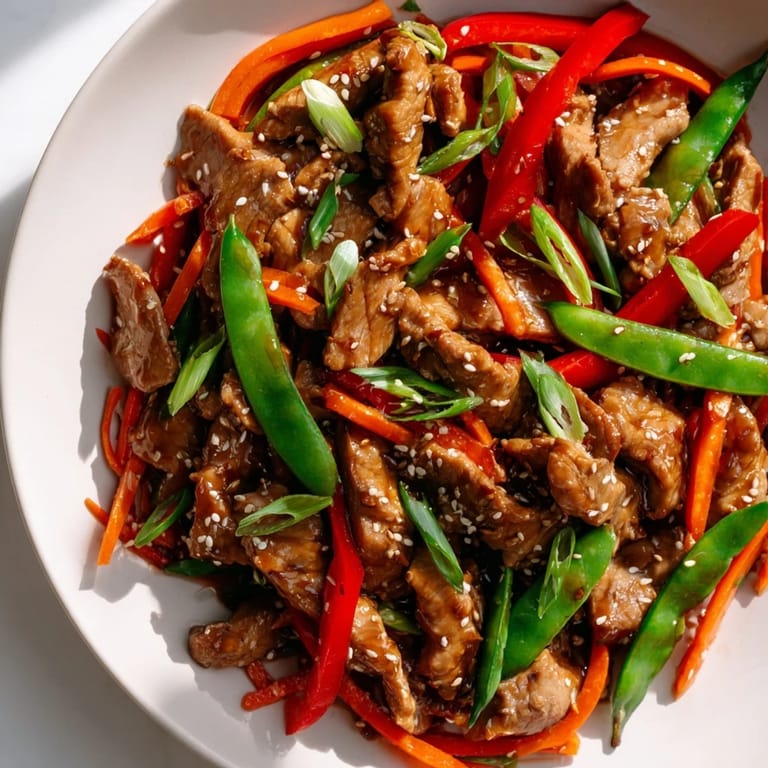
- Pork tenderloin, thinly sliced: The meat should be sliced thin enough that it cooks through in minutes, and against the grain so each piece stays tender instead of turning chewy.
- Red bell pepper: The sweetness plays off the savory sauce beautifully, and it stays crisp if you don't overcook it.
- Snap peas: They need just a quick kiss of heat to stay bright and snappy, which is honestly half their appeal.
- Carrot: Julienned thin so it cooks evenly and adds a subtle sweetness that rounds out the dish.
- Green onions: Split them—half raw at the end for freshness, half cooked for depth.
- Garlic and ginger: Fresh is the only way here; they bloom in the hot oil and fill your whole kitchen with their warmth.
- Low-sodium soy sauce: Low-sodium lets you taste the other flavors instead of just salt, which makes the whole thing more interesting.
- Mirin: This is the secret ingredient that makes the sauce glossy and a little bit sophisticated without tasting fancy.
- Brown sugar or honey: Your choice depends on what you have on hand, and honestly, both work.
- Rice vinegar: It cuts through the richness and adds a gentle tang that keeps the sauce from being one-note.
- Cornstarch: The thickening agent that turns the sauce from loose to luxurious, coating every vegetable and piece of meat.
- Sesame oil: Just a teaspoon, but it adds a nutty warmth that makes people ask what you did differently.
- Vegetable oil: High heat oil for the pan; use something that won't smoke and burn.
Tired of Takeout? 🥡
Get 10 meals you can make faster than delivery arrives. Seriously.
One email. No spam. Unsubscribe anytime.
Instructions
- Mix your sauce first:
- Whisk the soy sauce, mirin, brown sugar, rice vinegar, cornstarch, water, and sesame oil together in a small bowl. This is your safety net—once you start cooking, everything moves fast, and you don't want to be fumbling for ingredients. The cornstarch will settle, so you might need to stir it again before pouring.
- Cook the pork until just done:
- Heat one tablespoon of oil in your wok or skillet until it shimmers and moves like water. Lay the pork slices in a single layer—they should hit the pan with authority—and let them sit for a moment before stirring. Three to four minutes and they're golden and cooked through; pull them out onto a plate before they turn tough.
- Soften the sturdy vegetables:
- Add the remaining oil and let it get hot, then in go the bell pepper, snap peas, and carrot. Keep the heat high and keep them moving with your wooden spoon. You want them to have some color and still snap when you bite them, not turned to mush.
- Wake up the aromatics:
- Toss in the garlic, ginger, and half of the green onions, and cook for about 30 seconds until the smell hits you—that's your signal that they're ready. Don't walk away; stay there and breathe it in.
- Bring everything together:
- Return the pork to the pan, give the sauce a quick stir to make sure the cornstarch is mixed in, then pour it over everything. The heat will transform it into a glossy, luxurious coating that clings to every piece. Keep stirring for a minute or two until you can see the sauce thickening and coating the back of your spoon.
- Finish and serve:
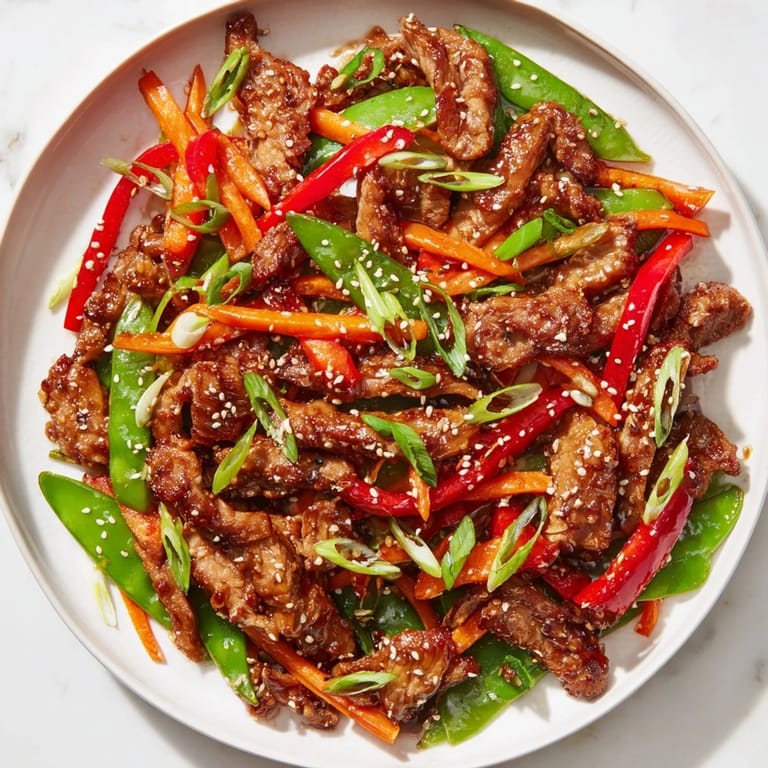
- Kill the heat, scatter the sesame seeds and remaining green onions over top, and taste it once just to make sure it's perfect. Serve it right away over steamed rice or noodles while it's still hot and the sauce is still glossy.
 Pin It
 My neighbor came back to collect that wok a few weeks later, and I had to confess I'd already bought my own because I'd made this stir-fry four times and couldn't bear to give up the ritual. There's something honest about a meal you can make in your sleep, that tastes different every time because you're tasting it with different people.
Why Speed Matters Here
Stir-frying works because everything happens at once and everything is hot. You're not nursing a slow braise or waiting for something to caramelize; you're moving fast and the food is alive. This is cooking that demands your attention and then rewards you immediately, which is exactly what makes weeknight dinners feel less like a chore and more like a small performance you're pulling off in your kitchen.
The Sauce Is Everything
I've learned that the sauce in a stir-fry isn't decoration; it's the whole point. The balance of salty and sweet, the warmth of ginger, the depth of mirin—these things matter more than whether you use exactly the right vegetables. You could swap out half the vegetables and it would still be delicious, but mess with the sauce and suddenly you're eating something forgettable.
How to Make It Your Own
Once you've made this once and felt how it comes together, you own it. The structure is solid enough that it holds up to improvisation, whether that's trading the pork for chicken or tofu, adding broccoli and mushrooms, or adjusting how much sugar you like in your sauce. The wok becomes your canvas and the heat becomes your brush.
- Swap proteins freely—chicken breast, thighs, tofu, or even shrimp all cook quickly and absorb the sauce just as well.
- Add extra vegetables depending on the season and what you have, but keep the total volume roughly the same so everything cooks evenly.
- Taste the sauce before it hits the pan and adjust it to your preference; some people like it sweeter, some people want more acid, and your version is the right one.
 Pin It
 This is the meal that taught me that simple food doesn't mean boring food, and that sometimes the best kitchen moments come from moving fast with the right ingredients and the right person eating across from you. Make this when you need dinner to feel effortless but taste like you tried.
Questions & Answers
- → What cut of pork works best for this dish?
Pork tenderloin is ideal for its tenderness and quick cooking, making it perfect for stir-frying.
- → Can other vegetables be added?
Absolutely. Broccoli, mushrooms, or bok choy complement the flavors and add nutrition.
- → How do I make the stir-fry sauce glossy?
Whisk cornstarch with cold water and mix into the sauce; cooking briefly thickens and creates a shiny glaze.
- → Is there a gluten-free option for the sauce?
Yes, substitute tamari for soy sauce to keep it gluten-free without compromising flavor.
- → What garnishes enhance the finished dish?
Toasted sesame seeds and extra sliced green onions add texture and a fresh, nutty finish.