 Pin It
 The first time I really understood what salmon could be was on a Tuesday evening when a friend brought home fresh fillets from the market and we threw together whatever herbs we had in the kitchen. We didn't have a fancy plan, just olive oil, some dill that was about to wilt, and a sudden craving for something light. Twenty minutes later, we were eating warm, flaky fish over peppery greens, and I realized this wasn't restaurant cooking—it was the easiest, most elegant thing we'd made all week.
I still remember the smell when I made this for my family on a summer afternoon—that sharp, bright combination of fresh dill and lemon that somehow filled the entire house. My sister kept poking her head into the kitchen asking if it was ready, and when we finally plated it, even she admitted it looked almost too good to be something we'd made ourselves.
Ingredients
- Salmon fillets: Look for bright pink flesh and ask the fishmonger to skin them for you—it saves time and they'll cook more evenly.
- Fresh herbs (parsley, dill, chives): These are non-negotiable; they're what makes the crust taste alive and prevent the fish from tasting flat.
- Dijon mustard: It acts as a binder for the herb paste and adds a subtle tang that makes people ask what your secret is.
- Olive oil: Use good oil for the paste and excellent oil for the vinaigrette—this is where quality actually matters.
- Mixed salad greens: Choose a blend with some peppery leaves like arugula; it stands up to the richness of the salmon.
- Cherry tomatoes and cucumber: They provide freshness and crunch that contrasts beautifully with the warm fish.
- Walnuts and feta: Optional but they add textural contrast and a salty note that brings everything together.
- White wine vinegar: A splash of honey mellows it out; this isn't a sharp vinaigrette, it's a gentle companion to everything else.
Tired of Takeout? 🥡
Get 10 meals you can make faster than delivery arrives. Seriously.
One email. No spam. Unsubscribe anytime.
Instructions
- Get your oven ready:
- Preheat to 400°F and line a baking sheet with parchment paper so the herbs don't stick and the salmon releases easily.
- Make the herb paste:
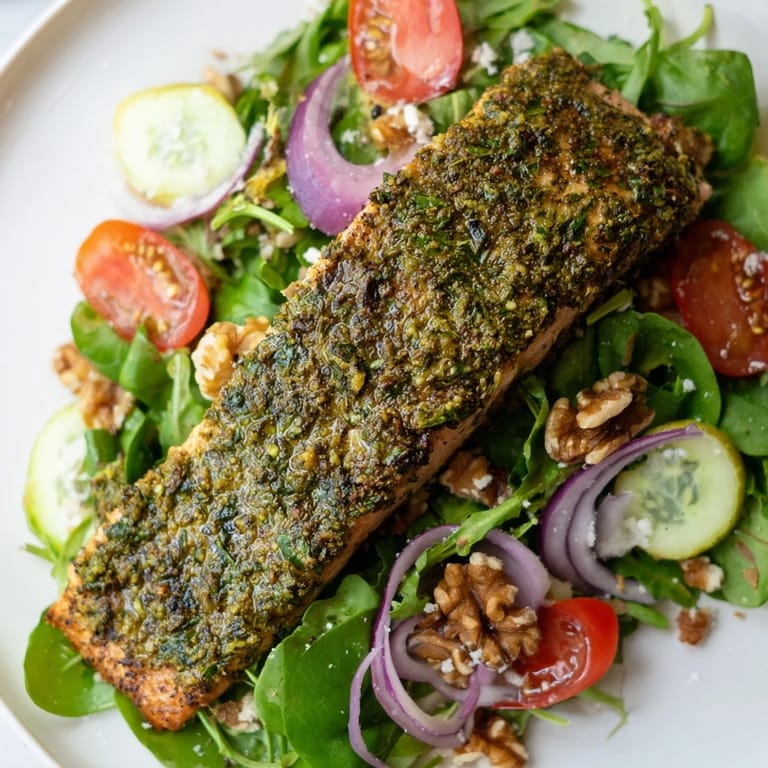
- Mash together olive oil, mustard, lemon juice, and the three fresh herbs—you want a loose, fragrant paste that smells incredible before it even hits the fish.
- Coat the salmon:
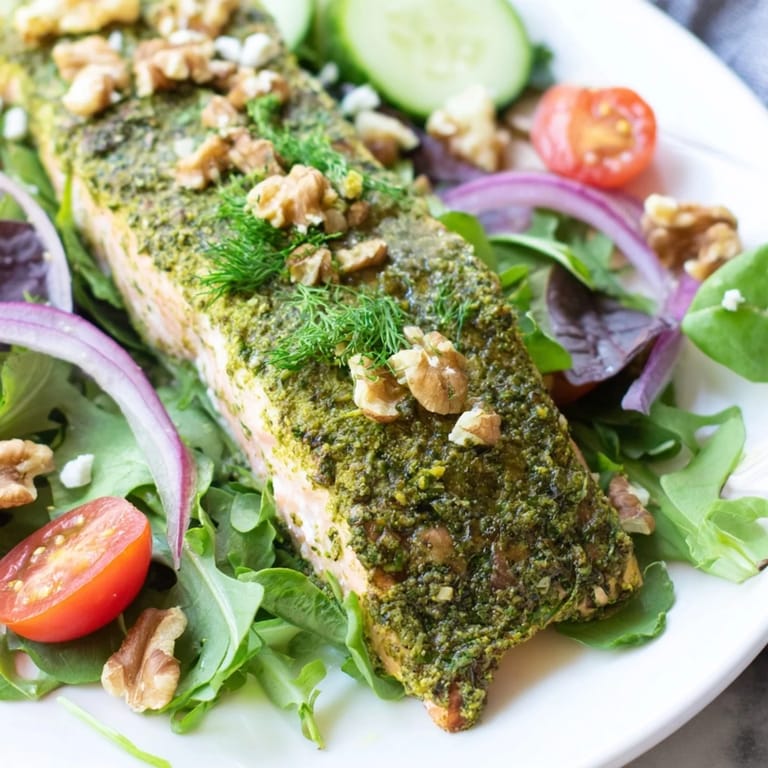
- Pat the fillets dry, lay them on the sheet, and spread the herb mixture evenly over the top like you're frosting a cake, making sure every edge gets some.
- Bake until just cooked:
- Watch for the moment when the fish flakes easily with a fork—around 12 to 15 minutes depending on thickness. Overcooking is the only real mistake here, so start checking at the 12-minute mark.
- Build the salad:
- While the salmon bakes, toss your greens with tomatoes, cucumber, red onion, and any nuts or cheese you're using—nothing needs dressing yet.
- Whisk the vinaigrette:
- Combine olive oil, vinegar, honey, and mustard in a small bowl and taste it; it should be balanced, not too sharp.
- Dress and plate:
- Drizzle the vinaigrette over the salad and toss gently, then divide among plates and top each pile with a warm salmon fillet. Serve right away so the warmth and cool greens can do their thing together.
 Pin It
 There's a moment when warm salmon meets cool, peppery greens for the first time that feels almost meditative. It's simple food that somehow tastes like you've taken real care with it, and that matters more than you'd think.
Why Warm Fish and Cold Greens Matter
The temperature contrast isn't just texture—it's what makes this dish work as a complete meal. The warmth of the salmon softens the greens slightly and helps the vinaigrette distribute, while the cool salad keeps everything balanced and prevents the whole plate from feeling heavy. Once you understand this, you can build on it—add quinoa if you want substance, swap in different greens based on the season, play with the herb combinations.
Building Your Herb Crust
The herb paste is the heart of this recipe, and it's incredibly forgiving. If you don't have all three herbs, use what you have—even just dill and parsley will transform the salmon. The mustard in the crust is subtle but important; it keeps the herbs from tasting one-dimensional and adds a faint warmth that somehow enhances the fish's natural flavor without announcing itself.
Variations and Personal Touches
This recipe is a starting point, not a rule. I've made it with tarragon instead of dill, added a touch of maple syrup to the crust for sweetness, and once tossed some pomegranate seeds into the salad because they were in season and caught my eye. The beauty is that salmon is neutral enough to handle experimentation, and the formula—herb-crusted fish over fresh greens with vinaigrette—is flexible enough to grow with you.
- Try topping with avocado or thinly sliced radishes for extra crunch and freshness.
- Substitute trout, halibut, or even chicken breast if salmon isn't available or within budget.
- Make it heartier by adding cooked quinoa, farro, or roasted potatoes to the salad base.
 Pin It
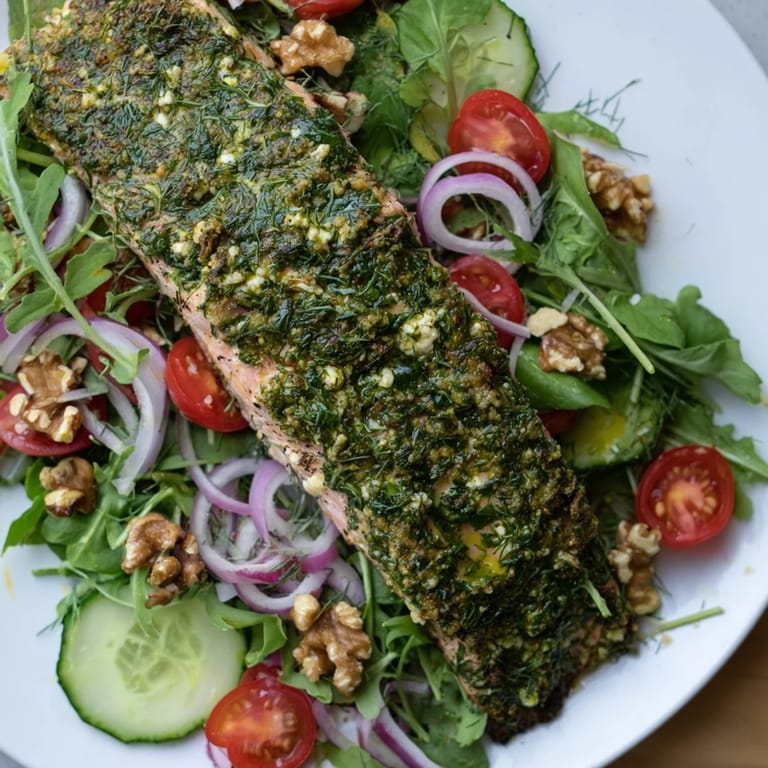
 This is the kind of meal that reminds you why cooking at home matters—it takes less than an hour, tastes like you've done something fancy, and leaves you feeling actually satisfied. Make it once and it becomes the recipe you return to.
Questions & Answers
- → What herbs are used in the crust?
Parsley, dill, and chives combine with garlic powder to create the aromatic herb crust on the salmon.
- → Can I substitute the salmon with another fish?
Yes, trout or other firm fish can be used as alternatives while maintaining the dish's texture and flavor.
- → Is it necessary to use nuts in the salad?
Nuts like toasted walnuts or almonds are optional but add a nice crunch and depth to the salad.
- → How is the vinaigrette prepared?
The vinaigrette is a simple mix of extra-virgin olive oil, white wine vinegar or lemon juice, honey or maple syrup, Dijon mustard, salt, and pepper, whisked until combined.
- → What salad greens work best for this dish?
Mixed greens such as arugula, spinach, and romaine provide a crisp, fresh base that complements the warm salmon.
- → Can this dish be made gluten-free?
Yes, all ingredients are naturally gluten-free, making this suitable for gluten-free diets when using certified products.