 Pin It
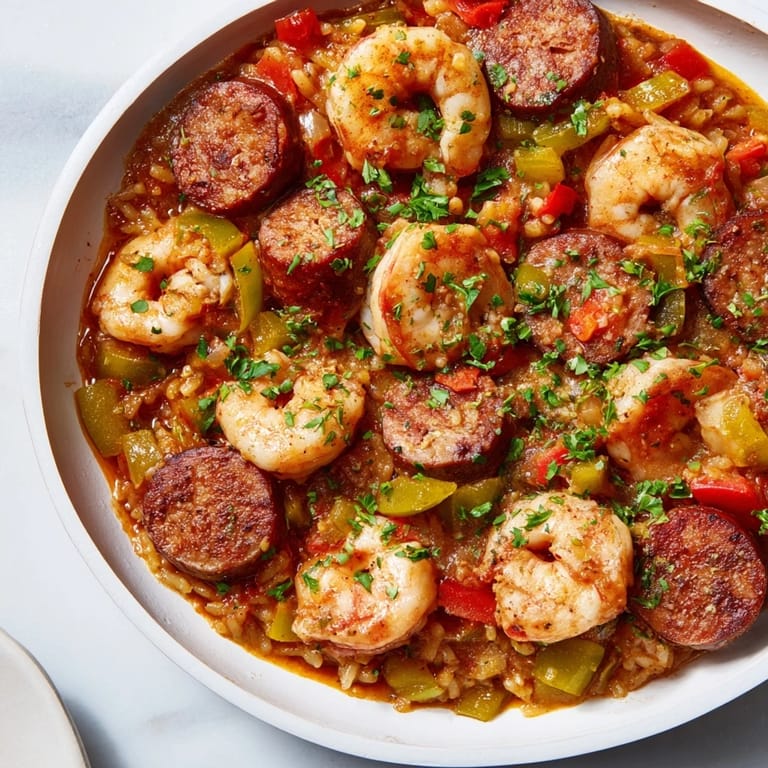
 The first time I made jambalaya, I was standing in my kitchen on a gray November afternoon, trying to recreate something I'd tasted at a friend's dinner party in New Orleans. I didn't have the recipe, just a vague memory of smoke and spice and the way everything came together in one glorious skillet. What started as an ambitious experiment turned into my most reliable weeknight dinner—the kind that makes the whole kitchen smell like a celebration, even on ordinary Tuesdays.
I made this for my sister's book club last spring, and watching everyone go quiet for a moment after their first bite told me everything. She asked for the recipe before dessert was even served, and now it's the dish she makes when she wants to feel like she's cooking something special but doesn't want the stress. That's the magic of a good jambalaya—it feels restaurant-quality but tastes like home.
Ingredients
- Andouille sausage (8 oz, sliced): Smoked sausage brings a savory depth that you can't rush or skip—look for real andouille if you can, but good smoked sausage works beautifully too.
- Large shrimp (8 oz, peeled and deveined): Buy them frozen if fresh aren't available; just thaw them before cooking so they stay tender.
- Yellow onion, red bell pepper, green bell pepper, and celery: This trio is the holy trinity of Creole cooking—the vegetables create the flavor foundation everything else builds on.
- Garlic (3 cloves, minced): Fresh garlic makes a real difference; jarred garlic won't give you the same brightness.
- Long-grain white rice (1 cup): Don't use short-grain or arborio rice here—you want rice that stays distinct and fluffy, not creamy.
- Low-sodium chicken broth (1 2/3 cups): The liquid ratio is crucial; too much and you'll end up with mush, too little and the rice stays hard.
- Diced tomatoes (1 can, undrained): Keep the juice—it's part of your cooking liquid and adds acidity that brightens everything.
- Smoked paprika, dried thyme, oregano, cayenne, black pepper, and salt: These spices bloom when they hit the hot oil and rice, creating that unmistakable Creole character.
- Olive oil (2 tablespoons total): Use a good quality oil—it carries the flavor of the sausage and vegetables.
- Fresh parsley (2 tablespoons, chopped): A whisper of brightness at the end; add it right before serving so it doesn't wilt away.
Tired of Takeout? 🥡
Get 10 meals you can make faster than delivery arrives. Seriously.
One email. No spam. Unsubscribe anytime.
Instructions
- Brown the sausage foundation:
- Heat a tablespoon of oil in your skillet over medium-high heat and let the sausage slices get golden and slightly crispy on the edges—you're building flavor here. Remove it to a plate and set it aside; you'll bring it back into the party in a moment.
- Soften your aromatic base:
- Add the remaining oil and let your onions, peppers, and celery relax in the heat for about 4 minutes, stirring occasionally. When they start to become translucent and smell absolutely incredible, add your garlic and cook just until fragrant—about a minute more.
- Toast the rice and spices:
- Stir in the raw rice, paprika, thyme, oregano, cayenne, pepper, and salt, letting everything coat with oil and toast for a minute. This small step is where the depth of flavor comes from—don't skip it.
- Return the sausage and simmer:
- Add the browned sausage back in, then pour the tomatoes with all their juice and the chicken broth over everything. Stir well, bring it to a gentle simmer, then lower the heat to medium-low, cover with a lid, and let it cook untouched for about 20 minutes.
- Crown with shrimp:
- After 20 minutes, the rice should be nearly tender and most of the liquid absorbed. Arrange the shrimp on top, cover again, and let them cook for another 5 to 7 minutes until they turn pink and curl slightly—don't overcook them or they'll toughen.
- Fluff and finish:
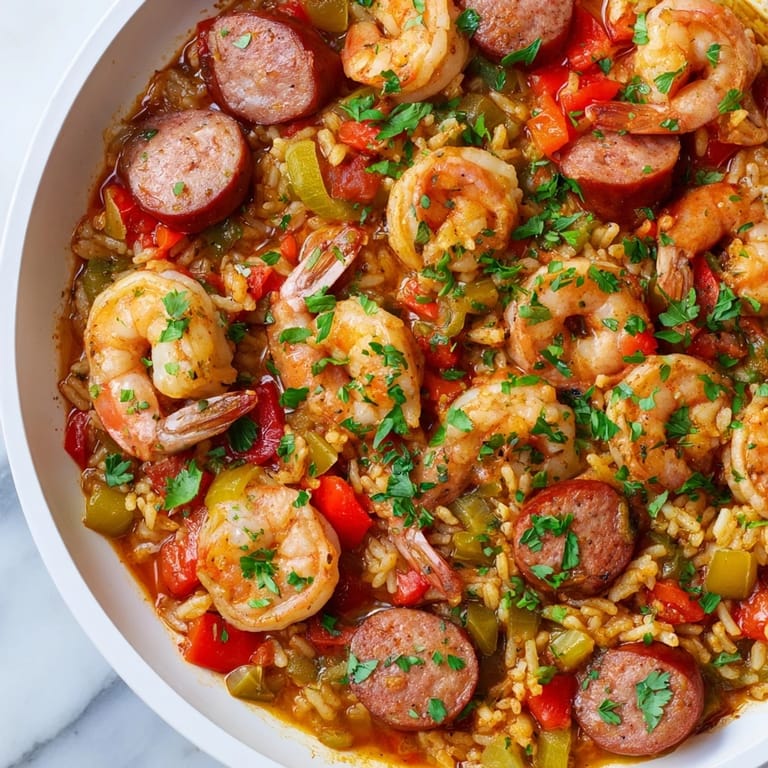
- Turn off the heat, gently fluff everything with a fork so the shrimp gets distributed through the rice, then scatter the fresh parsley over top and serve immediately while everything is still steaming.
 Pin It
 The moment I realized this dish had become something special wasn't when I was cooking—it was when my neighbor smelled it wafting over from my kitchen and showed up at my door asking what I was making. That's when I knew I'd found something worth making again and again.
Building Your Flavor Layers
Jambalaya isn't about dumping everything in and hoping for the best; it's about layers. The sausage browns first and leaves behind flavor. The vegetables soften slowly and release their sweetness. The spices bloom in hot oil before the rice ever touches the liquid. Each step matters because each step is contributing something irreplaceable. Understanding this transforms you from following a recipe to actually cooking.
Temperature and Timing Control
I learned the hard way that medium-high heat for browning and medium-low for simmering aren't suggestions—they're the difference between a skillet that smells amazing and a pot that boils dry. Your heat matters more than your timer. Start checking the rice at the 18-minute mark; if the liquid is mostly absorbed and the rice is tender, you're ready for the shrimp. If there's still liquid pooling, give it another minute or two.
Serving and Pairing Wisdom
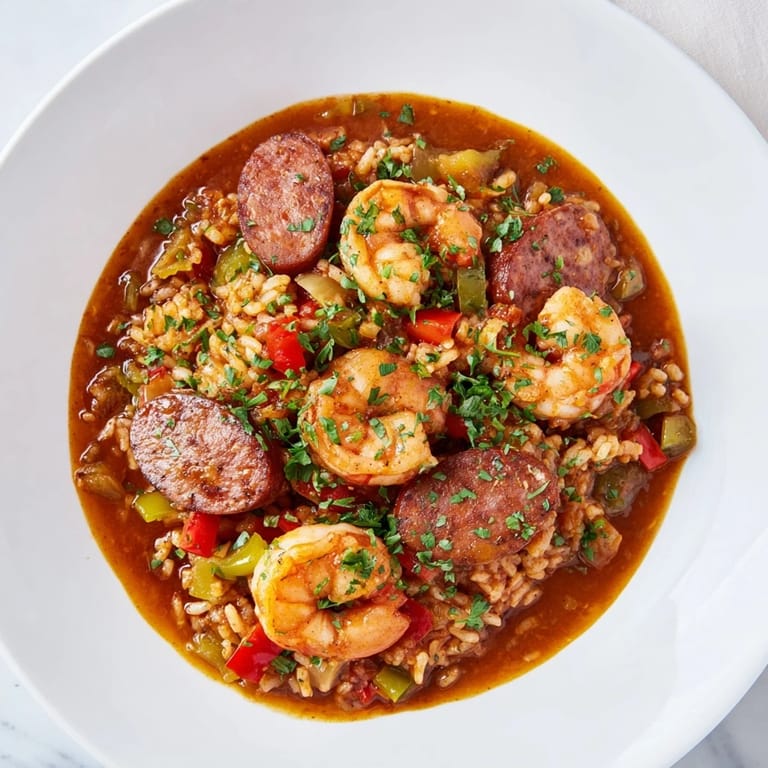
This dish shines on its own, but a piece of crusty bread is never a mistake—something to soak up any remaining broth and wipe the plate clean. A crisp white wine like Sauvignon Blanc cuts through the richness beautifully, and if you like heat, hot sauce on the side lets everyone choose their own spice level without remaking the whole dish.
- Make extra and eat the leftovers cold the next day mixed with a little mayo for the best sandwich you didn't know you were missing.
- If someone at your table prefers chicken to shrimp, you can absolutely swap it—just cut it into small pieces so it cooks through in those final minutes.
- Serve it the moment it's done; jambalaya is best steaming hot and fresh from the skillet.
 Pin It
 This is the kind of recipe that gets better each time you make it because you learn what your stove does, what your taste buds want, and how much comfort one skillet can hold. Make it once, and you'll be making it forever.
Questions & Answers
- → Can I substitute shrimp with another protein?
Yes, chicken can be used as a substitute, or you can combine both shrimp and chicken for varied textures.
- → How do I make the dish spicier?
Add extra cayenne pepper or serve alongside your favorite hot sauce to increase the heat level.
- → What type of rice is best for this skillet?
Long-grain white rice works best, as it absorbs flavors well while maintaining a fluffy texture.
- → Can I prepare this in advance?
This skillet is best enjoyed fresh, but leftovers can be refrigerated and gently reheated within two days.
- → What sides complement this skillet meal?
Serve with crusty bread and a crisp white wine like Sauvignon Blanc for a complete dining experience.
- → Is this dish suitable for dairy-free diets?
Yes, it contains no dairy ingredients, making it suitable for those avoiding dairy.