 Pin It
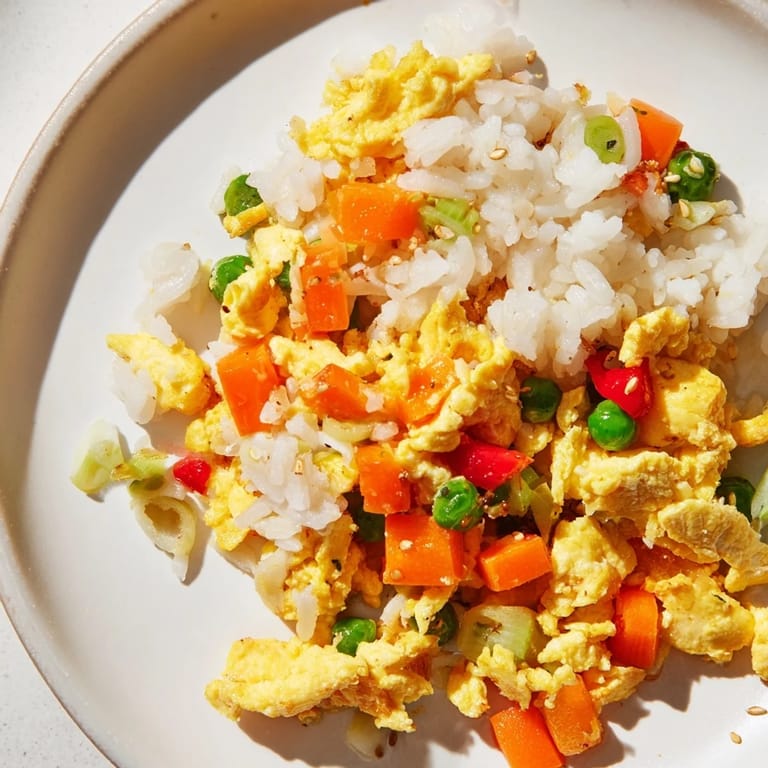
 There's something deeply satisfying about turning yesterday's rice into tonight's dinner. One evening, I had a half-container of cold rice sitting in the back of my fridge and exactly thirty minutes before guests arrived. A scramble through the vegetable drawer yielded carrots, peas, and bell peppers, and suddenly I wasn't stressed—I was cooking something that felt both elegant and effortless. That's when egg fried rice became my go-to move for those moments when you need something delicious without the fuss.
I remember standing at my stove on a random Tuesday afternoon, wok handle warm under my palm, watching the eggs puff and scramble into soft, golden curls. My roommate wandered in drawn by the smell—garlic, sesame, that irresistible aroma of something cooking fast—and before the rice even hit the pan, she was already asking for a bowl. That's when I realized this wasn't just quick weeknight food; it was the kind of dish that makes people linger in the kitchen.
Ingredients
- Cooked leftover rice (2 cups, day-old and cold): Cold rice is essential because it won't clump or turn mushy; fresh warm rice will steam and stick together, so plan ahead or spread warm rice on a plate to cool quickly.
- Large eggs (2): Beat them gently in a bowl with just a pinch of salt, and they'll scramble into silky, tender curds that coat every grain.
- Diced carrots (1/2 cup): These provide sweetness and texture; dice them small so they soften quickly and distribute evenly throughout.
- Frozen peas (1/2 cup, thawed): Thaw them before cooking so they don't cool down the pan and they'll stay plump and tender rather than becoming mushy.
- Chopped scallions (1/4 cup): Split this between cooking (for background flavor) and garnish (for a fresh, bright finish that makes a real difference).
- Diced bell pepper (1/2 cup, optional): Adds sweetness and crunch; any color works, though red or yellow are milder than green.
- Soy sauce (2 tablespoons): This is your flavor backbone, so taste as you go and add more if it feels flat—low-sodium lets you control the salt level.
- Sesame oil (1 teaspoon): A little goes a long way; this amber-colored oil adds an unmistakable nutty aroma that elevates everything.
- Ground white or black pepper (1/4 teaspoon): White pepper is milder and traditional here, but use what you have—it's all about finishing touches.
- Vegetable oil (2 tablespoons): Use a neutral oil that can handle high heat without smoking; this is just your cooking medium, not the star.
Tired of Takeout? 🥡
Get 10 meals you can make faster than delivery arrives. Seriously.
One email. No spam. Unsubscribe anytime.
Instructions
- Get everything prepped and ready:
- Dice your vegetables into bite-sized pieces, thaw the peas if frozen, and beat your eggs in a small bowl with a fork until pale and foamy. This takes maybe five minutes but transforms the whole cooking process from chaotic to smooth.
- Scramble the eggs first:
- Heat one tablespoon of oil in your wok or large skillet over medium-high heat until it shimmers. Add the beaten eggs and let them sit undisturbed for just a few seconds before stirring gently, pushing them around until they form soft, custard-like curds rather than tiny dry bits. Transfer them to a plate and set aside—they'll finish cooking when they return to the pan.
- Quick-sauté the harder vegetables:
- Add the remaining tablespoon of oil to the same hot pan and toss in the carrots and bell pepper, stirring constantly for about two minutes. You want them tender but still with some bite, not soft all the way through.
- Add the quick-cooking vegetables:
- Stir in the thawed peas and half of your chopped scallions, cooking for just one minute more until everything is warm and fragrant.
- Bring in the rice and break up any clumps:
- Add your cold leftover rice directly to the pan, using your spatula to break up any chunks that formed during storage. Stir-fry everything together for two to three minutes, pressing the rice against the hot pan surface to toast it slightly and help each grain separate and warm through evenly.
- Dress it with soy sauce and sesame oil:
- Drizzle the soy sauce and sesame oil over the rice and toss everything together thoroughly, making sure every grain gets coated with that savory, nutty flavor. This is where the dish really comes alive.
- Return the eggs and finish strong:
- Add the scrambled eggs back to the pan and stir-fry for another minute until everything is hot and unified. Taste it now—add more pepper or salt if needed, trusting your palate more than the recipe.
- Garnish and serve hot:
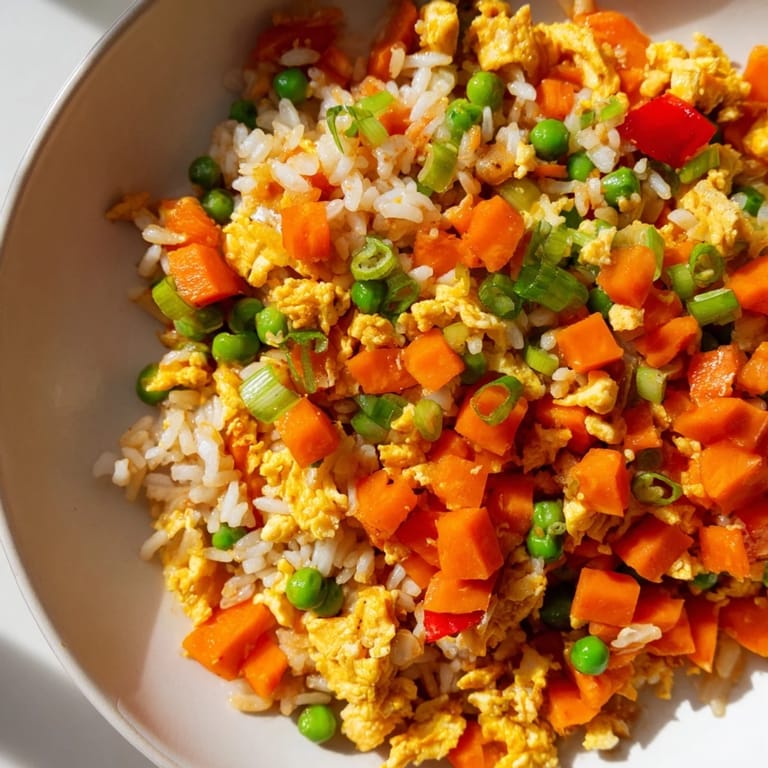
- Remove from heat, scatter the remaining fresh scallions over the top, and serve immediately while everything is still steaming and fragrant.
 Pin It
 There's a moment in every good stir-fry when everything comes together—when the rice stops looking separate and becomes unified, when the smell shifts from individual ingredients into something whole and harmonious. That's the moment you know you've nailed it, and suddenly what started as leftovers feels like an accomplishment worth celebrating.
When to Reach for This Dish
Egg fried rice is your friend on nights when you're hungry but too tired for anything complicated, or when unexpected guests text that they're five minutes away. It's also surprisingly good cold the next day straight from the fridge—perfect for lunch if you have any leftover. The beauty of it is that it feels fancy enough for a casual dinner party but everyday enough that making it on a random Tuesday doesn't feel like a production.
Playing with Flavors and Variations
Once you master the basic technique, this dish becomes your canvas. I've stirred in leftover roasted chicken, added shrimp from the freezer, crumbled in crispy tofu, or tossed in broccoli florets when carrots seemed boring. A small pinch of minced garlic or ginger when you're sautéing the vegetables adds dimension without overwhelming the dish. Some nights I finish with a tiny drizzle of chili oil for heat, or a squeeze of lime juice for brightness that makes people lean back and wonder what makes it taste like that.
Building Your Practice
The first time you make this, follow the steps as written so you understand how the technique works and how fast everything happens once you start cooking. After that, trust your instincts—if you want more garlic, add garlic; if you prefer your vegetables softer, sauté them longer; if you're vegetarian, skip the soy sauce consideration and just use whatever you have. This dish teaches you that cooking doesn't always require perfection, just presence and a hot pan.
- Keep your ingredients prepped and within arm's reach before you turn on the heat, because the actual cooking happens in minutes.
- If you don't have sesame oil, use a tiny bit less soy sauce instead—it's better to be underseasoned and taste it than oversalted from the start.
- Leftover fried rice keeps beautifully in the fridge for three days, and reheating it in a hot pan with a splash of water brings it back to life perfectly.
 Pin It
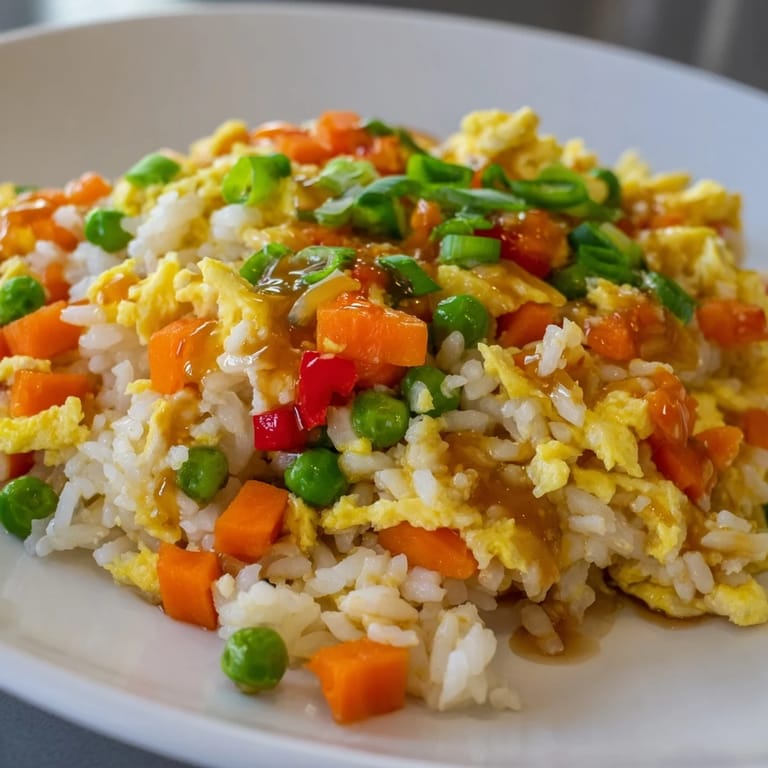
 Egg fried rice is proof that the best meals don't come from complicated recipes or rare ingredients; they come from technique, heat, and knowing how to listen to your food as it cooks. Make this whenever you need something fast and honest, and watch how often people ask you for the recipe.
Questions & Answers
- → What type of rice works best for this dish?
Day-old cooked rice works best as it’s drier and prevents clumping during stir-frying.
- → Can I substitute vegetables in this dish?
Yes, vegetables like snap peas, corn, or broccoli can be used depending on preference and availability.
- → How do I prevent eggs from overcooking?
Quickly scramble the eggs over medium-high heat until just set, then remove them before combining with rice.
- → Is there a way to enhance flavor beyond soy sauce?
A pinch of garlic or ginger added when sautéing vegetables adds extra aromatic depth.
- → What oils are recommended for stir-frying?
Neutral oils like vegetable oil are preferred; sesame oil is added at the end for its distinctive flavor.