 Pin It
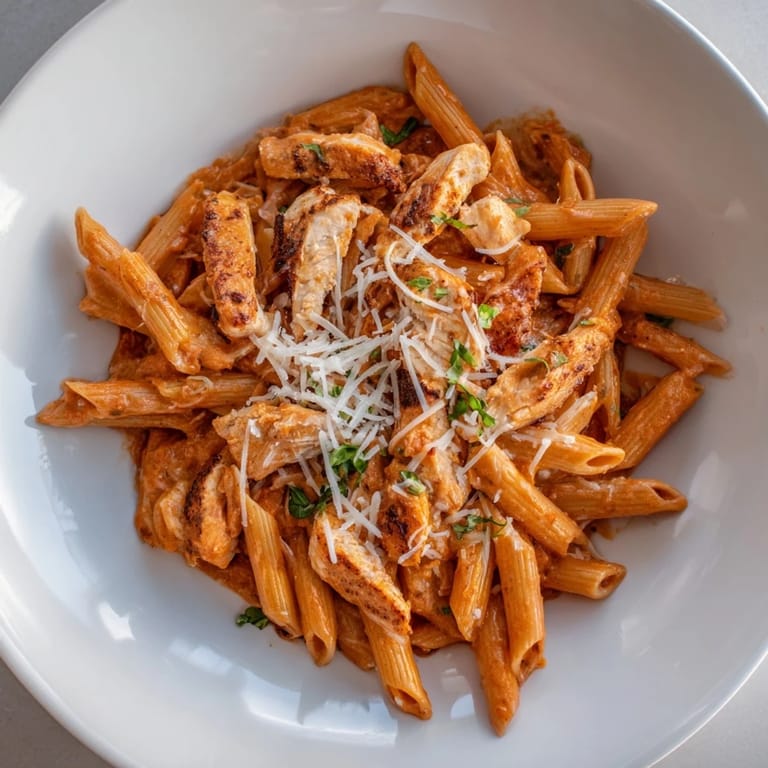
 There's something about the smell of garlic hitting hot butter that makes you feel like you're in a Roman kitchen, even if you're just in your apartment on a Tuesday night. I discovered this pasta years ago when a friend casually mentioned she'd throw together chicken and tomato cream sauce on nights when she needed something that tasted fancy but didn't demand hours of work. The first time I made it, I was skeptical—how could something this simple taste so restaurant-quality? Twenty-five minutes later, I was twirling pasta on my fork and understanding why she'd made it a regular rotation.
I remember making this for my partner after a particularly long week, and watching their face light up when they tasted it was the kind of small kitchen victory that reminds you why cooking matters. There was this moment of quiet satisfaction where nothing needed to be said—the food did the talking.
Ingredients
- Penne pasta (12 oz): Use a sturdy shape that holds onto sauce; penne's ridges are your secret weapon for catching all that creamy goodness.
- Boneless, skinless chicken breasts (1 lb): Pound them to even thickness before cooking so they finish at the same time and stay juicy.
- Salt and black pepper: Season generously at each step—this is what builds flavor, not one heavy-handed shake at the end.
- Olive oil (1 tbsp): A good quality oil makes a difference when you're cooking so few ingredients.
- Unsalted butter (2 tbsp): This creates the base for your sauce and carries the flavor of everything else.
- Yellow onion (1 medium, finely chopped): The sweetness balances the acidity of tomatoes; don't skip the chopping step.
- Garlic cloves (3, minced): Fresh garlic only here—the timing and aroma matter more than quantity.
- Red pepper flakes (1/2 tsp, optional): A tiny amount adds warmth and depth without heat; taste as you go.
- Crushed tomatoes (14 oz can): This is the backbone; San Marzano varieties sing in this dish.
- Heavy cream (1/2 cup): Adds silk and richness; pour it slowly and stir constantly to avoid breaking.
- Freshly grated parmesan (1/3 cup): Grate it yourself right before adding—pre-grated cheese won't melt smoothly.
- Fresh basil (1/2 cup, chopped): Add half during cooking and reserve the rest for garnish to keep that bright, fresh basil flavor alive.
Tired of Takeout? 🥡
Get 10 meals you can make faster than delivery arrives. Seriously.
One email. No spam. Unsubscribe anytime.
Instructions
- Get Your Pasta Going:
- Fill a large pot with salted water and bring it to a rolling boil—this is the only time salt goes in the water, and it should taste like seawater. Drop in penne and cook until just shy of tender; you want it to have a tiny bit of resistance when you bite it because it'll continue softening in the sauce.
- Prep Your Chicken:
- While water heats, pat chicken breasts dry with paper towels and sprinkle both sides generously with salt and pepper. This simple step is everything—moisture is the enemy of a golden crust.
- Sear the Chicken:
- Heat olive oil in a large skillet over medium-high heat until it shimmers. Place chicken breasts in the pan and resist the urge to move them for five to six minutes—listen for that satisfying sizzle and watch for the golden-brown color creeping up the sides. Flip and cook another five to six minutes until the internal temperature reaches 165°F, then transfer to a plate to rest.
- Build Your Flavor Base:
- In the same skillet, melt butter over medium heat and add your chopped onion. You'll hear a gentle sizzle and smell sweetness developing as the onion turns translucent over three to four minutes. Add minced garlic and red pepper flakes, cooking for just one minute until your kitchen smells like an Italian grandmother's kitchen.
- Make the Sauce:
- Stir in crushed tomatoes and let everything simmer for five minutes while the flavors mingle. You'll notice the sauce darkening slightly and becoming more cohesive. Reduce heat to low and pour in heavy cream slowly while stirring constantly—this prevents curdling and creates that silky texture.
- Add the Finishing Touches:
- Once the cream is fully combined and the sauce has thickened slightly after two to three minutes, stir in parmesan cheese and half your fresh basil until the cheese melts completely. Taste and adjust salt and pepper as needed.
- Bring It All Together:
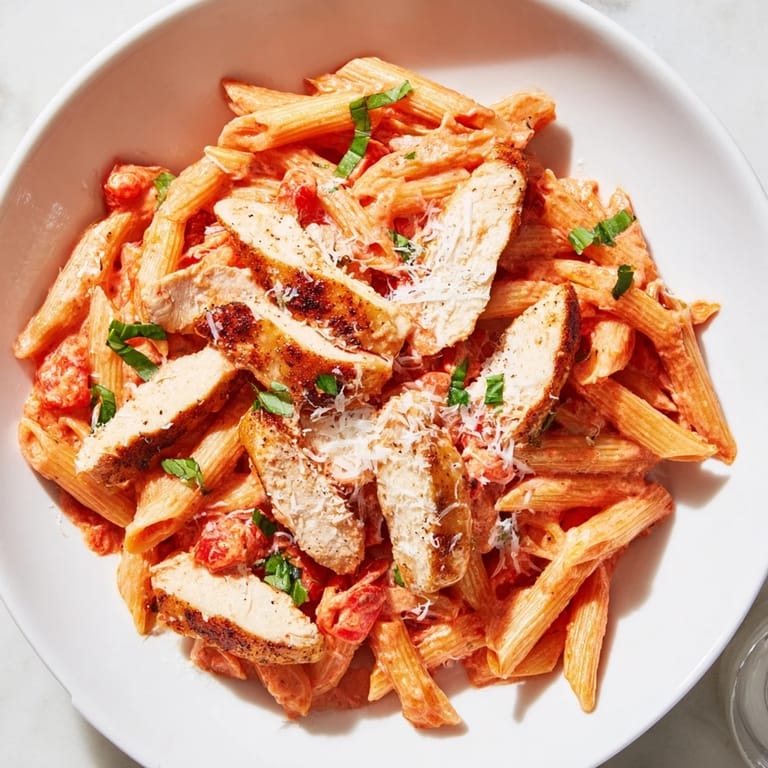
- Slice your rested chicken thinly and add it back to the skillet along with your drained pasta. Toss everything gently to coat, adding splashes of reserved pasta water until the sauce coats the noodles with a glossy finish—think silky, not soupy.
- Serve with Joy:
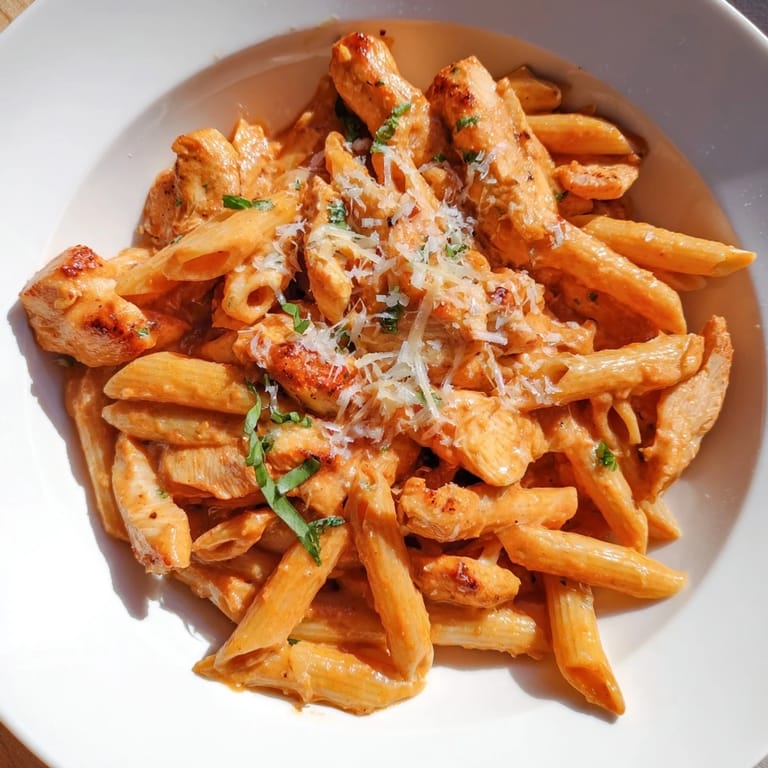
- Transfer to plates or bowls, garnish with remaining fresh basil and extra parmesan, and eat while everything is still warm and the basil is still bright.
 Pin It
 The best version of this dish came together the night my mom visited, and I made it almost without thinking—muscle memory from having made it so many times. She took one bite and said simply, 'You didn't tell me you learned to cook like this,' and that moment of quiet pride reminded me that the best recipes are the ones you make so often they become part of your kitchen language.
The Magic of Timing
Everything in this recipe happens in the same twenty-five minutes, which means you need to move deliberately but not frantically. Start your pasta water first so it's already boiling when you're ready, and have all your ingredients prepped before you begin cooking—chopped onions, minced garlic, measured cream sitting out. The rhythm matters; the pasta finishes around the same time the sauce reaches its perfect consistency, and the chicken comes off the heat just as you need it. This isn't magic, it's just cooking with intention.
Variations That Work
The skeleton of this recipe is forgiving enough to welcome changes. I've made it with spinach instead of basil when fresh herbs weren't in the house, adding it right at the end so it wilts into the sauce with grace. A splash of white wine after sautéing the onions deepens everything, though it's optional if you don't have it open. For vegetarian nights, roasted mushrooms or sautéed zucchini take the place of chicken without losing the dish's soul, just adjust your cooking time slightly.
Why This Pasta Tastes Like Sunday Dinner
There's comfort in a creamy tomato sauce that feels indulgent but approachable, in chicken that's tender enough to forget you're eating protein, in fresh basil that brings brightness at the very end. This is food that takes care of you on difficult days and tastes like celebration on good ones, which might be the truest measure of a recipe worth keeping.
- If your sauce seems too thick, thin it with pasta water a tablespoon at a time until it flows gently around the noodles.
- Taste constantly as you cook—salt is your best friend, but add it gradually so you don't overshoot.
- Make this again soon, because the second time you'll notice things the first time taught you, and it'll taste even better.
 Pin It
 This pasta has quietly become one of those recipes I make without thinking, the way you might hum a song you've known for years. It's a reminder that the best meals don't need complexity, just attention and a few minutes of your evening.
Questions & Answers
- → How do I keep the chicken tender?
Cook chicken breasts over medium-high heat until golden and fully cooked, then let them rest before slicing to retain juice.
- → Can I use other pasta shapes?
Penne is ideal for holding the creamy sauce, but rigatoni or fusilli also work well to trap flavors.
- → How to adjust the spice level?
Red pepper flakes add mild heat; adjust quantity or omit for a milder taste without losing flavor.
- → What can substitute fresh basil?
Spinach or oregano can provide a different but complementary herbal note if basil isn’t available.
- → How to get a silky sauce texture?
Reserve some pasta water to loosen the sauce as you toss pasta and chicken together for a smooth consistency.