 Pin It
 The first time I made this, I was standing in my kitchen on a random Tuesday evening, craving sushi but completely out of enthusiasm for rolling. I had leftover rotisserie chicken, some rice cooling on the counter, and suddenly thought: what if I just baked it all together like a casserole? Twenty minutes later, golden cheese bubbling on top, and my partner walked in asking what smelled like a fusion dream. That moment sparked an obsession with this dish—it's become my go-to when I want something that tastes impressive but doesn't demand the precision sushi usually requires.
I made this for my sister's potluck last spring, and watching people go back for thirds was so quietly thrilling. Someone asked if I'd ordered it from a restaurant, and I remember grinning while explaining it was just rice, chicken, and cheese in a baking dish. The way her eyes widened when she realized how simple it actually was made the whole dish feel even more special—proof that sometimes the best food is the kind that looks fancier than it tastes to make.
Ingredients
- Sushi rice (2 cups): This is the foundation, and rinsing it properly makes all the difference—you want that starchy water gone so the grains stay separate and fluffy instead of clumping into a mushy mess.
- Water (2 1/2 cups): The ratio matters here; too much and you'll end up with soggy rice that falls apart when you scoop it.
- Rice vinegar (2 tbsp), sugar (1 tbsp), salt (1 tsp): These three ingredients together create that signature sushi rice flavor—tangy, slightly sweet, and seasoned just right.
- Cooked chicken breast (2 cups): Rotisserie chicken saves time and adds deeper flavor than plain boiled chicken; shred or dice it depending on your texture preference.
- Mayonnaise (1/2 cup): Kewpie mayo is creamier and slightly sweet, which makes this dish taste authentically Japanese-inspired rather than just creamy.
- Cream cheese (2 tbsp): This adds richness and helps bind the chicken mixture into something cohesive and luxurious.
- Sriracha (1 tbsp): The heat is subtle at this amount, but it builds flavor without overwhelming; adjust based on your spice tolerance.
- Soy sauce (1 tbsp): Umami happens here—this salty, savory element ties the whole filling together.
- Green onions (2): Thinly sliced and mixed into the chicken, they add freshness and a mild onion bite that prevents the dish from feeling one-note.
- Mozzarella cheese (1 cup): It melts evenly and gets gloriously golden; this is what makes the topping irresistible.
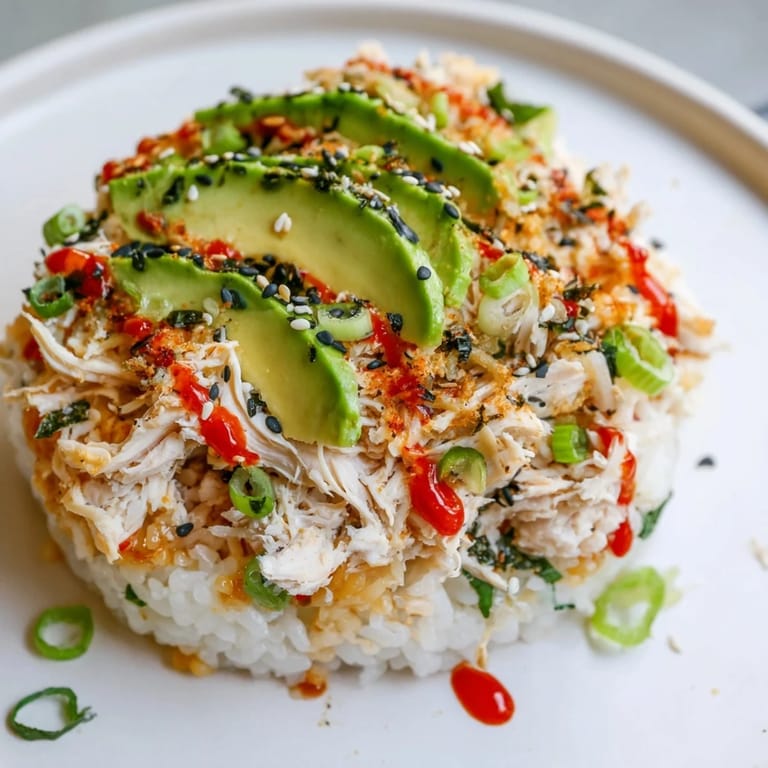
- Furikake seasoning (2 tbsp): This Japanese seasoning blend of seaweed, fish, and sesame is what makes people ask what your secret ingredient is.
- Avocado (1): Added fresh after baking so it stays creamy and doesn't turn dark and mushy; this is non-negotiable for that sushi feeling.
- Nori sheets: Cut into strips or use snack-size pieces for authentic texture and that oceanic sushi moment.
- Toasted sesame seeds (1 tbsp): The toasting step matters—it releases the nutty flavor that makes this sing.
- Extra sriracha and mayonnaise: For drizzling at the end, giving people the option to customize their heat level.
Tired of Takeout? 🥡
Get 10 meals you can make faster than delivery arrives. Seriously.
One email. No spam. Unsubscribe anytime.
Instructions
- Get your oven and dish ready:
- Preheat your oven to 400°F and lightly grease a 9x9-inch baking dish with a little oil or cooking spray. This is your foundation—a clean, ready stage makes everything else feel organized.
- Cook the rice properly:
- Rinse your sushi rice under cold running water, stirring gently with your fingers, until the water runs completely clear—this removes excess starch that would make the rice sticky and heavy. Add it to a pot with 2 1/2 cups water, bring to a boil uncovered, then cover and simmer on low heat for exactly 15 minutes. Remove from heat, keep the lid on, and let it rest for 10 minutes while the steam finishes cooking it through.
- Season the rice with the vinegar mixture:
- While the rice is resting, whisk together rice vinegar, sugar, and salt in a small bowl until the sugar and salt completely dissolve. This is your sushi seasoning base—never skip dissolving it first or you'll get gritty pockets. Gently fold this mixture into the cooked rice using a wooden spoon or rice paddle, being careful not to smash the grains; you want to coat them, not compress them.
- Mix the creamy chicken filling:
- In a medium bowl, combine your cooked chicken (shredded or diced, your choice), mayonnaise, softened cream cheese, sriracha, soy sauce, and thinly sliced green onions. Stir until everything is evenly incorporated and the texture is creamy and cohesive, almost like a luxurious chicken salad.
- Build your layers:
- Spread the seasoned rice in an even layer across your prepared baking dish, pressing it gently so it's compact but not crushed. Sprinkle 1 tablespoon of furikake over this rice layer, then carefully spread the chicken mixture evenly on top in a smooth layer.
- Add the cheese and final topping:
- Sprinkle the shredded mozzarella cheese evenly over the chicken, followed by the remaining tablespoon of furikake. This layering creates pockets of savory, umami-rich flavor throughout.
- Bake until golden and bubbly:
- Slide the dish into your preheated oven and bake for 20 to 25 minutes, watching until the cheese is melted and the edges show a light golden color. You'll start smelling that amazing savory-cheesy aroma around minute 18—that's your cue to peek.
- Finish and serve:
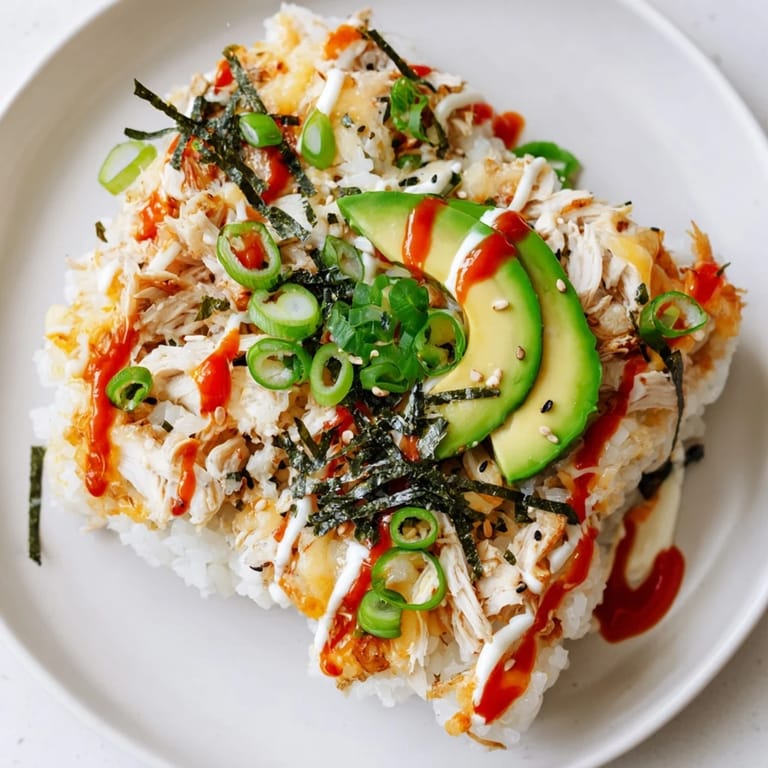
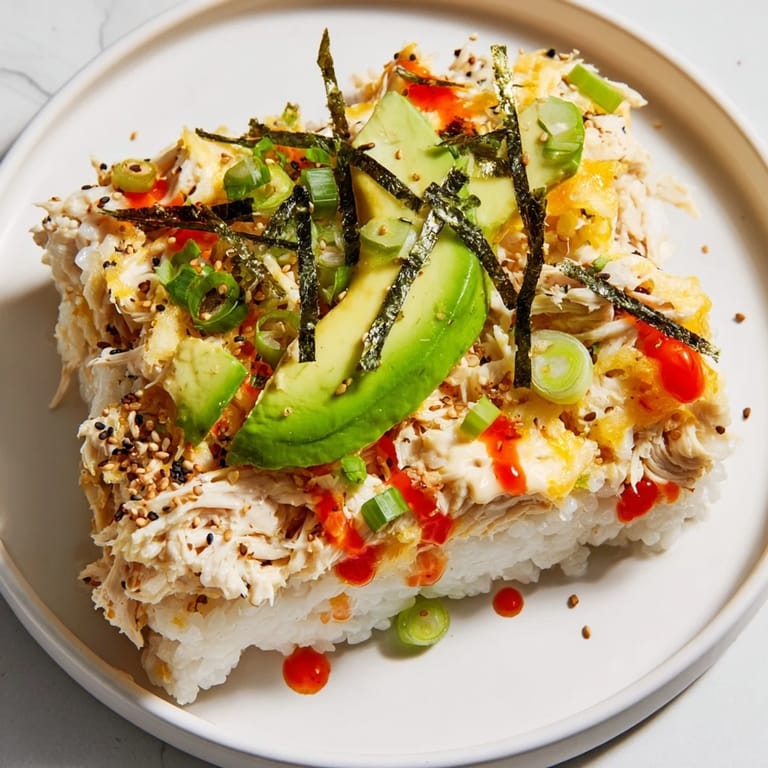
- Remove the dish from the oven and let it cool for about 5 minutes so everything sets slightly. Top with fresh avocado slices, nori strips, toasted sesame seeds, and drizzle with extra sriracha and mayonnaise for those who want it. Scoop portions onto small plates or let people eat it straight from nori sheets for an interactive, fun meal.
 Pin It
 I remember my nephew asking if he could eat sushi bake for his birthday dinner instead of a traditional birthday cake meal, and I realized this dish had quietly become something people crave, not just something they eat because it's convenient. Watching someone's face light up when they realize they actually enjoy something they thought they'd only tolerate made me understand why this recipe matters—it's approachable enough for weeknights but special enough to feel like a celebration.
Why Rice Matters Here
The sushi rice is honestly the star of this dish, not just a base. When you season it with that vinegar, sugar, and salt mixture, you're creating something with its own flavor identity—it's not just plain rice holding everything together. The way the grains stay separate and absorb that seasoning while the casserole bakes means every bite tastes intentional and balanced, never bland or one-dimensional.
The Magic of Layering
Baking instead of rolling lets you build layers of flavor that get to know each other while everything heats through. The mayonnaise-based chicken mixture stays creamy, the cheese melts into pockets of richness, and the furikake seasons from the inside out. This approach also means you can make it as casual or plated as you want—it's genuinely forgiving in a way that rolling sushi never is.
Making It Your Own
This recipe is flexible enough to adapt to what you have on hand or what you're craving that day. I've stirred in diced cucumber for crunch, added pickled ginger for brightness, and even increased the sriracha when I wanted something with serious heat. The foundation stays the same, but you get to decide the personality.
- Rotisserie chicken saves time and tastes better than plain boiled chicken.
- If you want vegetables, add diced cucumber, pickled ginger, or even thin carrots mixed into the chicken layer before baking.
- This reheats beautifully, so make it a day ahead if that fits your schedule better.
 Pin It
 This dish became a favorite because it tastes like you tried harder than you actually did—and somehow, that's exactly what people need sometimes. Make it, share it, and watch someone's face change when they realize sushi can be this easy.
Questions & Answers
- → How is the rice prepared for this dish?
The sushi rice is rinsed until clear, boiled with water, then gently folded with rice vinegar, sugar, and salt to enhance its flavor and stickiness.
- → What chicken works best in this casserole?
Cooked chicken breast, shredded or diced, works well. Rotisserie chicken can also be used for added flavor and convenience.
- → Can the spice level be adjusted?
Yes, sriracha can be increased or reduced according to taste, and additional sriracha drizzle can be added after baking.
- → What toppings add texture and flavor?
Furikake seasoning, sliced avocado, nori strips, and toasted sesame seeds add umami, creaminess, crispness, and nuttiness.
- → How should this dish be served?
It’s best served warm in portions on small plates or wrapped in nori sheets for easy handling and sharing.