 Pin It
 The first time I made paella, I wasn't trying to impress anyone—it was just me on a quiet Sunday afternoon, craving something warm and a little adventurous. I'd watched my neighbor toss ingredients into a massive pan with such ease, and I thought, how hard could this be? Three hours later, after discovering saffron actually stains your fingers for days and that seafood timing is everything, I understood why she moved so confidently. But that golden, fragrant first bite made every moment of chaos worth it.
I made this for a dinner party on a blustery October evening, and my friend Sarah said it was the first time she'd felt genuinely transported by food—we were talking and laughing so much we barely noticed an hour had passed. When I brought that pan to the table and everyone leaned in to smell it, the whole room went quiet for just a second. That's when I realized paella isn't just dinner; it's an experience built right into the cooking.
Ingredients
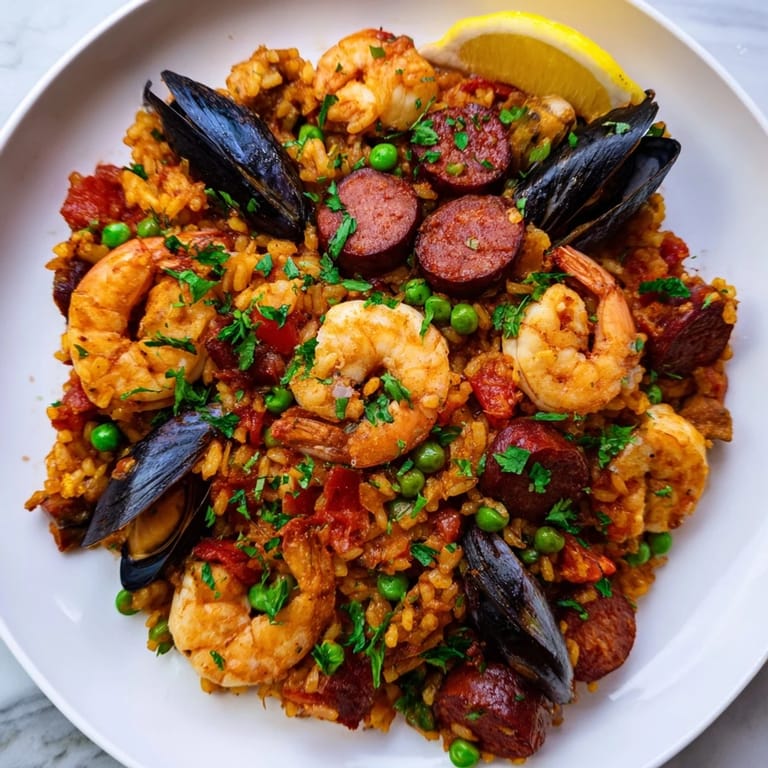
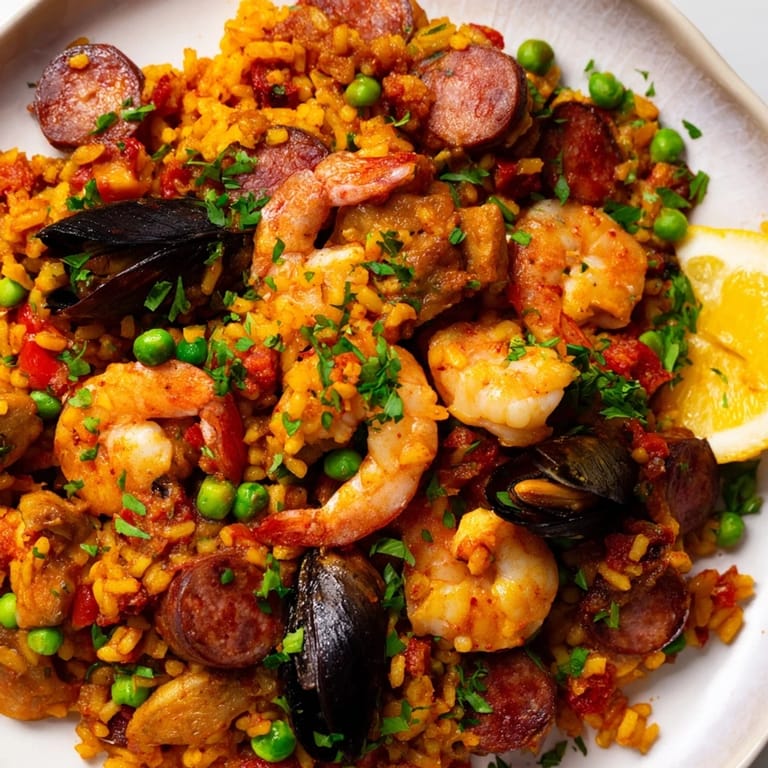
- Chorizo sausage (200g): This gives paella its soul—get the Spanish kind if you can, as it releases those smoky oils that color the whole dish beautifully.
- Boneless, skinless chicken thighs (250g): Don't reach for breasts; thighs stay tender and juicy no matter how long they sit in the pan.
- Large shrimp (250g): These cook so fast they're almost a final flourish—add them at the very end or they'll turn into little hockey pucks.
- Mussels (250g): Listen for that pop when they open; it's nature's timer telling you they're ready.
- Calamari rings (250g, optional): I love the chew they add, but skip them if they intimidate you.
- Short-grain paella or Arborio rice (400g): The starch in these varieties creates that creamy texture without becoming mushy—regular long-grain rice just won't deliver the same magic.
- Saffron threads (1/2 tsp): Steep this in hot stock first so it blooms into deep golden threads; it's worth the few extra minutes and makes all the difference in color and flavor.
- Chicken or seafood stock (1L, heated): Warm stock is crucial—cold stock will shock the rice and mess up your timing.
- Olive oil (2 tbsp): This is where flavors start, so use good oil if you have it.
- Onion, bell peppers, garlic (1 medium, 2 peppers, 3 cloves): These are your aromatic base, and getting them soft before the rice goes in matters more than you'd think.
- Tomatoes (2 medium): Fresh is lovely, but I've used canned in winter without guilt.
- Frozen peas (150g): They add sweetness and pop of color, and honestly, frozen is easier and just as good as fresh.
- Smoked paprika (1 tsp): This is non-negotiable—it's what makes paella taste like paella, not just rice with stuff in it.
- Salt, black pepper, bay leaf: Season as you go, tasting the broth before you pour it in.
Tired of Takeout? 🥡
Get 10 meals you can make faster than delivery arrives. Seriously.
One email. No spam. Unsubscribe anytime.
Instructions
- Wake up the saffron:
- Pour 3 tablespoons of hot stock over those precious threads in a small bowl and let them sit. They'll bloom into deep gold and perfume your whole kitchen—this is how you know you're doing it right.
- Brown the chorizo and chicken:
- Heat olive oil in your paella pan over medium heat, then add the sliced chorizo and chicken pieces. Let them get a proper golden crust for 5 to 7 minutes—this color carries flavor. When they're done, set them aside on a plate.
- Build the flavor base:
- In the same pan with all those beautiful browned bits stuck to the bottom, add your chopped onion and bell peppers. Let them soften for 4 to 5 minutes, stirring now and then, then add your garlic and tomatoes and cook for another 2 minutes until everything smells incredible.
- Coat the rice:
- Stir in your rice and smoked paprika, mixing until every grain is coated in the oil and vegetables. You're essentially toasting the rice gently—this step takes about a minute and seals in the nutty flavor.
- Bring it all back together:
- Return the chorizo and chicken to the pan, then carefully pour in your saffron-infused stock and the remaining stock along with the bay leaf. Season with salt and pepper, then give it one gentle stir to combine everything evenly.
- Let it bubble away:
- Bring everything to a boil, then reduce the heat to low and let it simmer uncovered for 15 minutes without stirring—this is how the rice grains stay separate and develop that coveted crispy bottom layer called socarrat.
- Nestle in the seafood:
- Gently press the shrimp, mussels, and calamari (if using) right into the rice, then scatter the frozen peas over the top. Cover loosely with foil and let everything cook together for another 10 to 12 minutes until the shrimp turns pink and the mussels pop open.
- Rest and finish:
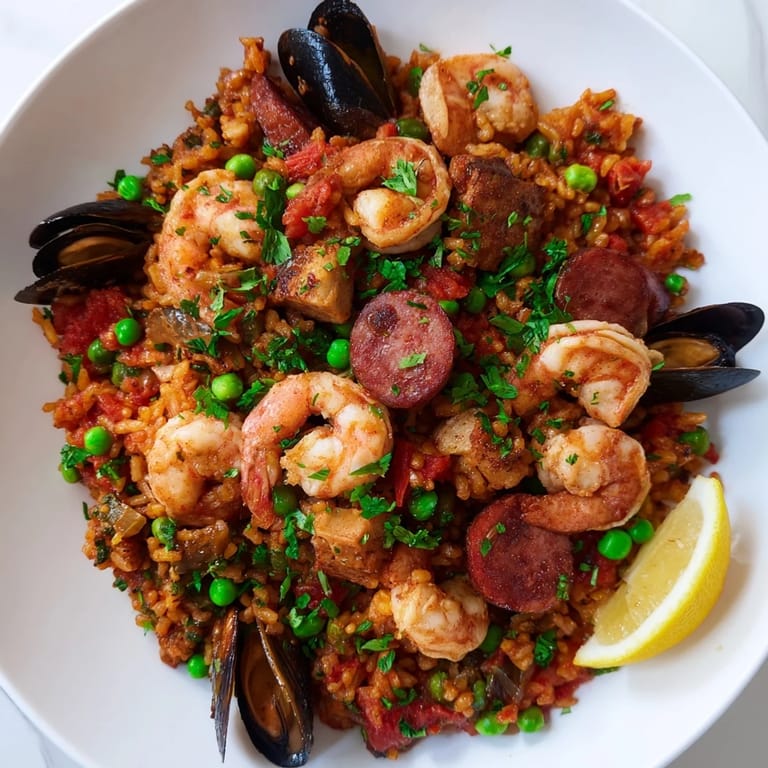
- Remove from heat, keep it covered, and let it sit quietly for 5 minutes—this allows the rice to fully absorb any remaining liquid and makes serving so much easier. Discard any mussels that stubbornly refused to open, then sprinkle with fresh parsley and serve with lemon wedges.
 Pin It
 There's this moment in paella that I can't quite describe in words—when you lift that foil and the steam rises up carrying saffron and sea salt and chorizo smoke, and you hear people actually gasp. That's when you know it became more than dinner; it's become a memory being made right there in real time.
The Saffron Question
Saffron feels expensive and precious because it is, but a little goes so far that one tiny container lasts forever. I used to skip it thinking I was being practical, but then I made paella without it and understood why people actually buy this stuff. The difference isn't subtle—it's the golden color, the subtle floral note, the whole identity of the dish. If you genuinely can't find it or afford it on a particular day, use a pinch of turmeric for color, but know you're making a simpler version and that's okay too.
Choosing Your Seafood
Mix and match based on what looks fresh at your market or what you actually enjoy eating—this recipe isn't so precious that it demands specific seafood. I've made paella with clams when shrimp was too pricey, and with scallops when someone mentioned they'd never had them before. The real magic is in the technique and the rice, not in hitting some exact combination. Just remember that different proteins cook at different speeds, so if you're swapping things around, think about timing—delicate fish goes in at the very end, while heartier shellfish can handle a few extra minutes.
The Wine Pairing and Beyond
A crisp Spanish white like Albariño or Verdejo cuts through the richness beautifully, but I've also served this with an icy beer and watched people just as happy. The real pairing that matters is the company—paella is inherently a sharing dish, and the best meal I've ever made was the least fancy one, where the pan sat in the middle of the table and people helped themselves while we talked until the sun set.
- Spanish wines are usually affordable and pair better than you'd expect.
- Sparkling options like Cava add celebration without demanding formality.
- Even a simple white wine or cold beer turns this into a complete meal.
 Pin It
 This dish taught me that sometimes the most impressive meals come from respecting simple techniques and good ingredients rather than chasing complexity. Make it once, make it twice, and by the third time your hand will know exactly how it should feel.
Questions & Answers
- → What type of rice works best for paella?
Short-grain paella rice or Arborio rice absorbs flavors well while maintaining firmness during cooking.
- → How do I infuse saffron for better flavor?
Steep saffron threads in hot stock for several minutes before adding to the dish to release rich color and aroma.
- → Can I substitute the seafood in paella?
Yes, clams, scallops, or other shellfish can replace or complement shrimp, mussels, and calamari for personalized flavor.
- → What gives paella its smoky taste?
Smoked paprika (pimentón) adds depth and a smoky note essential to traditional paella flavor profiles.
- → How long should paella rest before serving?
Rest covered for about 5 minutes to allow flavors to meld and the rice to finish steaming gently.