 Pin It
 The first time I tasted a proper tagine, I was sitting on a low cushion in a Marrakech riad, the evening air thick with the smell of cinnamon and slow-cooked lamb. My host stirred a clay pot with such patience that I realized this wasn't just cooking—it was a ritual. Years later, I found myself recreating that exact warmth in my own kitchen, and somehow the flavors transported me back instantly.
I made this for friends who claimed they didn't like anything too exotic, and watched their skepticism melt with the first spoonful. The conversation shifted from small talk to someone asking for thirds, and I realized that food like this has a way of making people drop their guards.
Ingredients
- Lamb shoulder, cut into 2-inch cubes (1.5 kg): Shoulder has just enough fat to stay moist during the long braise, and the chunks should be roughly the size of walnuts so they cook evenly.
- Olive oil (2 tbsp): Use a good one—it matters when you're browning the meat and adding those aromatics.
- Onions, finely chopped (2 large): They'll dissolve into the sauce and create the base of everything else, so chop them small.
- Garlic cloves, minced (4): Mince fine, not sliced, or you'll bite into raw garlic chunks.
- Fresh ginger, grated (1-inch piece): Grate it on a microplane if you have one—it releases more juice and flavor than mincing.
- Ground cinnamon (1½ tsp): Don't skip this; it's the heart of the whole dish, but measure carefully because too much tastes like dessert.
- Ground cumin, coriander, turmeric (1 tsp each): These three build a warm, earthy foundation that makes the dish feel authentically Moroccan.
- Ground black pepper, allspice, ground ginger (½ tsp each): They layer without overpowering, adding complexity rather than heat.
- Saffron threads (1 pinch, optional): If you use it, steep it in warm broth first to unlock the color and flavor.
- Beef or lamb broth (400 ml): Use something flavorful—weak broth will make the whole dish feel pale.
- Canned chopped tomatoes (400 g): They add acidity that keeps the richness from becoming cloying.
- Honey (2 tbsp): A small amount rounds out the spices and plays against the tartness of the tomatoes.
- Pitted prunes (200 g): Buy them whole and pit them yourself if you have time—they taste sweeter and more alive than pre-pitted.
- Whole blanched almonds (80 g): Toast them yourself just before adding; store-bought toasted almonds lose their crunch.
- Toasted sesame seeds (2 tbsp): Toast them in a dry pan for 30 seconds just before serving so they don't taste stale.
- Fresh cilantro or parsley, chopped: Add it just before serving—it brightens everything and fights the richness.
- Salt: Taste as you go and season at the very end.
Tired of Takeout? 🥡
Get 10 meals you can make faster than delivery arrives. Seriously.
One email. No spam. Unsubscribe anytime.
Instructions
- Heat your pot and get ready for browning:
- Preheat your oven to 160°C (325°F), or if you're using the stovetop, just have your heat ready to go low. A heavy pot—Dutch oven or traditional tagine—is worth the investment here because it holds heat evenly and won't create hot spots that burn the sauce.
- Brown the lamb properly:
- Heat 1 tbsp olive oil over medium-high heat until it shimmers. Working in batches so you don't crowd the pan, brown the lamb on all sides until it's golden and crusty—this takes patience, about 3 minutes per batch. Don't rush it; that crust is flavor you can't get back.
- Build your aromatic base:
- Add the remaining oil, then onions, garlic, and ginger, and let them soften for about 5 minutes until the kitchen smells alive. Stir occasionally so nothing sticks or burns at the edges.
- Wake up the spices:
- Sprinkle in every spice and that pinch of saffron, then stir constantly for about 1 minute. You'll smell the difference immediately—suddenly you're not in your kitchen anymore, you're somewhere warmer and more foreign.
- Return the lamb and add the braising liquid:
- Put the lamb back in, add the tomatoes, broth, and honey, and stir so everything is submerged. Bring it to a gentle simmer—not a rolling boil, which will make the meat tough.
- Low and slow in the oven (or on the stovetop):
- Cover and transfer to the oven for 1 hour 30 minutes, or keep it on the stovetop on low heat. Stir every 20 minutes or so to make sure nothing sticks to the bottom. The house will smell incredible.
- Toast the almonds:
- While that's happening, heat a dry skillet over medium heat and toss in the almonds, shaking them constantly for 2–3 minutes until they turn golden. Pour them onto a plate immediately so they don't burn.
- Add the prunes and almonds:
- After the first 1 hour 30 minutes, add the toasted almonds and prunes, stir well, cover again, and let it go for another 30–45 minutes. The lamb should be fall-apart tender and the sauce should be thick enough to coat a spoon.
- Taste and season:
- Taste it, then taste it again. Add salt until it tastes right to you—it's the only seasoning you can adjust at this point.
- Serve with garnish:
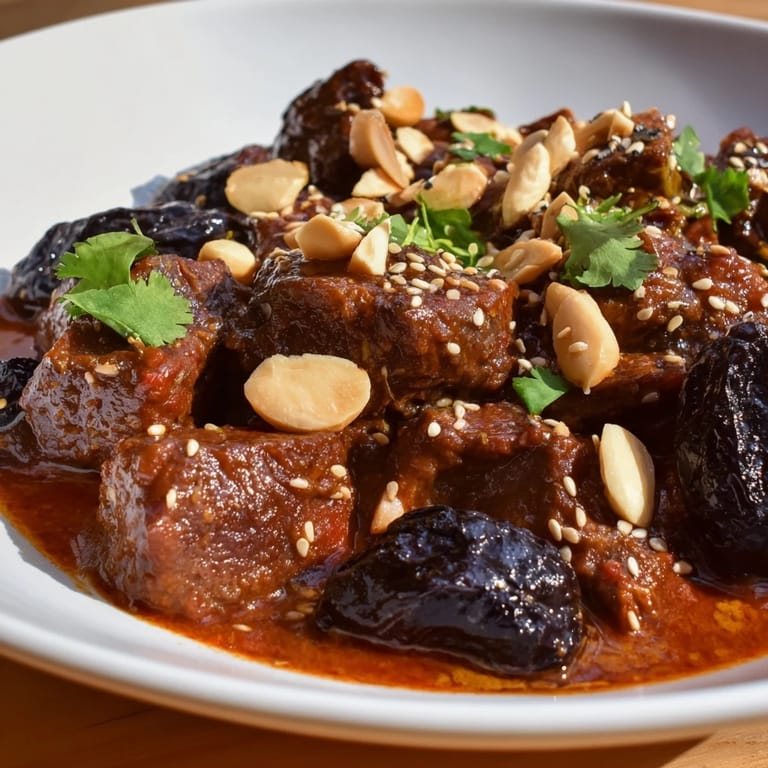
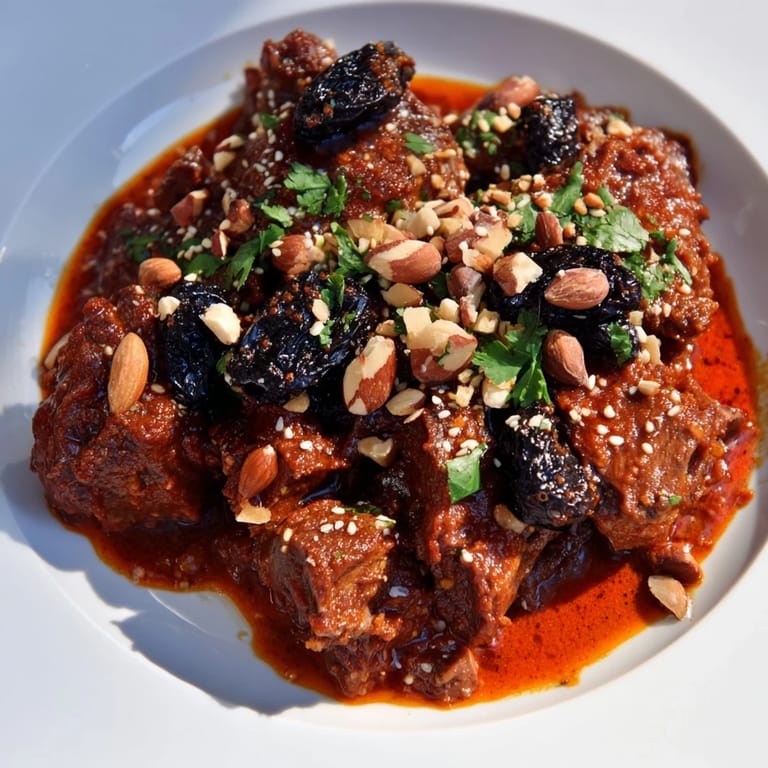
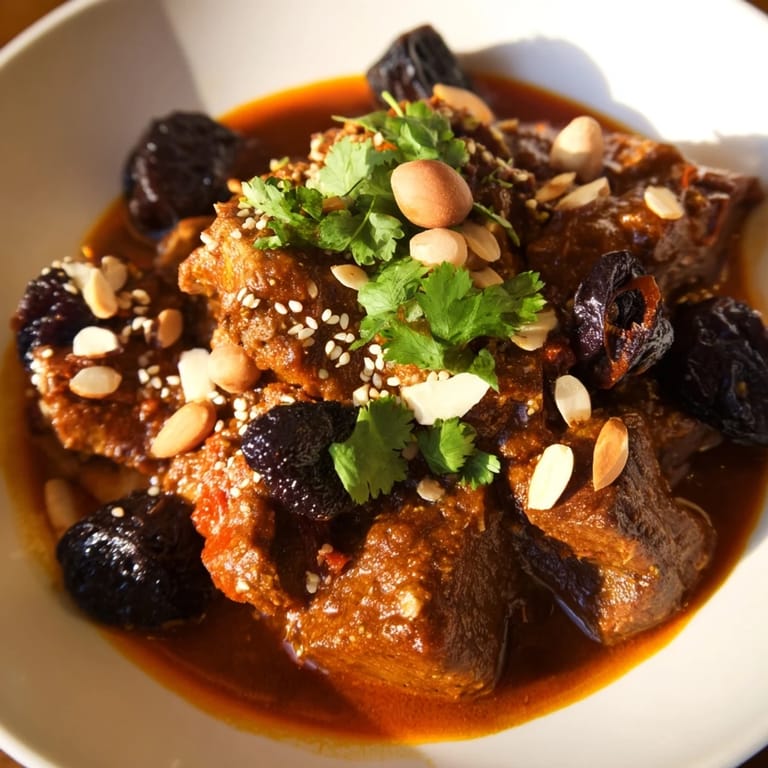
- Transfer to a serving dish, scatter sesame seeds and fresh cilantro or parsley over the top, and bring it to the table while it's still steaming.
 Pin It
 I served this to my grandmother who grew up eating Moroccan food, and she closed her eyes after the first bite. That small moment of recognition felt like permission to keep cooking things that matter, things that carry memory in them.
The Story of Tagine
A tagine is both a cooking vessel and a way of thinking—everything cooks together slowly, flavors marrying and deepening over time. The cone-shaped lid traps steam and returns it to the food, so nothing dries out and nothing escapes. You can use a Dutch oven and get nearly the same result, but if you ever find yourself with a real tagine, the ritual of using it matters as much as the food itself.
Building Flavor Through Spice
Moroccan cooking doesn't blast you with heat; it wraps around you with warmth. The spices work as a choir where each voice matters but none overpowers. Cinnamon and cumin are the main singers, with coriander and turmeric adding depth underneath. I learned to add them all at once into hot oil so they bloom together rather than separately, which creates something unified instead of layered.
Serving and Pairing
This dish belongs on a table where people slow down. Serve it in wide bowls with plenty of sauce, and have couscous, saffron rice, or warm bread on the side to soak it all up. The sweetness of the prunes means this pairs beautifully with something cooling—mint tea is traditional, but a light red wine works too if that's what you have.
- Make extra because leftovers taste even better the next day as the flavors settle and deepen.
- If your family likes heat, put out a small bowl of harissa on the side for people to stir in to their own bowls.
- Cilantro is not optional—it's the final note that keeps everything from feeling too heavy.
 Pin It
 This is the kind of food that turns an ordinary Wednesday night into something worth remembering. Make it for people you love and watch what happens.
Questions & Answers
- → What cut of lamb is ideal for this dish?
Lamb shoulder cut into cubes is preferred for its balance of tenderness and flavor after slow cooking.
- → Can I use other dried fruits instead of prunes?
Yes, dried apricots offer a sweeter alternative that pairs well with the spices.
- → How do the spices impact the dish?
The warm spices like cinnamon, cumin, and turmeric create a fragrant base that complements the sweetness of prunes and richness of lamb.
- → Is toasting the almonds necessary?
Toasting almonds enhances their nutty flavor and adds a satisfying crunch contrast to the tender meat and sauce.
- → What sides pair best with this dish?
Steamed couscous, saffron rice, or crusty bread are ideal for soaking up the flavorful sauce.