 Pin It
 The first time I made gumbo, I wasn't even trying to—my neighbor brought over a bag of fresh okra from her garden and challenged me to do something with it. I'd eaten gumbo in New Orleans once, years earlier, and remembered the way the broth seemed to hold the entire kitchen's warmth. So I called my mom, scribbled down some notes, and spent the afternoon learning why a roux demands your full attention. That chocolate-brown base changed everything.
Years later, I made this for a dinner party when someone mentioned they'd never had authentic gumbo. Watching four people reach for seconds—and thirds—while rain pattered against the windows felt like the smallest, biggest victory. One guest asked for the recipe, then came back the next week to tell me his kids asked for it again.
Ingredients
- Boneless, skinless chicken thighs (350 g): Thighs stay juicy and flavorful during the long simmer, unlike white meat which can turn stringy—this is the secret to restaurant-quality texture.
- Smoked andouille sausage (225 g): The smokiness is non-negotiable; it builds the backbone of the whole dish, so don't skip it or substitute with mild sausage.
- Fresh or frozen okra (250 g): Okra does double duty here—it flavors the broth and naturally thickens it, but only if you don't overcrowd the pot or stir too aggressively early on.
- The holy trinity—onion, bell pepper, celery: These three vegetables are the flavor foundation of every Creole kitchen; they need time to soften before anything else joins the party.
- All-purpose flour and vegetable oil (60 g each): The roux is where patience pays off—rushing it or letting it burn will cost you the entire batch, so give it your undivided attention for 15–20 minutes.
- Chicken stock (1.5 liters): Use homemade or quality store-bought; thin or weak stock will leave the gumbo tasting flat no matter what else you do.
- Smoked paprika, cayenne, bay leaves, thyme: These spices work together to create depth and warmth—don't skip the smoked paprika, as it echoes the sausage's flavor profile.
Tired of Takeout? 🥡
Get 10 meals you can make faster than delivery arrives. Seriously.
One email. No spam. Unsubscribe anytime.
Instructions
- Build your roux patiently:
- Heat oil over medium heat, add flour, and whisk constantly for 15–20 minutes until it reaches deep chocolate brown. You'll smell the difference—it shifts from toasted flour to something almost nutty and rich. Watch it like you're meditating; don't walk away.
- Soften the holy trinity:
- Add onion, bell pepper, and celery to the roux and sauté 3–4 minutes until they release their juices and smell incredible. Stir in garlic for one more minute—you want it fragrant but not brown.
- Brown the proteins:
- Toss in sausage and chicken pieces, cooking 5 minutes until the chicken loses its raw look. This step seasons the broth with rendered fat and depth.
- Introduce the okra:
- Add sliced okra and cook 3–4 minutes, stirring gently so it breaks down slightly and begins its thickening work without turning to mush.
- Build the broth:
- Pour in tomatoes, stock, bay leaves, thyme, paprika, cayenne, Worcestershire, salt, and pepper. Bring to a boil, then drop the heat to low and let it simmer uncovered for 45–50 minutes, stirring occasionally. The longer it sits, the more the flavors marry.
- Finish and taste:
- Remove bay leaves, taste for salt and spice balance, and adjust freely. If you want it thicker, sprinkle filé powder off the heat—it'll thicken without cooking and won't become gluey.
- Serve with grace:
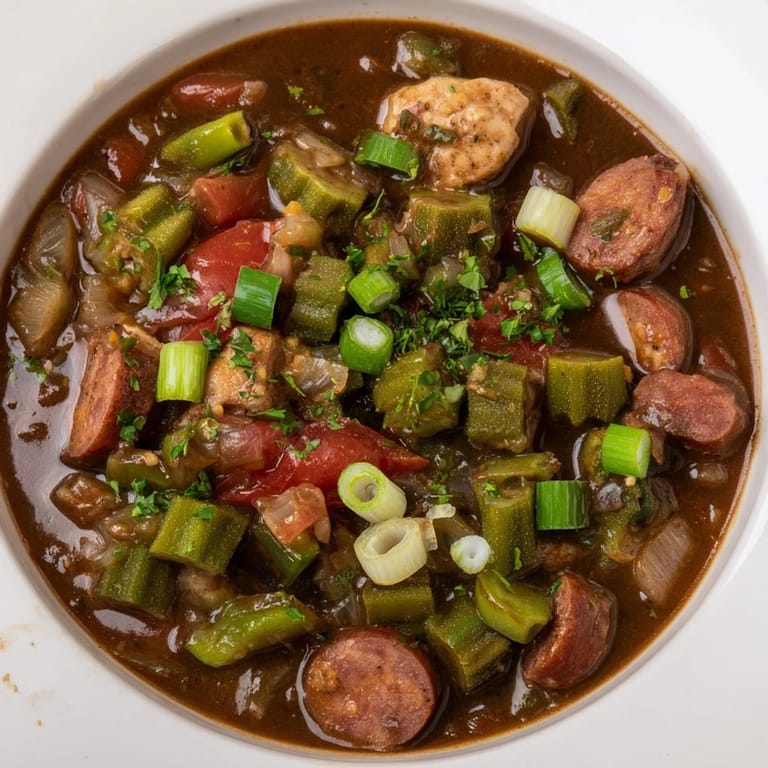
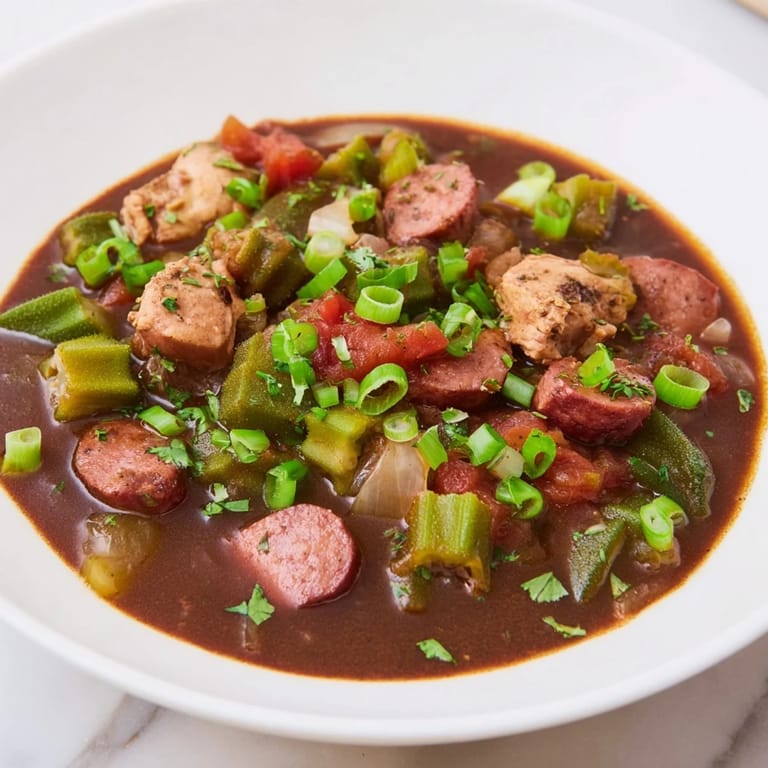
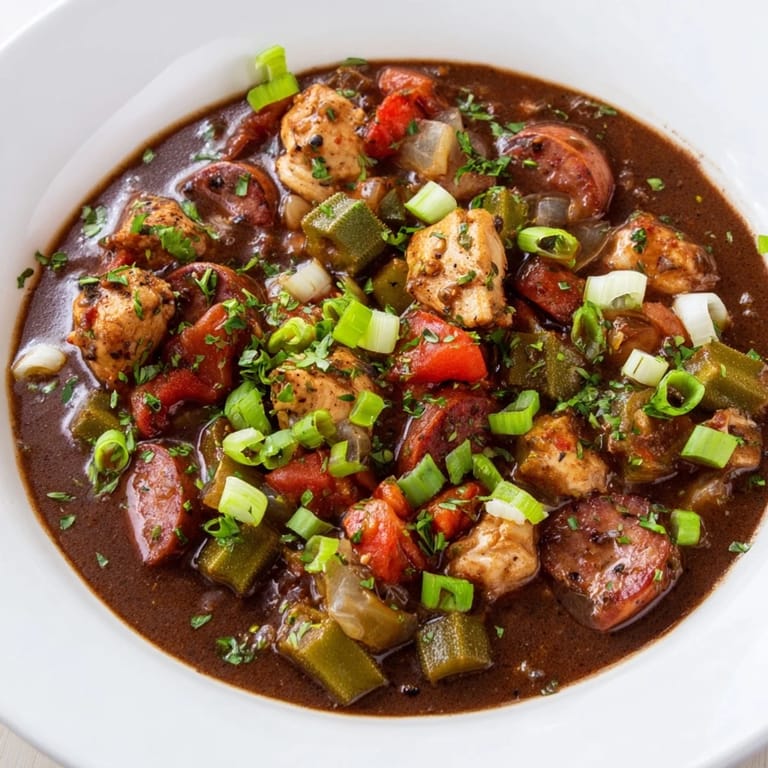
- Ladle over hot white rice, top with fresh spring onions and parsley, and let each person add hot sauce to their liking.
 Pin It
 The moment I understood gumbo wasn't just cooking—it was storytelling—was when my daughter asked if we could make it for her school potluck. Watching her explain each ingredient to her classmates, and seeing their surprised faces when they tasted it, made me realize this wasn't my recipe anymore. It was becoming ours.
The Roux: Heart of the Dish
The roux is where gumbo lives or dies, and it's also where most home cooks falter. I learned this the hard way after burning my first three attempts. The trick is medium heat, constant whisking, and patience—it takes 15–20 minutes for flour and oil to transform from pale paste to glossy chocolate brown. You'll smell the progression: first toasted, then nutty, then deeply rich. That's your signal to stop. Too dark and it turns bitter, too light and it won't have enough body to carry the spices and proteins. The moment the roux reaches perfect brown, the heat does most of the work for you.
Okra: The Secret Thickener
Fresh okra from a farmers market will always outperform frozen, but frozen works beautifully if you thaw and drain it first. The vegetable releases a mucilage as it cooks—that slime is exactly what thickens gumbo without flour or cornstarch. Don't shy away from it; instead, respect it by adding okra at the right moment and not overstirring afterward. If you slice it thin, it breaks down gently and distributes evenly. Thick slices stay intact longer, which some people prefer for texture. Either way, add it mid-simmer so it thickens the broth without turning completely soft by the end.
Making It Your Own
Gumbo is forgiving in ways most soups aren't—it welcomes variation and personalization. Some cooks add a splash of red wine or a spoonful of tomato paste for deeper color. Others stir in a bit of file powder at the end instead of using okra as the sole thickener. If smoked paprika feels too intense for your palate, swap in sweet paprika or even skip it and rely on the sausage for smokiness. The beauty is that as long as you respect the roux, honor the holy trinity, and don't oversalt, you'll land somewhere delicious.
- For a seafood version, add shrimp or crab in the last 10 minutes of simmering—they need just enough time to warm through without becoming rubber.
- Serve with hot sauce on the side and let everyone customize their heat level.
- Leftover gumbo tastes even better the next day, so make extra and freeze portions in single-serving containers for busy weeks ahead.
 Pin It
 Gumbo taught me that some dishes are worth the time investment because they fill more than your stomach—they connect people. That's why I make it again and again.
Questions & Answers
- → What is the purpose of the dark roux in this dish?
The dark roux acts as a flavor foundation, providing a rich, nutty depth and thickening the broth to create a hearty texture.
- → Can I substitute another sausage for andouille?
Yes, any smoky smoked sausage can be used, though andouille brings traditional smoky and spicy notes characteristic of the dish.
- → How do I prevent the roux from burning?
Cook the roux slowly over medium heat, stirring constantly until it reaches a deep brown without burning, which takes about 15–20 minutes.
- → Is fresh okra necessary or can I use frozen?
Frozen okra works well; just thaw and drain it before adding to avoid excess moisture in the broth.
- → What is filé powder used for?
Filé powder, made from ground sassafras leaves, is added off the heat to thicken the broth and add a unique earthy flavor.
- → Can seafood be added to this dish?
Yes, peeled shrimp or crab meat can be added during the last 10 minutes of simmering for a seafood variation.