 Pin It
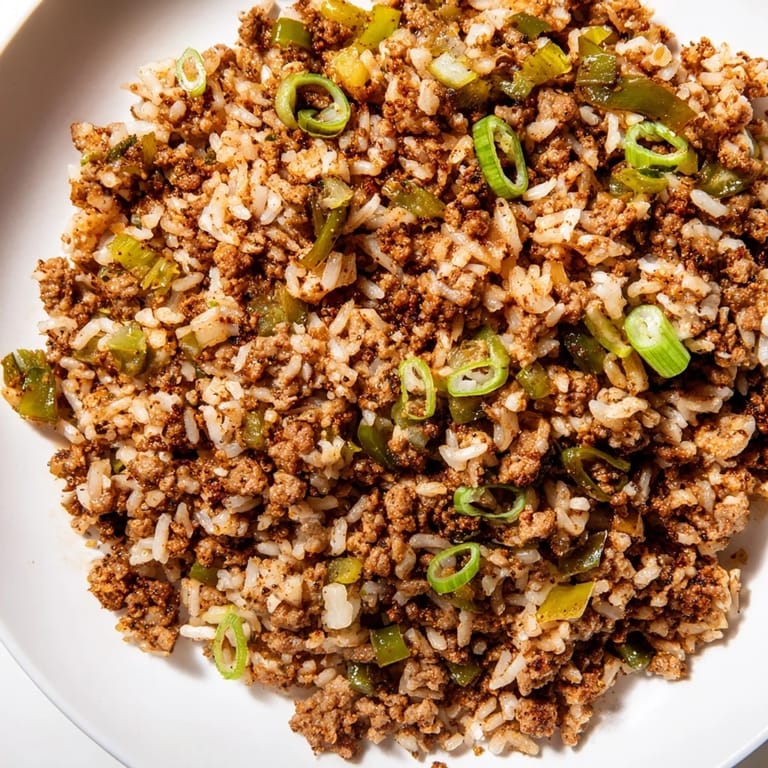
 There's something about the smell of that holy trinity—onions, celery, and bell pepper—hitting hot oil that instantly transports me to my uncle's kitchen in New Orleans. The first time I made dirty rice, I was supposed to be helping him prep for a crawfish boil, but he handed me the skillet instead and said, "Your turn." I was nervous about the chicken livers at first, but once I tasted how they melted into the rice with those Cajun spices, I understood why he insisted it had to be done that way.
I made this for a weeknight dinner when my partner came home exhausted, and watching their whole face change after that first bite was worth every minute at the stove. The kitchen had filled with this golden, savory warmth that made everything feel less hectic. Sometimes the simplest dishes do the most work.
Ingredients
- Ground pork (225 g): The backbone of this dish—it renders beautifully and carries the spices without overpowering them.
- Ground beef or chicken livers (225 g): If you're using livers, they're the traditional choice and give dirty rice its signature depth; beef is milder if you prefer that route.
- Onion, green bell pepper, celery (1 medium onion, 1 pepper, 2 stalks): This is your aromatic base, the foundation that makes everything else taste like home.
- Garlic cloves (3, minced): Don't skip mincing—it distributes the flavor more evenly than large chunks.
- Spring onions (2, sliced): Save these for the end; they add brightness that cuts through the richness.
- Long-grain white rice (200 g): Rinsing the rice first keeps it from becoming gummy and helps each grain stay separate.
- Chicken broth (480 ml): Use good broth if you can—it's not just liquid, it's flavor.
- Vegetable oil (2 tbsp): Neutral oil lets the spices shine without competing flavors.
- Cajun seasoning, thyme, smoked paprika, salt, black pepper, cayenne (see quantities in instructions): These spices are what make dirty rice sing; they're bold but balanced.
Tired of Takeout? 🥡
Get 10 meals you can make faster than delivery arrives. Seriously.
One email. No spam. Unsubscribe anytime.
Instructions
- Brown the meat:
- Heat oil in your skillet over medium-high heat until it shimmers, then add the pork and beef (or livers). Break it up as it cooks, pressing it against the pan to get some caramelization. This takes about 6 to 7 minutes and shouldn't be rushed—you want golden, cooked-through meat, not pale and undercooked.
- Build the base:
- Add the onion, bell pepper, celery, and garlic, stirring often. Let them soften together for about 5 minutes, until the onion becomes translucent and everything starts smelling incredible.
- Wake up the spices:
- Sprinkle in the Cajun seasoning, thyme, smoked paprika, salt, pepper, and cayenne. Stir everything together so the spices coat the meat and vegetables evenly. You'll see the mixture start to deepen in color.
- Toast the rice:
- Add your rinsed rice and stir constantly for 1 to 2 minutes. This toasting step is subtle but important—it changes the rice's texture and deepens its flavor slightly.
- Add the liquid and simmer:
- Pour in the chicken broth and bring everything to a boil, then reduce the heat to low. Cover the skillet and let it simmer gently for 20 to 22 minutes until the rice is tender and has absorbed all the liquid.
- Rest and fluff:
- Turn off the heat and let the dish sit, still covered, for 5 minutes. This allows the rice to finish cooking gently. Then use a fork to fluff everything, breaking up any clumps.
- Finish with freshness:
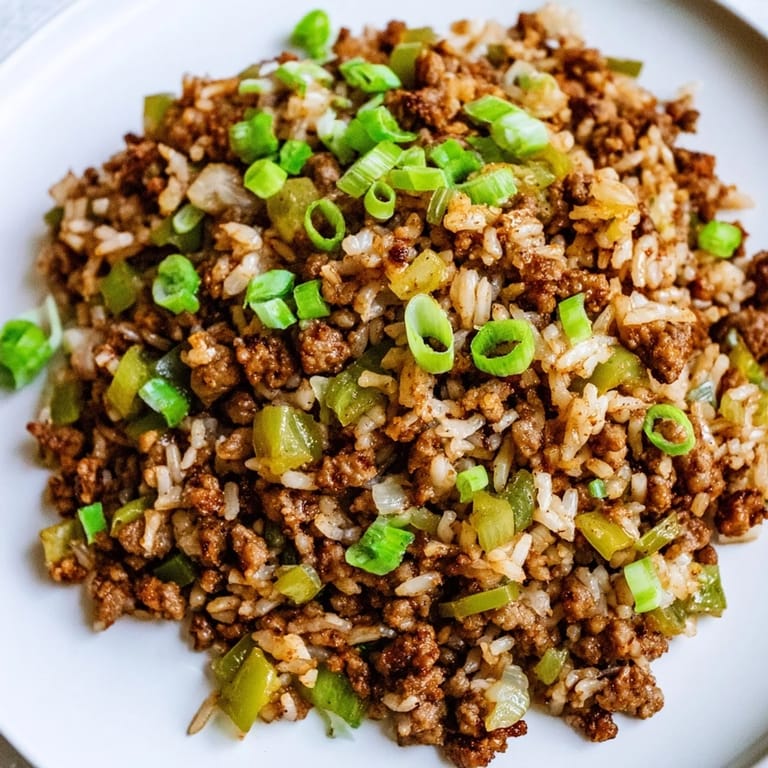
- Scatter the sliced spring onions over the top right before serving. They add a clean, sharp note that balances the richness beautifully.
 Pin It
 I learned the real magic of dirty rice when someone told me to taste it throughout cooking, not just at the end. Each layer—the meat's richness, the vegetables' sweetness, the spices' heat—matters. That's when this went from a recipe I followed to a dish I actually understood.
Why Chicken Livers Matter (If You're Curious)
The traditional version uses chicken livers, and honestly, if you're hesitant, I was too the first time. But they're not liver-y in a way that's overwhelming—they cook down into something earthy and rich that gives the rice a complexity that ground meat alone can't match. If you try them once and decide they're not for you, the beef version is completely legitimate and still delicious. The dish doesn't judge.
The Smell Test
One of the best ways to know if you're cooking this right is to pay attention to how the kitchen smells at each stage. When the meat hits the oil, it should smell savory and rich. After the vegetables soften, you'll get that sweet onion and pepper undertone. Once the spices go in, it becomes something almost overwhelming in the best way—that's when you know you're on the right track. If at any point something smells burnt or too sharp, adjust your heat down slightly.
Serving and Pairing
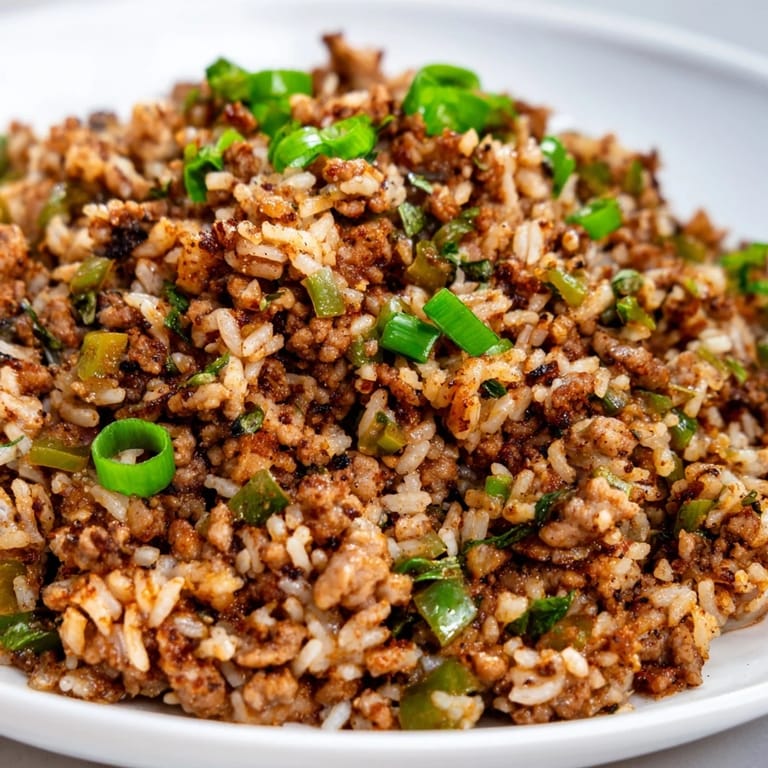
Dirty rice is endlessly flexible once it's made. I've eaten it plain, topped with a fried egg, served alongside roasted vegetables, or even stuffed into bell peppers and baked. It also reheats beautifully, which is rare for rice dishes—just add a splash of water or broth to loosen it if it's dried out.
- A bottle of hot sauce on the table lets everyone adjust the heat to their liking.
- Serve it with something cool and crisp—a salad or pickled vegetables—to balance the richness.
- It pairs surprisingly well with cold beer or a light white wine if you're in the mood.
 Pin It
 This dish has become my go-to when I want to cook something that feels Southern and warm without spending hours in the kitchen. It's the kind of food that brings people together because it tastes like care, even when you made it on a Tuesday night with whatever was in your pantry.
Questions & Answers
- → What meats are best for this dish?
Ground pork and beef are traditional, but chicken livers can be used for a more authentic Southern flavor.
- → Can I adjust the spice level?
Yes, reduce or omit cayenne pepper for milder heat or add more for extra kick.
- → What vegetables are included in the dish?
Onions, green bell pepper, celery, and garlic are sautéed to build a flavorful base.
- → How is the rice cooked perfectly tender?
Rice is rinsed, toasted briefly in oil, then simmered covered in chicken broth until all liquid is absorbed.
- → What garnishes complement the dish?
Sliced spring onions add freshness, while hot sauce and chopped parsley offer optional flavor boosts.