 Pin It
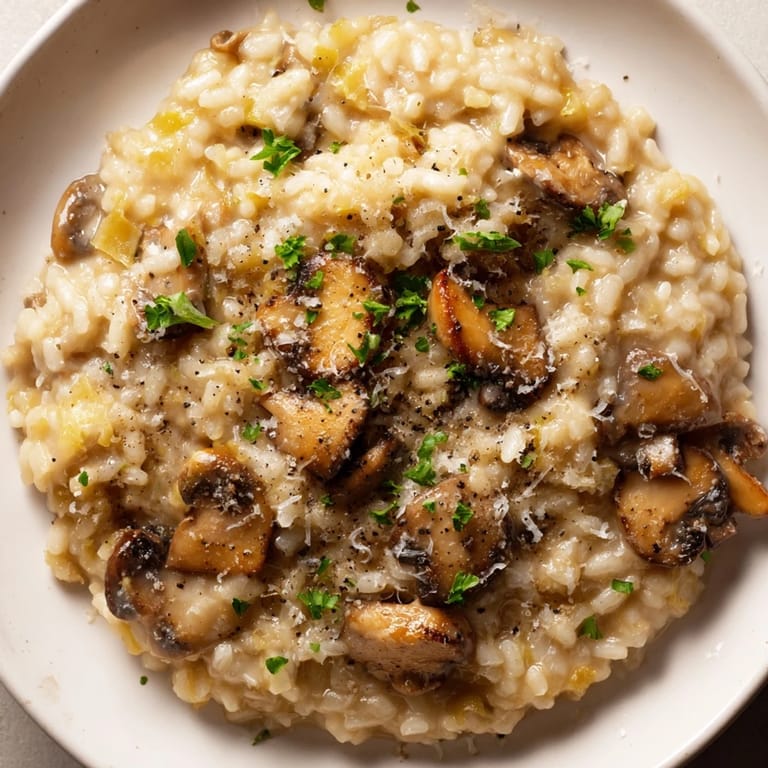
 My neighbor Marco stopped by on a Tuesday evening with a bag of cremini mushrooms from his garden, and I suddenly remembered why I'd been craving risotto. There's something about standing at the stove, wooden spoon in hand, coaxing rice into something creamy and alive that feels like the opposite of rushing. The kitchen filled with that toasty, buttery smell within minutes, and by the time he tasted it, he asked if I'd learned this from his mother. I hadn't, but that might have been the best compliment I've ever received.
I made this for my sister's book club last spring, and honestly, I was nervous about the timing. Then I realized that risotto doesn't demand perfection—it rewards presence. While they sat in the living room laughing about chapter three, I was in the kitchen, unhurried, testing the rice every few minutes and adding that next ladle of warm broth. When I brought it to the table, someone said it was the reason they came, and I knew I'd never stress about it again.
Ingredients
- Arborio rice: This short-grain rice releases starch as it cooks, creating creaminess without cream—it's the whole magic of risotto.
- Cremini or button mushrooms: Sauté them first so they concentrate their flavor and don't water down the dish; wild mushrooms make it even more luxurious.
- Dry white wine: Don't skip it and don't use anything you wouldn't drink; the acidity brightens everything.
- Vegetable broth: Keep it warm in a separate pot so each addition hits the rice at temperature and cooks evenly.
- Parmesan cheese: Freshly grated, never pre-shredded; it melts into the risotto and tastes like butter itself.
- Butter: Use good unsalted butter; it's added twice because risotto lives on the stuff.
Tired of Takeout? 🥡
Get 10 meals you can make faster than delivery arrives. Seriously.
One email. No spam. Unsubscribe anytime.
Instructions
- Sauté the mushrooms first:
- Heat olive oil and butter together in a large pan over medium heat, then add sliced mushrooms and let them cook undisturbed for a few minutes—they'll go golden and nutty when you resist the urge to stir too much. Once any liquid evaporates and they smell incredible, pull them out and set them aside.
- Build the flavor base:
- In the same pan, add onion and let it turn translucent and sweet, about three minutes, then add garlic just long enough to smell it. This is your foundation.
- Toast the rice:
- Add the Arborio rice and stir it around for two minutes until the edges look translucent and it smells toasty—this step makes the rice sturdy so it doesn't turn mushy.
- Deglaze with wine:
- Pour in the white wine and stir until it's almost completely absorbed, letting the acidity wash over the rice.
- Begin the patient rhythm:
- Add broth one warm ladleful at a time, stirring frequently and waiting until most of the liquid is absorbed before adding the next—this takes about eighteen to twenty minutes and feels meditative. Keep tasting after the fifteen minute mark so you catch it at creamy and al dente.
- Finish it:
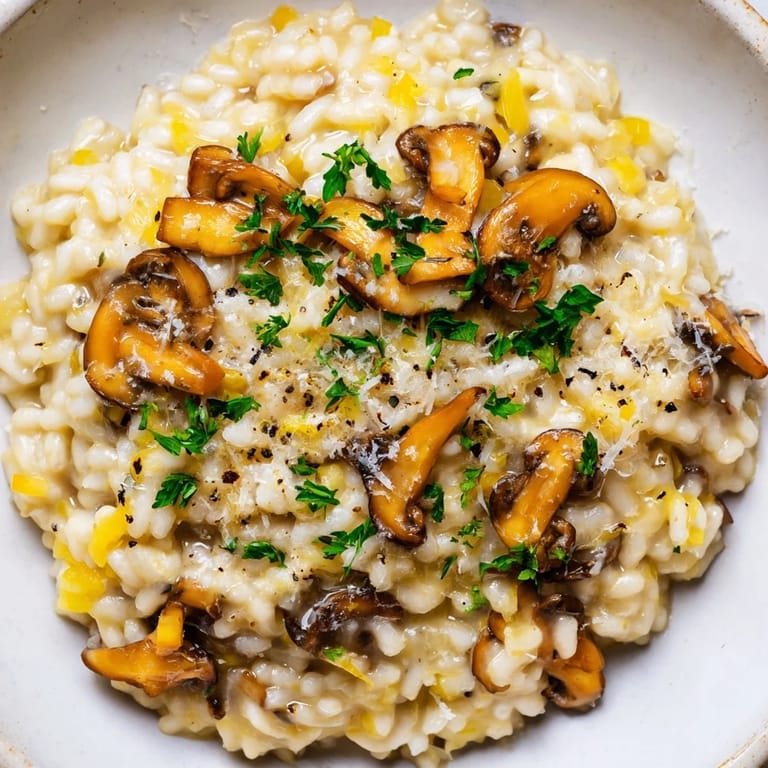
- Stir in the mushrooms, butter, and Parmesan cheese, season with salt and pepper, and cook for just two more minutes before serving immediately while it's at its creamiest.
 Pin It
 I served this once at a dinner where someone had just moved into the neighborhood, and watching her eat it, close her eyes, and ask for the recipe felt like making a friend. That's what risotto does—it becomes an act of care before it becomes a dish.
The Secret of Stirring Frequently
There's a reason every recipe tells you to stir frequently, and it's not just to prevent sticking. The constant motion encourages the rice to release starch into the liquid, and that starch is what transforms broth into something creamy without a drop of cream. It's not fussy; it's physics. I keep my wooden spoon in hand, resting my forearm on the counter edge, and I move it in lazy circles while I think about the day or listen to music. This is not standing guard—it's paying attention.
Mushrooms Matter More Than You Think
The mushroom step is where amateur cooks rush and that's where the dish loses half its soul. Sautéing them separately first means they develop real flavor instead of steaming in the liquid of the risotto. If you can find cremini, use them—they're meatier than buttons and taste like they matter. Wild mushrooms, if you can get them, turn this into something you'll think about for days. The butter and oil together create a temperature that browns them gorgeously instead of just cooking them pale and soft.
Final Thoughts and Quick Saves
This dish teaches you something every time you make it, and that's rare. The timing becomes intuitive, the stirring becomes meditative, and eventually you understand why Italians built an entire cuisine around learning to do one thing slowly and well.
- If risotto breaks or looks oily at the end, it's usually because you added cold ingredients to hot rice—let everything come to the same temperature and stir gently.
- Leftover risotto can be chilled, formed into patties, and pan-fried until golden the next day, though honestly, it's best eaten fresh.
- A crisp white wine like Pinot Grigio or Sauvignon Blanc poured alongside tastes like you planned this whole thing perfectly.
 Pin It
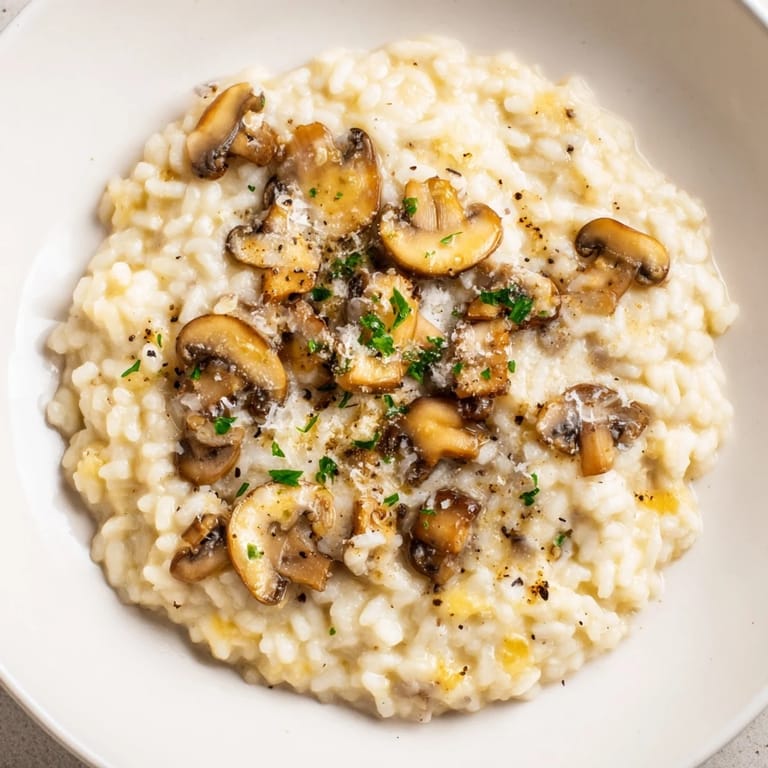
 Risotto is proof that the best kitchen moments aren't about complexity—they're about caring enough to show up, stir slowly, and taste as you go. Make this for someone you want to feed well.