 Pin It
 My grandmother kept a ham hock in her freezer year-round, always ready for when the kitchen needed warming up. One particularly gray January afternoon, I watched her pull it out alongside a bag of beans she'd sorted through by hand that morning, and suddenly the whole house smelled like home before she'd even filled the pot with water. There's something about the way white beans soften around smoky meat that feels less like cooking and more like casting a spell, one gentle simmer at a time.
I made this soup for my neighbor when she was recovering from surgery, and I'll never forget how she closed her eyes on the first spoonful and just sat there for a moment. She called it days later to say she'd made three batches already and was teaching her daughter. That's when I realized this wasn't just comfort food, it was the kind of dish that quietly teaches people to cook.
Ingredients
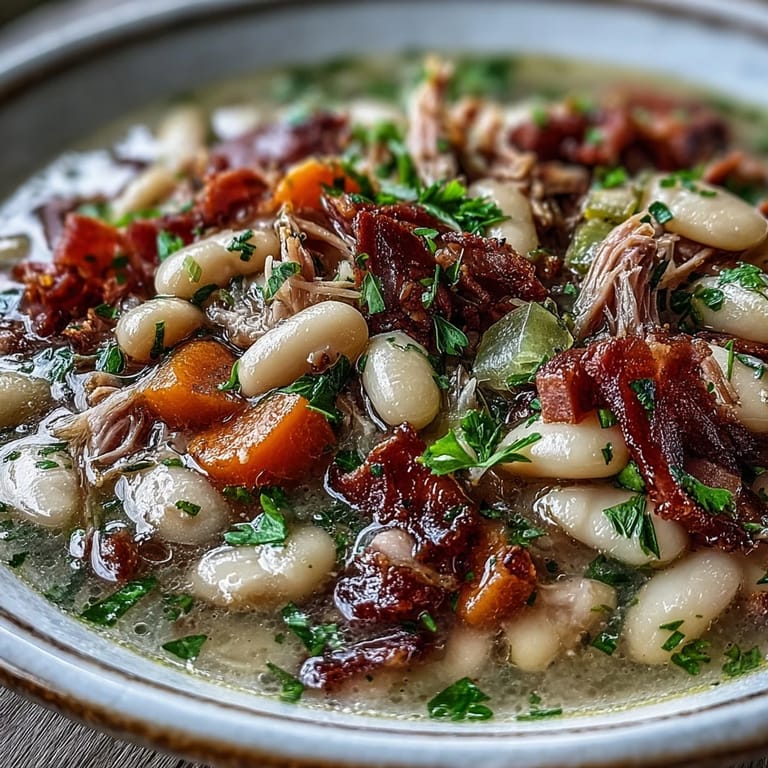
- Smoked ham hock: This gnarly, smoky bone is your seasoning backbone, infusing the entire pot with depth that no spice rack could replicate, so don't skip it or substitute it.
- Dried great northern or cannellini beans: Overnight soaking isn't just tradition, it actually helps them cook evenly and reduces that post-soup bloating feeling, so plan ahead.
- Yellow onion, carrots, celery: This trio is called mirepoix in fancy kitchens, but here it's just the flavor foundation that makes every spoonful taste like it came from a house that knows how to cook.
- Garlic: Mince it fine so it practically melts into the broth rather than announcing itself in chunks.
- Bay leaves and thyme: These herbs are quiet workers, building complexity without screaming for attention, and always remove the bay leaves before serving unless you enjoy the surprise crunch.
- Smoked paprika: Optional but worth it, a whisper of extra smoke that deepens the ham hock's already beautiful flavor.
- Chicken broth: Low-sodium lets you control the salt level, which matters because the ham hock is already salty and you don't want an overly salted pot.
- Fresh parsley: It looks pretty and adds a bright, almost peppery note that cuts through all that richness.
Tired of Takeout? 🥡
Get 10 meals you can make faster than delivery arrives. Seriously.
One email. No spam. Unsubscribe anytime.
Instructions
- Gather everything and get organized:
- Pull out your Dutch oven, soak those beans the night before (this is non-negotiable), and chop your vegetables into roughly equal pieces so they cook at the same pace. Taking five minutes to do this right saves you from having mushy carrots and crunchy onions.
- Build the pot:
- Combine your drained beans, ham hock, vegetables, garlic, and all those herbs and spices right into the pot, then pour the broth over everything and give it a good stir. You'll notice immediately how the ham hock nestles down into the beans like it belongs there.
- Bring it to life:
- Turn the heat to high and let it come to a rolling boil, then drop it down to low, cover it, and let time do the work. The house will start smelling incredible around the 45-minute mark.
- The halfway moment:
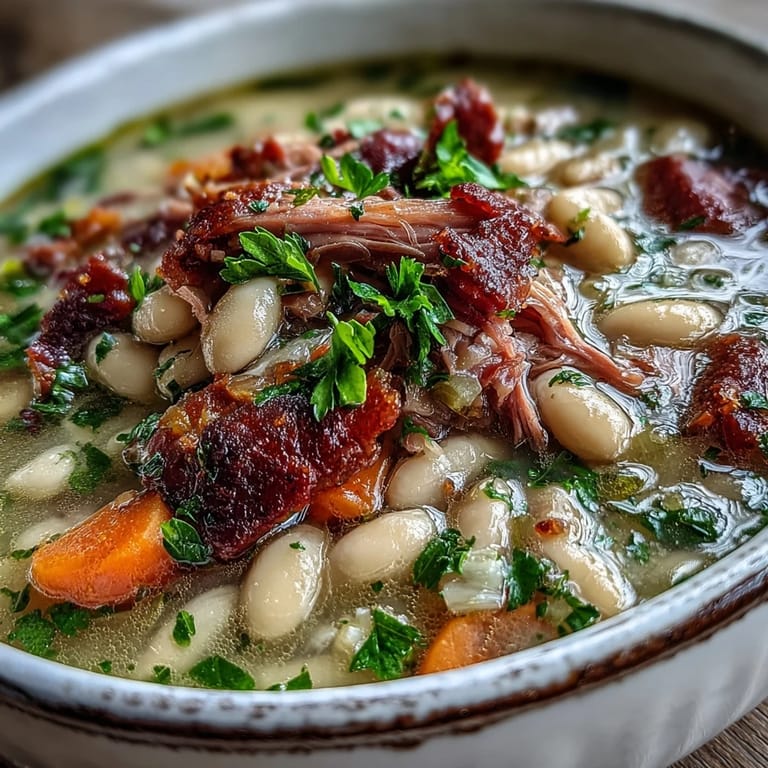
- After about two hours, the beans should be mostly tender and the broth will have turned a pale golden color. Fish out the ham hock carefully, let it cool until you can handle it, then shred the meat and discard the skin and bone.
- Finish the composition:
- Return the shredded meat to the pot and let it simmer uncovered for another 30 minutes, which allows some liquid to evaporate and the flavors to concentrate. Stir occasionally and taste for salt, remembering that the ham already brought its own saltiness to the party.
- The final touches:
- Remove those bay leaves, ladle into bowls, and finish each one with a handful of fresh parsley. A crack of black pepper on top makes it feel intentional and complete.
 Pin It
 My father once said this soup tasted like his childhood, and I realized then that certain foods aren't memories themselves, they're just the containers we keep memories in. That's what this soup does.
The Science of Slow Simmering
There's actual chemistry happening in that pot, not magic, though it can feel like magic. The low, steady heat breaks down the connective tissue in the ham hock, turning it into gelatin that thickens the broth naturally without any added cream or starch. Meanwhile, the beans absorb all that smoky flavor gradually, so by hour two they taste like they were born smoked.
Making It Your Own
This recipe is a blueprint, not a prison. I've added diced tomatoes, fresh spinach stirred in at the end, and even a tablespoon of balsamic vinegar for brightness. The bones of the dish stay the same, but you can paint whatever flavors feel right to you.
Storing and Serving Wisdom
This soup genuinely improves overnight as the flavors marry and deepen, so if you have the patience to wait, do it. It freezes beautifully for up to three months in airtight containers, and there's something comforting about knowing a bowl of this is waiting in your freezer for a rough day.
- Serve it with cornbread, crusty bread, or oyster crackers, whatever feels right in the moment.
- If the soup thickens too much when reheated, just stir in a splash of broth or water and taste again.
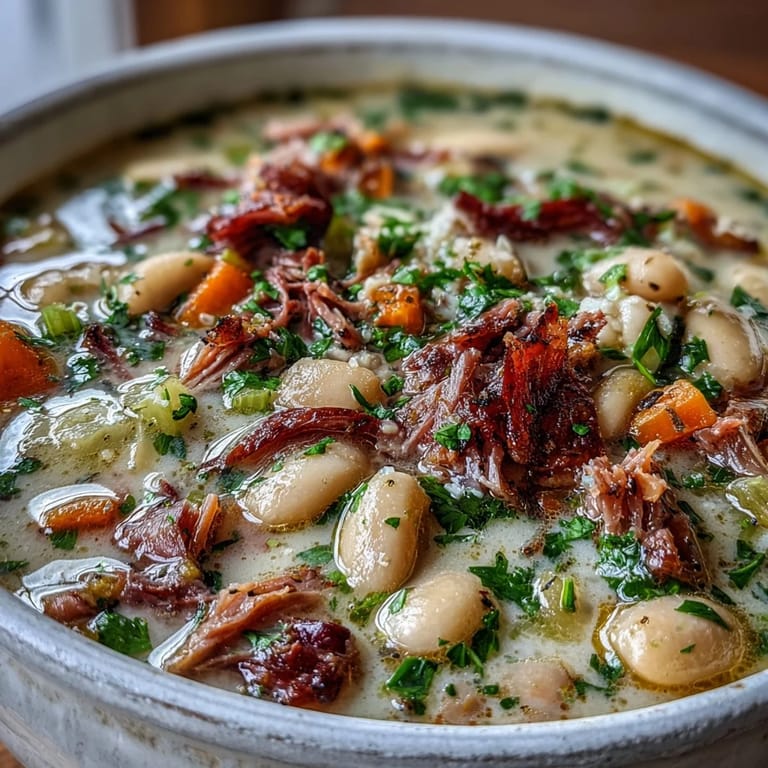
- For a creamier texture, mash some of the beans against the side of the pot with the back of a spoon before serving.
 Pin It
 This is the kind of soup that teaches you why people gather around tables in the first place. Make it, share it, and watch it become someone else's memory too.
Questions & Answers
- → What type of beans work best in this dish?
Great northern or cannellini beans are ideal for their creamy texture and mild flavor that complement the smoky ham.
- → How should the ham hock be prepared before cooking?
The ham hock is added whole to the pot and simmered slowly with the beans to infuse the broth with smoky richness before shredding the meat.
- → Can I make the dish spicier?
Yes, adding a pinch of cayenne or a splash of hot sauce enhances the warmth without overpowering the other flavors.
- → Is it necessary to soak the beans overnight?
Soaking beans overnight reduces cooking time and helps achieve a tender, creamy consistency.
- → What sides pair well with this soup?
Traditional sides include cornbread or crusty bread, which are perfect for dipping and balance the hearty texture.
- → How can I adjust the thickness of the soup?
Mash some beans against the pot side before serving to create a creamier texture; adjust broth quantity for preferred thickness.