 Pin It
 The first pot of minestrone I ever made was on a rainy October afternoon when the farmers' market had gifted me with an awkward abundance of late-summer vegetables. Standing in my kitchen, chopping zucchini and green beans while raindrops tapped against the window, I realized this wasn't just soup I was making—it was a canvas for seasonal improvisation. That flexibility became my gateway to authentic Italian cooking, where recipes breathe and change with what's available.
Last winter, my neighbor broke her ankle slipping on ice, and I found myself trudging through snow with a container of winter minestrone, steam fogging up my glasses as I carried it. She called me later that evening to say the soup had somehow tasted exactly like her Italian grandmother's, and I felt that peculiar joy that comes from accidentally recreating someone's cherished memory. Now our families swap soup containers regularly, building our own little tradition.
Ingredients
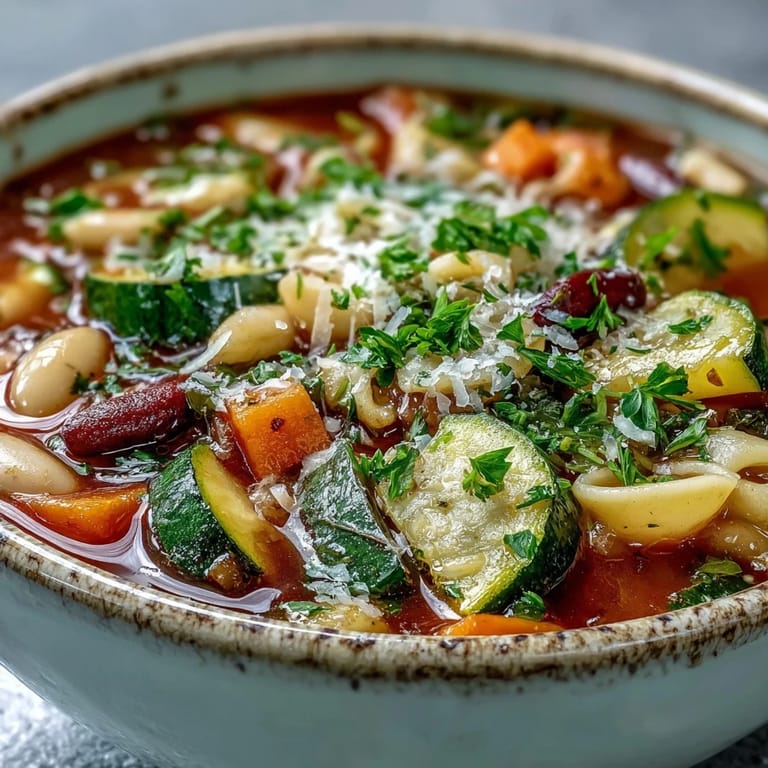
- Seasonal vegetables: The beauty of minestrone lies in its adaptability—I've learned that zucchini adds a subtle sweetness in summer while butternut squash brings heartiness to winter versions.
- Small pasta: Tiny shapes like ditalini or small shells create perfect little pockets that catch broth and bits of vegetables in each spoonful.
- Cannellini beans: These creamy white beans provide substance and protein, making the soup feel complete even without meat.
- Parmesan rind: This unlikely ingredient slowly melts into the broth, lending an umami richness that transforms the entire character of the soup.
- Fresh herbs: Adding parsley at the end brings a bright, fresh counterpoint to the deep, cooked flavors of the soup.
Tired of Takeout? 🥡
Get 10 meals you can make faster than delivery arrives. Seriously.
One email. No spam. Unsubscribe anytime.
Instructions
- Build your flavor foundation:
- Heat olive oil in a large pot and add your diced onion, carrots, and celery, allowing them to soften and release their aromatics for about 5 minutes. You'll know you're on the right track when your kitchen begins to smell like comfort itself.
- Layer in your seasonal vegetables:
- Add garlic, zucchini or squash, and green beans or leafy greens, letting them mingle for 3 minutes. These vegetables will infuse the broth with their distinct personalities.
- Create your broth base:
- Stir in diced tomatoes and potato if using, letting them sizzle briefly before pouring in the vegetable broth and adding the bay leaf. This is where patience pays off—bring it to a boil, then reduce to a gentle simmer for 15 minutes.
- Add texture and body:
- Introduce beans and pasta, then simmer uncovered until both are tender, about 10-12 minutes. Watch for that magical moment when the pasta is just al dente.
- Season and finish:
- Stir in oregano, basil, salt, and pepper, then fish out the bay leaf. Fold in fresh parsley right before serving to preserve its bright flavor.
 Pin It
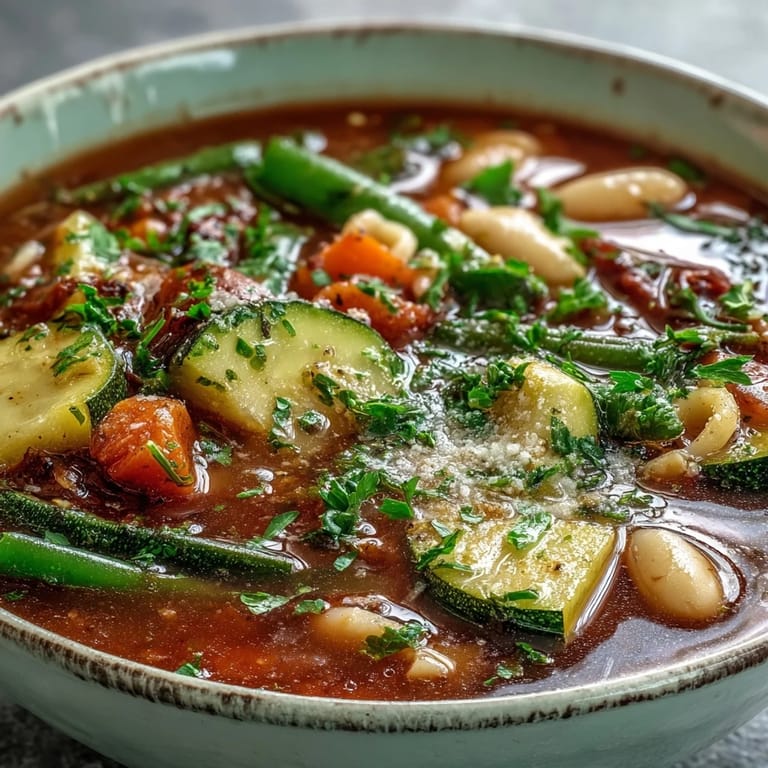
 A few years ago during a particularly brutal flu season, my teenage son who normally scoffs at vegetables devoured three bowls of this minestrone in one sitting, then asked if I could teach him to make it. We spent that afternoon together in the kitchen, his first real cooking lesson, with me explaining the rhythms of sautéing and simmering. Now whenever he comes home from college, he makes a pot of his slightly spicier version for us—a role reversal I cherish more than I can say.
Seasonal Adaptations
The soul of minestrone lies in its seasonal flexibility. Spring versions brighten with tender peas and asparagus tips, while summer iterations welcome tomatoes so fresh they need barely any cooking. Fall brings earthy mushrooms and hearty greens, and winter calls for root vegetables that transform into sweet, tender bites after their long simmer. I've learned to listen to what the farmers market is telling me rather than rigidly following a recipe—sometimes the most delicious pot happens when you honor what's growing right now.
Making It Ahead
Minestrone belongs to that magical category of foods that improve with time. Make it a day ahead and the flavors deepen and meld in ways that elevate the soup from merely delicious to transcendent. I often deliberately make a double batch knowing the second-day servings will have a complexity the first simply can't achieve. The vegetables release more of their essence, the broth thickens slightly, and everything harmonizes in the most satisfying way.
Serving Suggestions
The humble appearance of minestrone belies its ability to anchor a truly memorable meal. On casual weeknights, we eat it with nothing more than crusty bread for dipping, but for dinner parties, I've served small cups as a starter before a pasta main, or alongside grilled cheese sandwiches made with fontina and sage for a cozy lunch with friends.
- For a complete meal, serve with a simple green salad dressed with lemon vinaigrette and a board of Italian cheeses and olives.
- A drizzle of high-quality olive oil and a few shavings of aged Parmesan just before serving elevates the soup to company-worthy status.
- Keep small portions frozen in single-serving containers for those inevitable days when cooking feels impossible but you still need something nourishing.
 Pin It
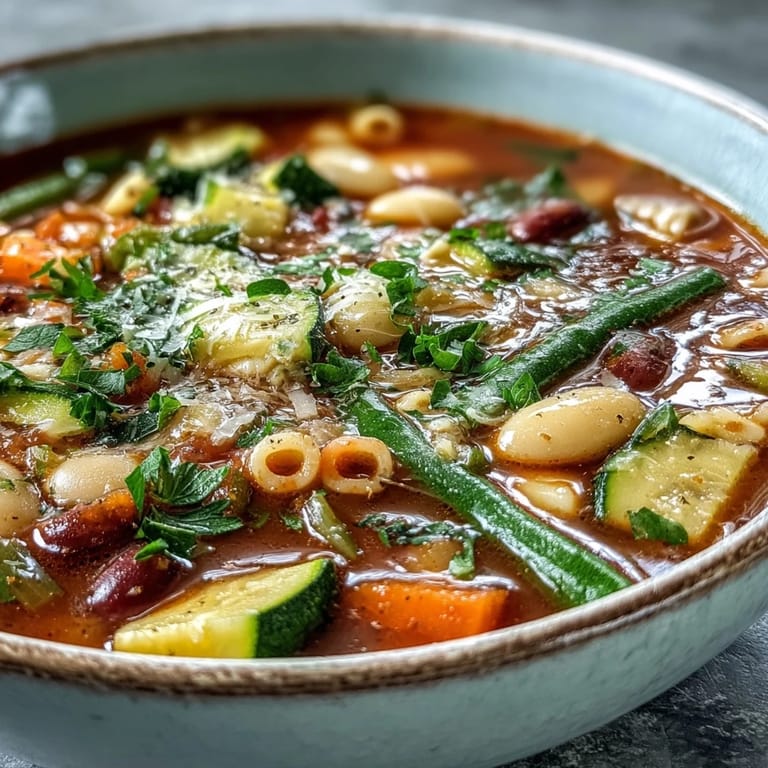
 This minestrone has carried me through countless seasons, each pot slightly different from the last, each one perfectly imperfect. I hope it becomes that kind of companion in your kitchen too—reliable, forgiving, and always exactly what you need it to be.
Questions & Answers
- → What vegetables work best in minestrone?
Classic minestrone includes the Italian soffritto base of onion, carrots, and celery. Add seasonal vegetables like zucchini in summer, butternut squash in winter, green beans, kale, spinach, or cabbage. Potatoes add heartiness while diced tomatoes provide depth and color.
- → Which pasta shape is ideal for minestrone?
Small pasta shapes work best—try ditalini, elbows, small shells, or even broken spaghetti. These petite shapes cook evenly and are easy to scoop with vegetables. Add pasta during the last 10-12 minutes of simmering to prevent overcooking.
- → Can minestrone be made gluten-free or vegan?
Absolutely. Substitute regular pasta with gluten-free varieties like corn or rice-based shapes. For vegan versions, simply omit the Parmesan cheese or use dairy-free alternatives. The vegetable broth and beans naturally provide protein and richness without animal products.
- → How long does minestrone keep in the refrigerator?
Minestrone stores beautifully for 4-5 days in a sealed container. The flavors actually deepen and improve as the ingredients meld together. If planning to store, slightly undercook the pasta initially since it will continue softening in the broth.
- → What's the secret to richer minestrone flavor?
Adding a Parmesan rind during simmering infuses the broth with subtle umami depth. Sautéing vegetables thoroughly before adding liquid develops caramelized notes. Dried herbs added during cooking and fresh parsley at the end create layered aromatic complexity.