 Pin It
 There's something about the way afternoon light hits a mezze board that makes everything feel like possibility. I discovered this particular arrangement on a terrace in Athens, watching a family spread out their lunch with the kind of casual elegance that only comes from knowing exactly what tastes good together. The feta caught the sun, the olives gleamed, and suddenly I understood that the space between things mattered as much as the things themselves.
I made this last summer when my neighbor brought over a bottle of wine and we decided to stay outside until the light turned golden. She sat cross-legged on a blanket while I arranged cucumber and tomatoes, and she kept saying things like 'this is what I needed' in that voice people use when they're really talking about more than just food. By the time the mint was scattered across the top, we'd solved nothing and everything felt lighter.
Ingredients
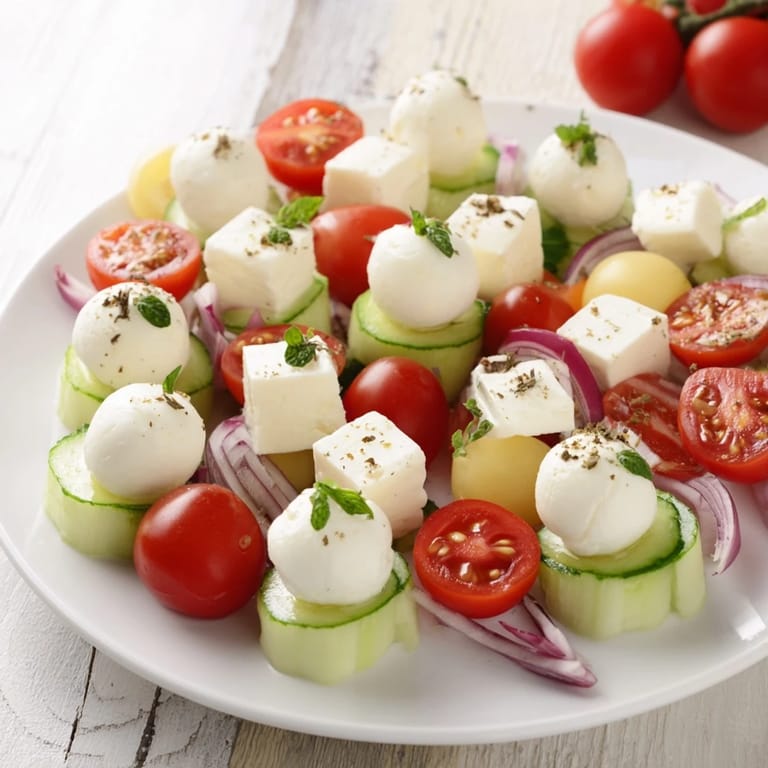
- Feta cheese, cubed: Use the crumbly, salty kind if you can find it, and cut it into generous chunks so it doesn't disappear into the arrangement.
- Fresh mozzarella balls: Bocconcini are worth hunting for because they stay soft and creamy, and they roll slightly when someone reaches for them, which is oddly satisfying.
- Cucumber: Slice it thick enough that it holds its shape but thin enough to actually bite through without a struggle.
- Cherry tomatoes: Halve them so they catch the dressing without being too fragile to pick up.
- Yellow bell pepper: The sweetness matters here, so pick one that feels heavy for its size.
- Red onion, thinly sliced: It'll be sharp and raw, which is exactly the point, but don't skip soaking it in cold water for five minutes if you want guests to actually eat it.
- Radishes: They're there for crunch and a peppery bite that cuts through the richness of the cheese and oil.
- Kalamata olives: Pit them yourself if you have time, but honestly, no one minds fishing around a pitted one in a moment of conversation.
- Hummus and tzatziki: Make them if you're ambitious, but store-bought versions won't ruin anything.
- Extra virgin olive oil: This is one of the few places where the actual good oil makes a noticeable difference, so don't skimp.
- Fresh mint and dill: These aren't garnish, they're flavor, so be generous with how much you scatter.
- Sea salt and cracked black pepper: The cracking matters because bigger pieces give you little bursts of flavor instead of a uniform salt taste.
Tired of Takeout? 🥡
Get 10 meals you can make faster than delivery arrives. Seriously.
One email. No spam. Unsubscribe anytime.
Instructions
- Set the foundation:
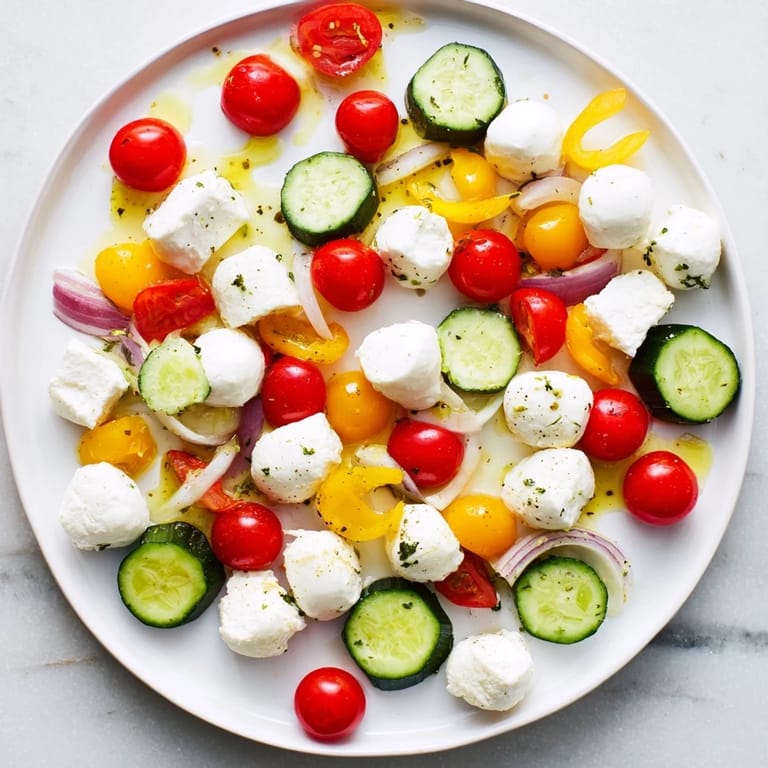
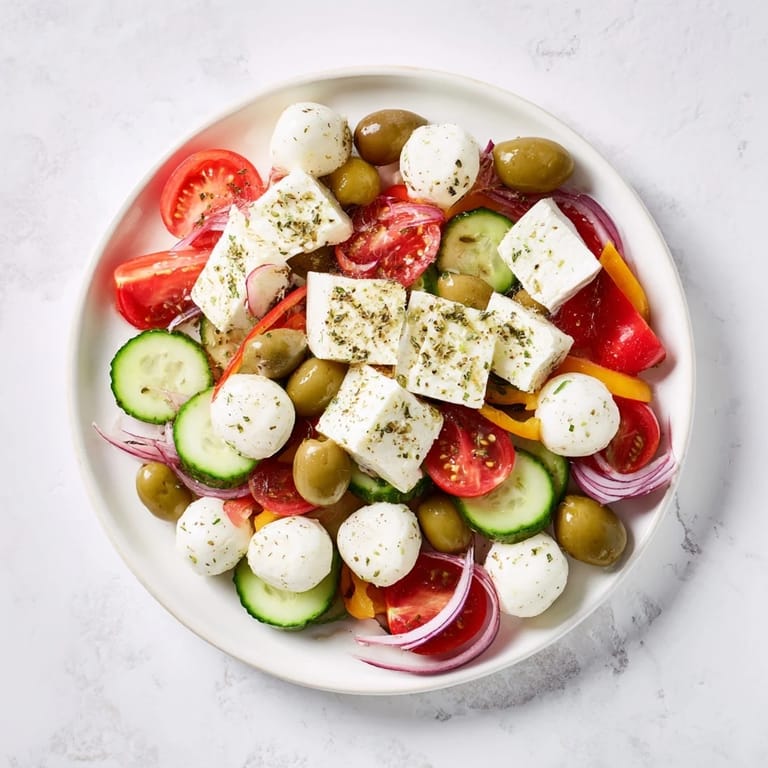
- Get your largest, prettiest board or platter and position it where the light will hit it right. Start by placing your feta and mozzarella in separate spots, leaving breathing room between everything so the board doesn't look crowded the moment someone takes a bite.
- Build with vegetables:
- Fan out your cucumber, tomatoes, peppers, onion, and radishes in loose clusters, thinking of them as little islands rather than a solid mass. The gaps are important because they make the platter look bountiful and let people's eyes find what they want.
- Add the supporting players:
- Pile the olives in their own small heap or tuck them into a tiny bowl, and move your hummus and tzatziki into similar bowls so they don't spread into the vegetables.
- Dress it all:
- Drizzle olive oil across the vegetables and cheese with a loose hand, then hit everything with a scatter of sea salt and cracked pepper.
- Finish with freshness:
- Tear mint and dill into pieces and scatter them across the board like you're blessing it, because honestly, that's what you're doing.
- Serve and watch:
- Set out crackers or pita on the side and step back. The conversation will do the rest.
 Pin It
 I realized something watching people approach this board: they slow down. They don't grab and go. They pause and choose, and they share bites with whoever's standing next to them. That's when I knew this wasn't really about the food at all.
The Art of Leaving Space
In cooking, we're usually taught to fill every inch of the plate, to make things look abundant and generous. But a mezze board is the opposite. The empty spaces are what make people want to reach for something, what give their eyes a place to rest, what suggest there's room for one more person at the table. It's a small thing, but it changes everything about how a meal feels.
Building Flavor Without Heat
There's no cooking here, no heat, no transformation beyond a few knife cuts. That means every ingredient tastes like itself, which sounds simple until you realize how much most food depends on cooking to mask mediocrity. The tomato needs to actually taste like tomato. The cheese needs to be good. This is where quality matters, where buying the thing that feels slightly expensive pays off with every bite.
From Kitchen to Table
This is the kind of dish that turns your kitchen into part of the entertaining, not a place you disappear into. You can prep everything while people are already there, pouring wine and settling into chairs. The act of arranging becomes a moment of connection instead of something hidden away.
- Prep everything while your guests are pouring their own drinks, so the board comes together in real time like magic.
- If you're nervous about something not looking right, remember that people eating mezze are focused on flavor and conversation, not magazine photography.
- Make it earlier in the day if you need to, but refresh the herbs and oil right before people arrive so it feels alive.
 Pin It
 This platter is permission to stop cooking and start gathering. That's the whole point.
Questions & Answers
- → What cheeses are used on this mezze board?
Feta cheese cubes and fresh mozzarella balls (bocconcini) are featured for creamy, tangy flavors.
- → Which vegetables are included in this spread?
Cucumber rounds, cherry tomatoes, yellow bell pepper strips, red onion slices, radishes, and Kalamata olives create a colorful vegetable variety.
- → Are there any dip options served alongside?
Yes, small bowls of creamy hummus and refreshing tzatziki are served for dipping.
- → How is the platter seasoned for flavor?
Extra virgin olive oil is drizzled over the ingredients, then sprinkled with sea salt and cracked black pepper for enhanced taste.
- → Can this mezze board accommodate dietary restrictions?
It is vegetarian and can be made gluten-free by using GF crispbreads; vegan options are possible with plant-based cheeses.