 Pin It
 My neighbor dropped by one Sunday morning with spring onions from her garden, and I had a carton of eggs sitting in the fridge. Instead of scrambling them into something ordinary, I decided to build something worth lingering over—a frittata that would let those tender green shoots shine alongside crispy potatoes and sharp cheddar. What started as a casual impulse turned into something I've made countless times since, each batch slightly different depending on what's in season or what I'm craving.
I made this for my sister last spring when she was going through a rough patch, and she sat at my kitchen counter eating thirds while telling me about her week. That frittata became part of a turning point in her day—not because it was complicated, but because it was warm, filling, and tasted like someone had actually thought about feeding her properly.
Ingredients
- Waxy potatoes (300 g, about 2 medium): These hold their shape during cooking better than starchy varieties, staying tender without turning to mush in the hot skillet.
- Spring onions (4, white and green parts separated): The white parts soften into sweetness while the greens add a fresh, delicate bite that survives the oven.
- Mature Cheddar cheese (100 g, grated): Mature gives you real flavor depth; mild cheddar tends to disappear into the eggs without much personality.
- Whole milk (60 ml or ¼ cup): This keeps the eggs from becoming too dense, creating that characteristic fluffy texture that makes a frittata different from scrambled eggs.
- Large eggs (6): Room temperature eggs whisk more smoothly and cook more evenly than cold ones straight from the fridge.
- Olive oil (2 tbsp): Good quality oil prevents the potatoes from sticking and adds its own subtle richness to the base layer.
- Salt and black pepper to taste: Season in layers rather than all at once, which deepens the overall flavor.
Tired of Takeout? 🥡
Get 10 meals you can make faster than delivery arrives. Seriously.
One email. No spam. Unsubscribe anytime.
Instructions
- Get your oven ready:
- Preheat to 190°C (375°F) so it's waiting when you need it, not the other way around.
- Build your potato base:
- Heat olive oil in your ovenproof skillet over medium heat, then add the thin potato slices with a pinch of salt. Stir occasionally and listen for the gentle sizzle that tells you they're turning golden—this should take about 8 to 10 minutes, and you want them barely tender, not soft.
- Bring in the white parts:
- Add the white sections of the spring onions and let them cook for just 1 to 2 minutes until they're soft and fragrant, which mellows their bite.
- Combine your egg base:
- In a separate bowl, whisk together the eggs, milk, remaining salt, and pepper until the mixture is uniform and slightly frothy. Stir in half the grated cheddar and all the green parts of the spring onions so the color is distributed throughout.
- Bring everything together:
- Pour the egg mixture over the potato layer in the skillet and gently stir to make sure the vegetables are spread out evenly, then top with the remaining cheddar in an even layer.
- Finish in the oven:
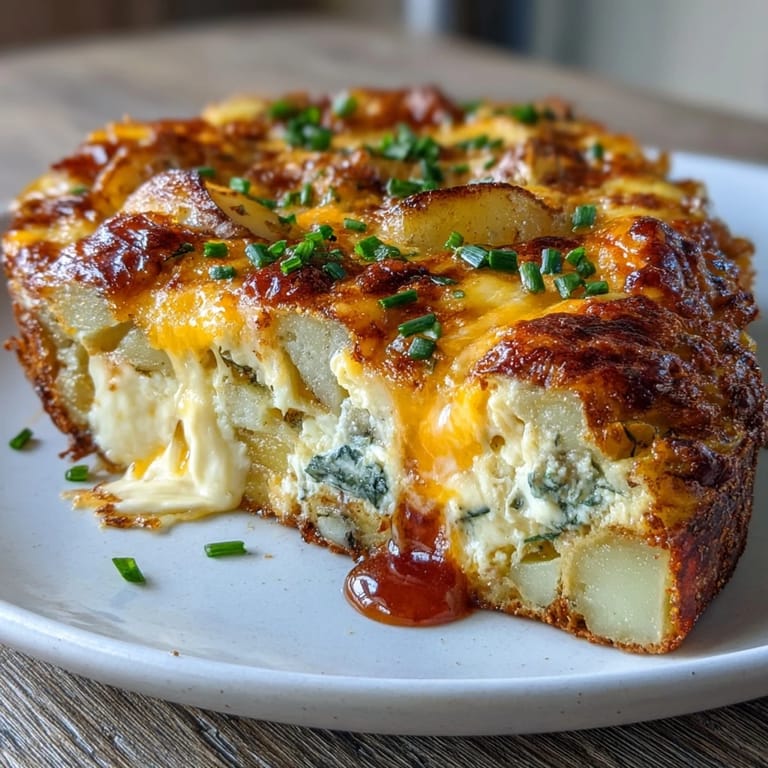
- Transfer the skillet to your preheated oven and bake for 12 to 15 minutes, watching until the frittata puffs up slightly and the center sets but still jiggles just a touch when you move the pan. Let it rest for 5 minutes before slicing—this makes plating infinitely easier.
 Pin It
 The moment the frittata comes out of the oven, still steaming and slightly puffed, there's something almost meditative about letting it rest. That five minutes of cooling isn't wasted time—it's when the eggs truly set and hold their shape when you slice into them.
How to Customize Your Frittata
This base is endlessly flexible, which is part of why I keep returning to it. Cooked bacon tears beautifully across the top before baking, or sautéed mushrooms add an earthy depth that plays wonderfully with the cheese. Smoked salmon scattered over the green onions gives it an entirely different personality—almost brunch-restaurant-worthy if you want to feel fancy on a Tuesday.
Cheese Variations Worth Trying
While sharp cheddar is my default, Gruyère creates a nuttier, more sophisticated flavor that borders on restaurant-quality. Feta brings a briny sharpness that feels lighter and more Mediterranean, and creamy goat cheese adds a subtle tanginess that makes the whole thing taste less heavy.
Serving and Storage Wisdom
A simple salad with vinaigrette alongside it brightens the richness, and crusty bread becomes essential for soaking up every bit. The frittata tastes equally good warm from the oven or at room temperature later, which makes it perfect for prepping ahead or wrapping slices for lunch the next day.
- Leftover frittata keeps beautifully in an airtight container for up to four days in the fridge.
- Slice and reheat gently in a low oven rather than the microwave to keep the texture from becoming rubbery.
- Cold frittata slices make an unexpectedly satisfying snack straight from the fridge.
 Pin It
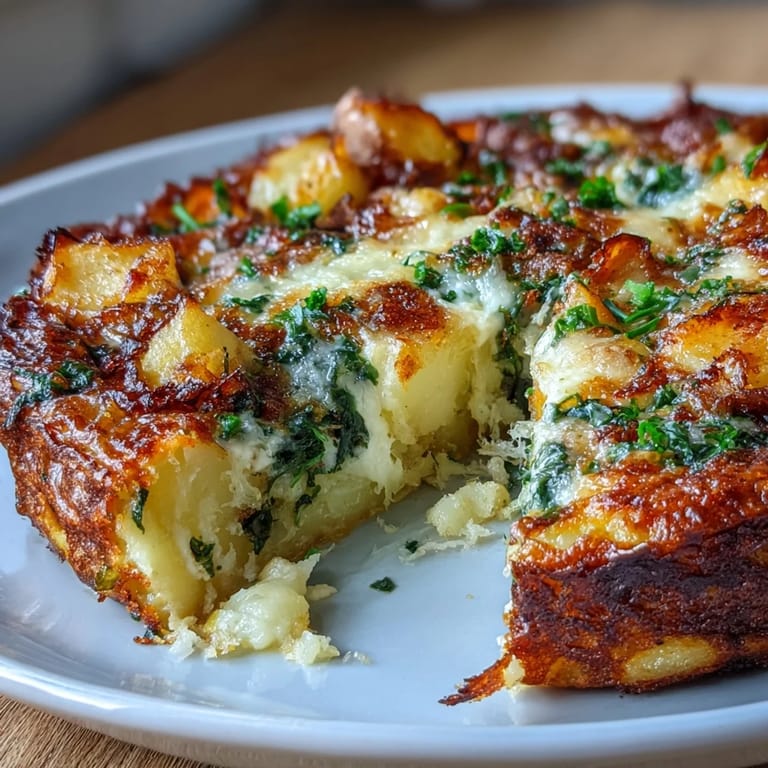
 This frittata has become my answer to the question of what to make when I want something nourishing but not fussy. It's the kind of dish that makes an ordinary morning feel a little more intentional.
Questions & Answers
- → What potatoes work best for this dish?
Waxy potatoes are ideal since they hold their shape and have a creamy texture when cooked.
- → Can I substitute cheddar cheese with other types?
Yes, Gruyère, feta, or goat cheese provide lovely variations with different flavor profiles.
- → How should the spring onions be prepared?
Slice the white parts finely and cook briefly for softness; use the green parts raw for freshness mixed into the egg base.
- → What is the best way to cook the potatoes before baking?
Cook sliced potatoes gently in olive oil with a pinch of salt until tender and lightly golden.
- → Can this dish be served cold?
While best warm or at room temperature, it can also be enjoyed cold, retaining its flavor and texture.