 Pin It
 I discovered soba noodle salad on a sweltering afternoon when my friend showed up with a cold bowl and insisted I try it before the heat convinced me to stop eating altogether. One bite and I understood—the noodles were silky, the vegetables snapped with freshness, and that peanut-sesame dressing somehow tasted both rich and impossibly light. It became my go-to recipe for those days when you want something that feels substantial but doesn't weigh you down, and now I find myself making it constantly, tweaking the dressing until it's exactly as I like it.
The first time I served this to guests, I was nervous because cold noodle salads felt fancy and risky, but everyone went back for seconds and one friend asked for the recipe before leaving. That moment taught me that good food doesn't have to be complicated—it just needs to be thoughtful, and when you taste how the sesame oil carries the garlic into every strand of noodle, you understand why people keep coming back.
Ingredients
- Soba noodles (250 g): These buckwheat noodles have a subtle nutty flavor and slightly chewy texture that sets them apart from regular pasta—look for ones with 100% buckwheat if you're cooking gluten-free, but honestly the regular ones are what make this sing.
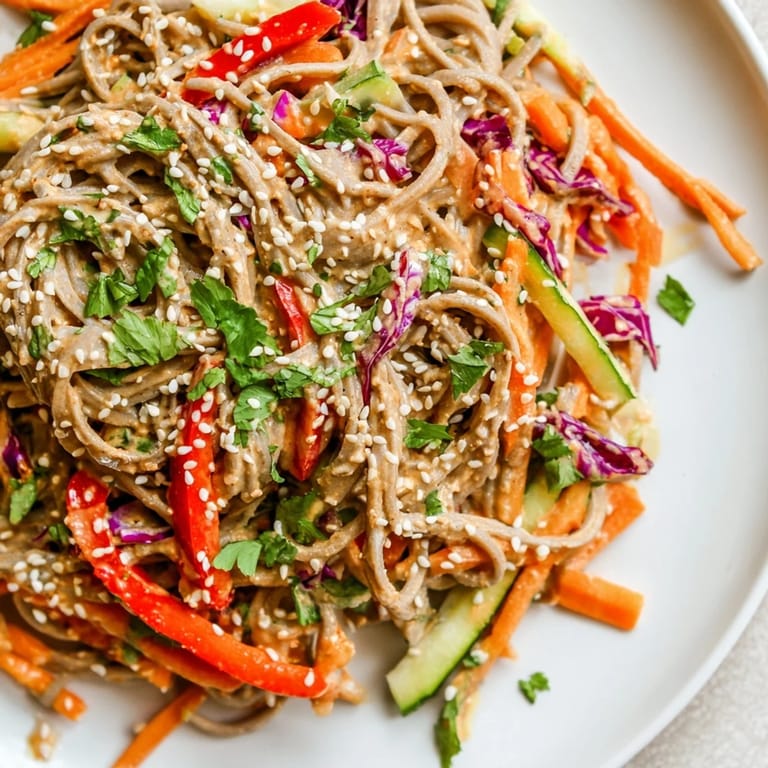
- Carrot: Julienned thin so they stay crisp and don't overpower the delicate noodles; a mandoline makes this easier but a sharp knife works just fine.
- Cucumber: Sliced into ribbons or thin strips to keep the salad light and refreshing, the cool crunch balances the rich dressing perfectly.
- Red bell pepper: Adds sweetness and color, thinly sliced so it distributes evenly without any one bite being overwhelmingly peppery.
- Spring onions: The sharp bite of these is essential—they keep the salad from feeling one-dimensional and add an oniony brightness that ties everything together.
- Red cabbage (1 cup shredded): This is my secret weapon for staying power; it keeps the salad crunchy even after a day in the fridge and adds a subtle earthiness.
- Peanut butter or tahini (3 tbsp): Smooth peanut butter creates a creamier, richer dressing while tahini leans into sesame—use whichever matches your mood or dietary needs.
- Soy sauce (2 tbsp): The umami backbone of the dressing; use tamari if you need gluten-free, and don't skip it thinking low-sodium will work the same way.
- Rice vinegar (1 tbsp): This gentle acid brightens everything without overpowering, unlike regular vinegar which would make the whole thing taste harsh.
- Toasted sesame oil (1 tbsp): A little goes a long way—this is liquid gold, deeply fragrant and essential to the flavor, so don't substitute regular sesame oil.
- Maple syrup or honey (1 tbsp): Just enough sweetness to round out the dressing and balance the salty soy; skip it and the dressing tastes one-note.
- Fresh ginger (1 tsp grated): Adds warmth and a subtle spice that makes people ask what makes this taste so good.
- Garlic clove (1 small, minced): Use fresh garlic, never jarred—it makes a real difference in how the dressing tastes.
- Water (1–2 tbsp): Added gradually to reach the perfect dressing consistency, pourable but clinging to the noodles.
- Toasted sesame seeds (2 tbsp): Toasted seeds add a deeper flavor than raw ones; toast them yourself if you can because the difference is noticeable.
- Fresh cilantro (2 tbsp chopped): Herbaceous and bright, this is the final touch that makes the whole thing feel fresh and intentional.
- Red chili (1 small, thinly sliced, optional): Heat is optional but recommended—just a sliver adds complexity without making it spicy in a way that overwhelms.
- Lime wedges: Essential for serving; a squeeze of lime at the table lifts everything and adds a final brightness.
Tired of Takeout? 🥡
Get 10 meals you can make faster than delivery arrives. Seriously.
One email. No spam. Unsubscribe anytime.
Instructions
- Boil and cool the noodles:
- Bring a large pot of water to a rolling boil, add soba noodles, and cook exactly according to package instructions (usually 5–7 minutes)—set a timer because even a minute too long and they get mushy. Drain into a colander and rinse under cold running water, stirring gently with your fingers to separate them and remove the starchy coating that would make the salad gummy.
- Build the dressing:
- In a mixing bowl, whisk together peanut butter, soy sauce, rice vinegar, sesame oil, maple syrup, ginger, and minced garlic until combined, then slowly add water a tablespoon at a time, whisking between each addition, until the dressing is smooth, creamy, and flows off the whisk. You want it pourable but thick enough to cling to the noodles, not watery.
- Toss everything together:
- Add the cooled noodles and all the vegetables to the dressing and toss with your hands or two spoons, making sure every strand and piece of vegetable gets coated. This is where the magic happens—the noodles absorb the flavors and start to taste like they were meant to be together.
- Serve and garnish:
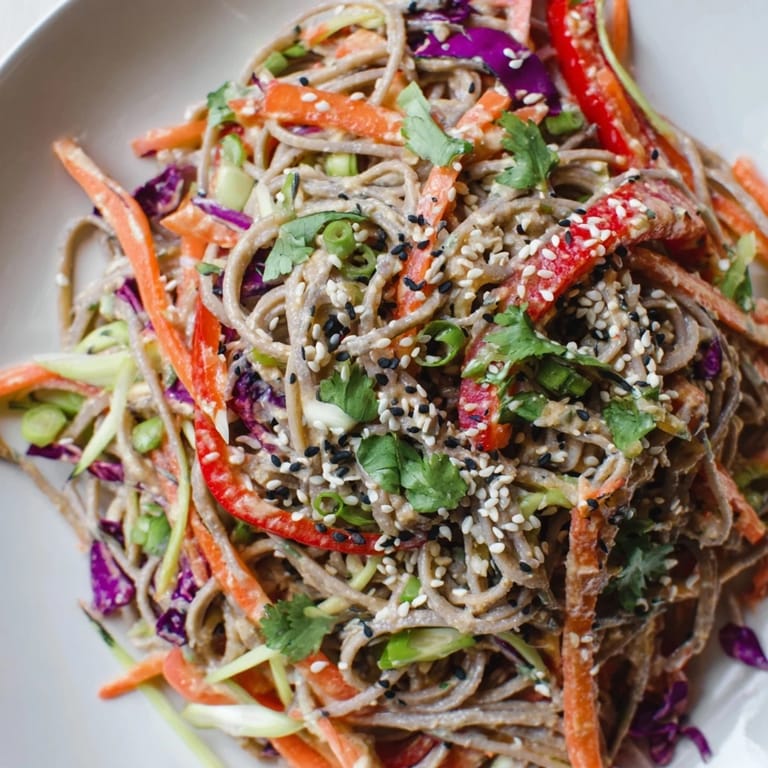
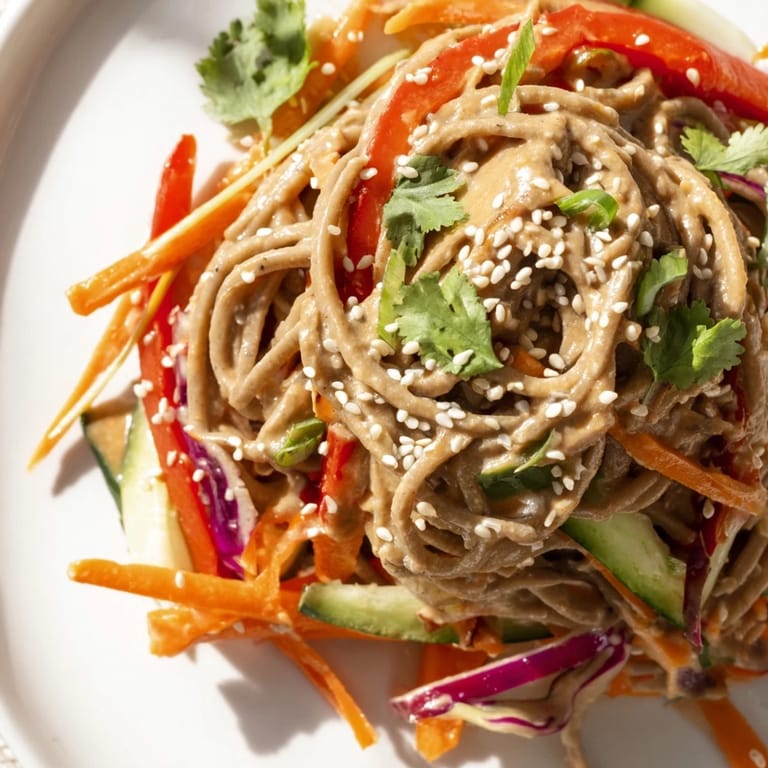
- Divide the salad among bowls, scatter toasted sesame seeds and fresh cilantro on top, add a few thin slices of red chili if you like heat, and serve with lime wedges. Let people squeeze lime over their bowl right before eating—it's the final touch that makes everything taste alive.
 Pin It
 I make this salad on quiet mornings when I want to eat something that feels like self-care, or on busy evenings when I have no energy but need actual nutrition. The sound of water running over the cold noodles, the smell of sesame oil hitting the warm garlic, the way the vegetables snap under your knife—these small rituals make cooking feel less like a chore and more like a moment of peace.
Why This Works as a Complete Meal
Buckwheat noodles provide protein and fiber while staying light enough to eat in warm weather, and the vegetables add crunch, vitamins, and color without making you feel stuffed. The peanut or sesame dressing is rich enough to satisfy but the vinegar and lime keep everything feeling fresh, so you end up eating a bowl that's both filling and refreshing. This is why I serve it as a main course instead of a side—it genuinely stands on its own.
Making It Your Own
The foundation of this recipe is solid, but the beauty is in customization based on what you have and what you're craving. Add grilled tofu for extra protein, scatter edamame across the top for earthiness, or shred some cooked chicken if you want it less vegetarian. The vegetables can shift with the seasons—use whatever is crisp and fresh, keeping the balance of textures and colors in mind.
Storage and Make-Ahead Tips
This salad keeps well in the fridge for up to two days, though I usually eat it the same day or the next morning when the flavors have melded even more. If you're making it ahead, store the components separately—noodles in one container, vegetables in another, dressing in a jar—and assemble when you're ready to eat. A squeeze of fresh lime before serving brings back the brightness that fades as the salad sits, making day-old leftovers taste almost as fresh as when you made it.
- Keep the dressing separate if you're not eating it immediately, as it thickens and the noodles continue absorbing it.
- Toast extra sesame seeds and store them in an airtight container so you can always have fresh garnish on hand.
- This salad travels well in a container for lunch, just pack the lime wedges separately and squeeze them right before eating.
 Pin It
 This recipe became a permanent part of my cooking rotation because it asks so little and gives so much—fresh, flavorful, and ready in half an hour. I hope it becomes something you reach for again and again, on the afternoons when you need something good.
Questions & Answers
- → How should I cook soba noodles for optimal texture?
Boil soba noodles for 5-7 minutes until tender but firm. Drain and rinse thoroughly under cold water to stop cooking and remove excess starch, preserving their chewy texture.
- → Can I substitute peanut butter in the dressing?
Yes, tahini can replace peanut butter for a sesame-focused flavor or to avoid nuts. Adjust water to achieve a creamy consistency.
- → What vegetables complement soba noodles best in this dish?
Julienned carrot, thinly sliced cucumber, red bell pepper, spring onions, and shredded red cabbage add crispness and color.
- → How can I make this dish gluten-free?
Use 100% buckwheat soba noodles and substitute tamari for soy sauce to avoid gluten.
- → Is it possible to add protein to this cold salad?
Yes, additions such as edamame, grilled tofu, or shredded cooked chicken enhance the protein content and make it more filling.