 Pin It
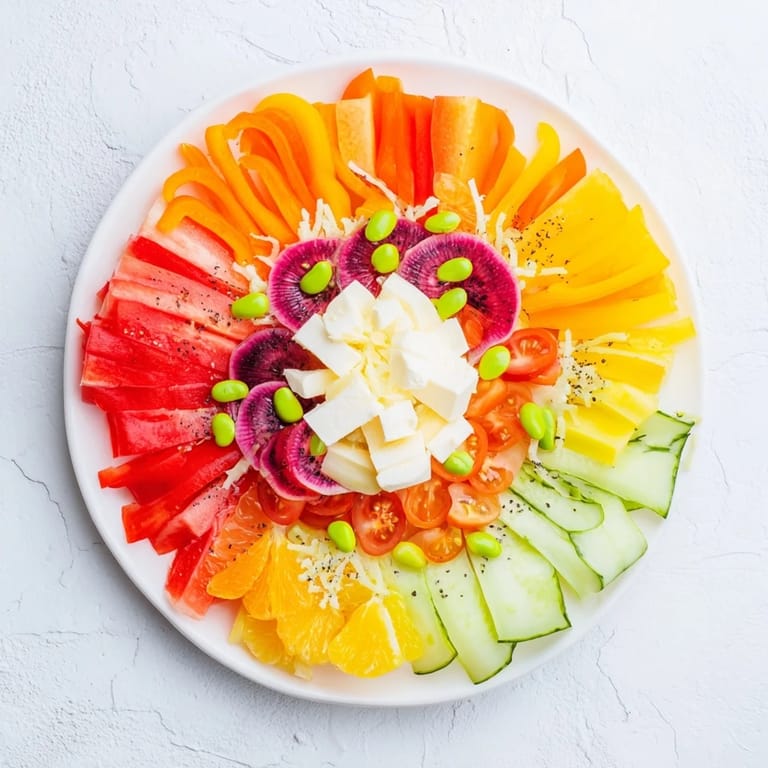
 The first time I arranged vegetables by color on a platter, I wasn't trying to make art—I was just trying to use up what the farmer's market had in abundance that Saturday. Halfway through, my daughter walked into the kitchen and gasped like I'd created something from a storybook. That moment taught me that sometimes the most satisfying dishes aren't the ones that follow tradition, but the ones that make people pause before they eat. The Prism Burst became our answer to the question: what if dinner was beautiful enough to photograph but simple enough to throw together any night?
I made this for a potluck once where I was convinced everyone would show up with the same pasta salad. Instead, I watched people's faces light up when they saw the prism fanned across the platter—and then watched them come back for thirds because it actually tasted as good as it looked. That's when I realized this dish does something most recipes don't: it makes people want to eat more vegetables without them having to negotiate it first.
Ingredients
- Ricotta cheese or Greek yogurt: The creamy white anchor that holds the whole visual together, and honestly, it tastes better than you'd expect when mixed with just lemon and olive oil.
- Cherry tomatoes: Halve them just before serving so they're still glossy and alive-looking, not dusty.
- Bell peppers (red, orange, yellow): Slice these thin so they're tender and not waxy—a mandoline makes this painless if you have one.
- Cucumber: Use the freshest you can find and slice it on an angle for visual interest.
- Blueberries and grapes: These aren't just garnish; they add a subtle sweetness that rounds out all the fresh vegetable brightness.
- Purple cabbage: Shred it fine so it mingles with the blueberries and creates that blue-violet gradient without being tough to eat.
- Extra-virgin olive oil and lemon juice: The dressing should be delicate so you taste the vegetables, not the dressing.
Tired of Takeout? 🥡
Get 10 meals you can make faster than delivery arrives. Seriously.
One email. No spam. Unsubscribe anytime.
Instructions
- Build your white base:
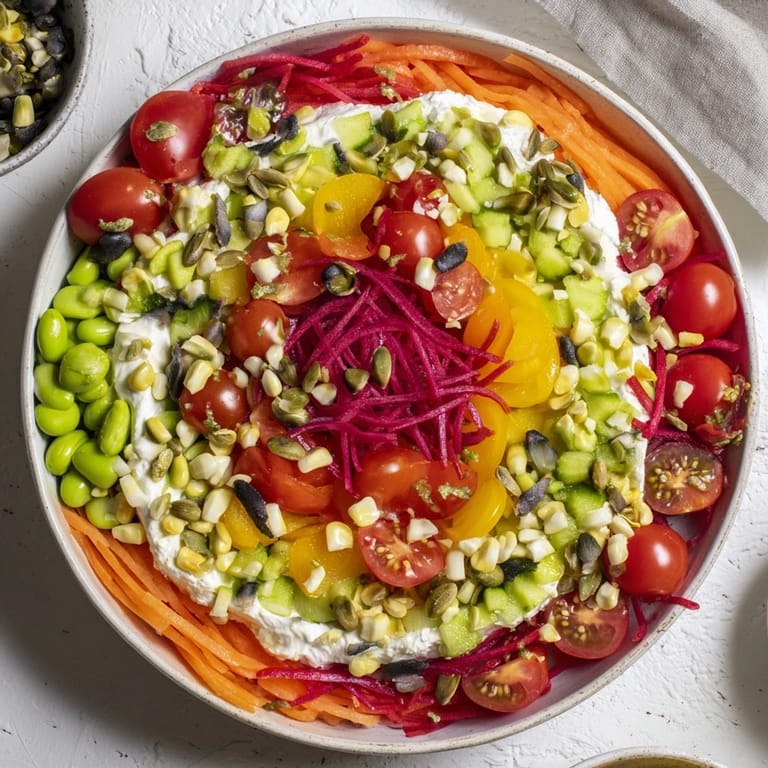
- Mix ricotta with olive oil, lemon zest, salt, and pepper until it's creamy but not runny. Spread it into a small circle in the center of your platter—this is your anchor point, so don't worry if it's imperfect. The vegetables will soften its edges naturally.
- Pre-portion your colors:
- Arrange each color group in its own small bowl so you're not scrambling when you start fanning. This takes the stress out of the actual assembly and lets you focus on making it beautiful.
- Fan from the center outward:
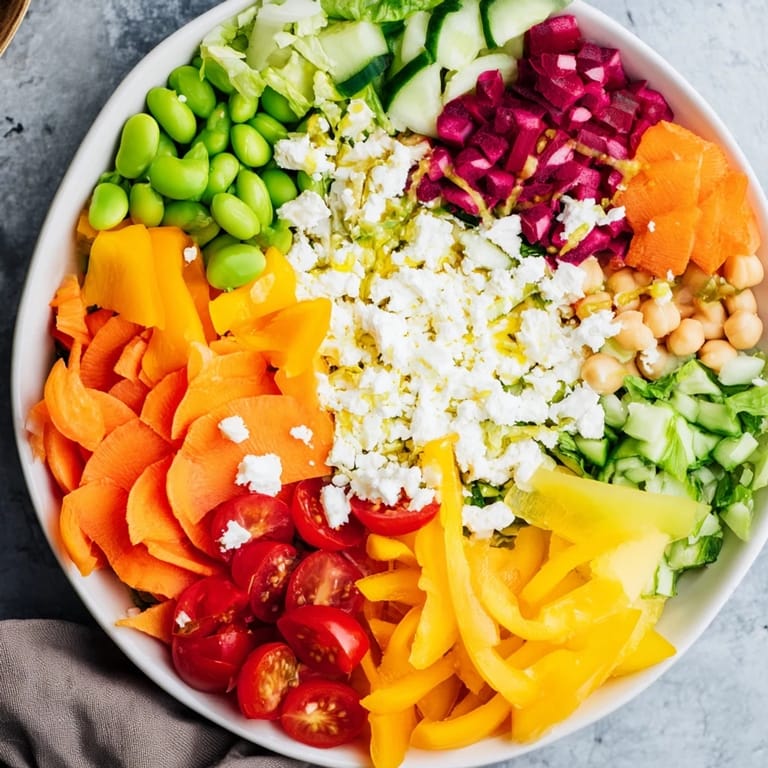
- Starting with red, lay each color in a stripe radiating from the white center like sun rays. Use your hands or the back of a spoon to keep the lines clean—a little overlap is fine and actually adds to the natural look.
- Whisk your dressing:
- Combine olive oil, lemon juice, honey, salt, and pepper in a small bowl. Taste it and adjust; it should be bright and just balanced enough to let the vegetable flavors shine through.
- Dress and serve:
- Drizzle the dressing lightly just before serving, or pass it on the side so everyone can control how much they use. Scatter fresh herbs over the top and crack some black pepper across it like you mean it.
 Pin It
 There was a moment during a family dinner when my usually picky eater didn't just eat the salad—he built his own little prism on his plate, arranging the colors in order like he was conducting a symphony. That's when I understood that presentation isn't shallow; it's permission to play with your food in the best way.
The Magic of Contrast
This salad works because every layer tastes different—crisp, sweet, earthy, fresh. The white ricotta base is cool and mild, the reds and oranges bring brightness, and the grapes add a whisper of natural sweetness that ties everything together. By organizing the colors, you're actually organizing the flavor journey, so each forkful hits differently depending on what you land on. It's intentional and accidental at the same time.
Making It Your Own
This isn't a recipe that needs strict obedience—it's more of a template. Swap the ricotta for Greek yogurt or a plant-based alternative, use whatever vegetables look good at your market that day, and don't stress if your stripes aren't perfect. The beauty of a prism is that it's inherently forgiving because the concept is what matters, not the precision.
Serving and Storage Notes
Serve this immediately after dressing so everything stays crisp and the colors stay bold. If you need to prep ahead, arrange the vegetables without the dressing and keep them covered in the fridge—they'll stay fresh for a few hours. Just dress it right before your guests arrive.
- Add toasted pumpkin seeds or sunflower seeds for crunch if your crowd likes texture.
- Edible flowers tucked between the color stripes make this feel special enough for a dinner party.
- A crisp white wine like Sauvignon Blanc pairs perfectly because it doesn't compete with the fresh, delicate flavors.
 Pin It
 This salad reminds me that sometimes the most memorable meals aren't the complicated ones—they're the ones that make people smile before they even take a bite. Make it, watch the reactions, and trust that simple ingredients arranged with intention taste better than you'd expect.
Questions & Answers
- → What is the central white base made of?
The base combines ricotta cheese or Greek yogurt with olive oil, lemon zest, salt, and pepper for a creamy foundation.
- → How are the colorful layers arranged?
Vegetables and fruits are fanned outward from the central base in rainbow order to create a prism-like visual effect.
- → Can I substitute ingredients for dietary needs?
Yes, ricotta can be swapped for vegan cream cheese or plant-based yogurt to suit dietary preferences.
- → What dressing complements this salad?
A light dressing of olive oil, lemon juice, honey or agave syrup, salt, and pepper enhances the fresh flavors without overpowering them.
- → How can I add extra texture?
Toasted nuts or seeds like pumpkin, sunflower, or pine nuts can be added for crunch and depth.