 Pin It
 There's something about a steaming bowl of shirataki noodles that stops time, especially on afternoons when I needed something warm but didn't want the heaviness of regular pasta weighing me down. My kitchen smelled incredible that first time—the ginger and garlic perfuming everything as the bone broth simmered, filling the space with this unmistakable comfort I couldn't quite name until I tasted it. That bowl taught me that simple doesn't mean boring, and zero-carb doesn't mean sacrifice.
I made this for a friend who'd just started avoiding carbs, and watching her face when she realized she could eat a full, satisfying bowl without any guilt was everything. She asked for the recipe before she'd even finished, then texted me the next week saying she'd made it three times already. That's when I knew this wasn't just another diet recipe—it was something people actually wanted to cook again.
Ingredients
- Bone broth (4 cups): This is your foundation—the richer and more flavorful your broth, the less you'll need to season; I learned to taste before adding extra soy sauce because good broth already whispers its own seasoning.
- Fresh ginger (thumb-sized piece, sliced): Don't peel it, just smash it slightly so it releases its oils into the broth; the warmth it brings is almost medicinal, which is exactly why this bowl feels so restorative.
- Garlic (2 cloves, smashed): Smashing rather than mincing means the flavor mellows as it simmers, giving you depth without that sharp raw garlic bite.
- Soy sauce or tamari (2 tablespoons): Tamari is your gluten-free friend here, and honestly, it tastes slightly richer than regular soy sauce in this particular context.
- Rice vinegar (1 tablespoon): This tiny amount brightens everything without making the broth taste vinegary—it's the secret that makes people ask what they're tasting.
- Sesame oil (1 teaspoon): A teaspoon is all you need; too much and it overpowers, but this amount gives you that toasted, nutty whisper that ties everything together.
- Shirataki noodles (400g, drained and rinsed): The rinsing and the hot water pour-over step genuinely matter—this removes the fishy odor that catches people off guard if you skip it.
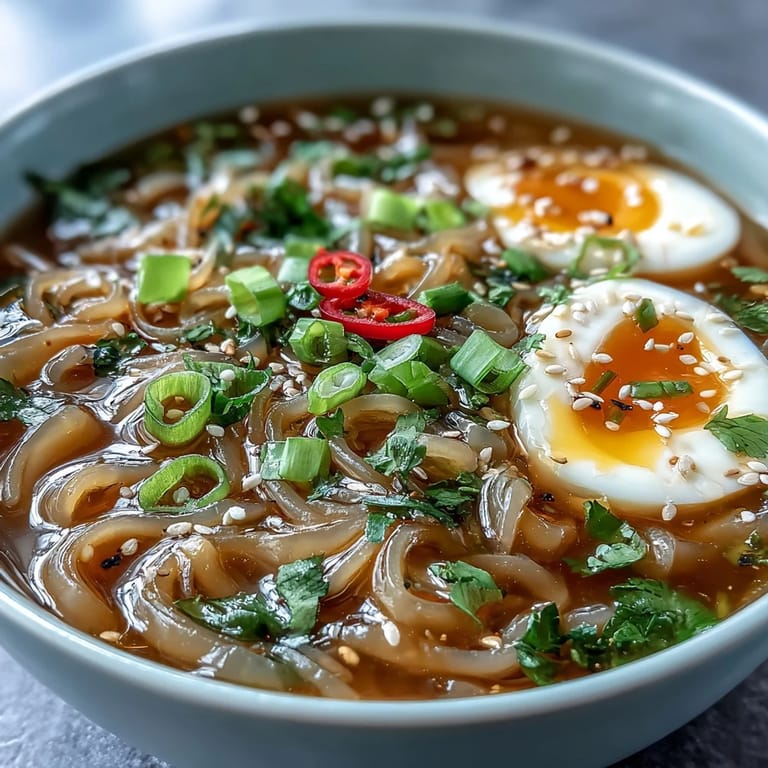
- Soft-boiled eggs (2, halved): Optional but they transform this from a light broth into a meal that actually sustains you; the runny yolk creates its own sauce.
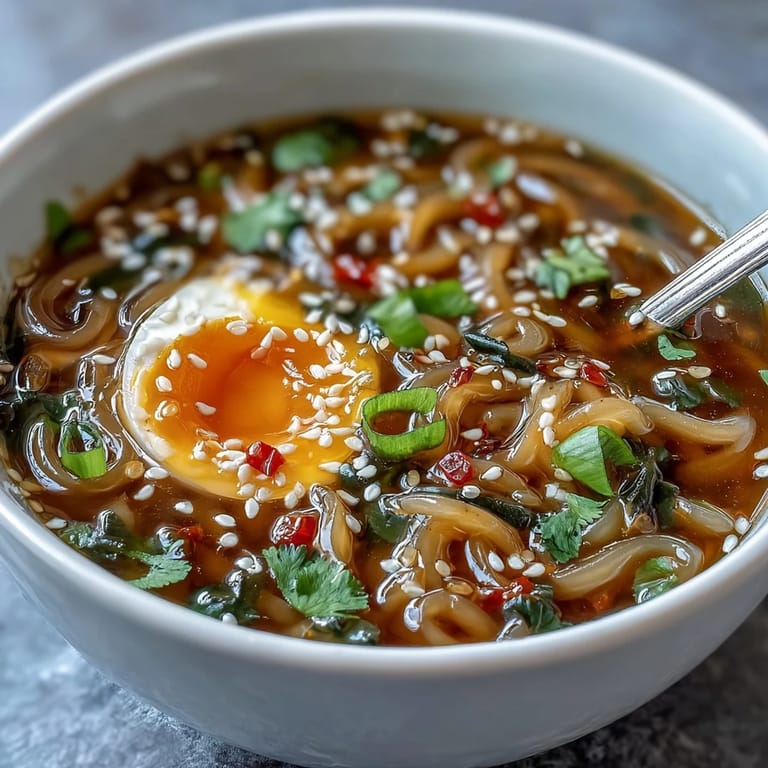
- Spring onion, red chili, fresh herbs, sesame seeds: These toppings aren't decoration—they're contrast, bringing brightness and crunch to what would otherwise be all soft and warm.
Tired of Takeout? 🥡
Get 10 meals you can make faster than delivery arrives. Seriously.
One email. No spam. Unsubscribe anytime.
Instructions
- Build your flavor base:
- Pour the bone broth into your medium pot and add the ginger slices, smashed garlic, soy sauce, rice vinegar, and sesame oil all at once. This matters because they're all going to infuse together as everything comes to heat, creating a foundation that tastes intentional rather than assembled.
- Let it breathe:
- Bring everything to a gentle boil over medium heat, then drop the heat down and let it simmer for 10 minutes. You'll notice the kitchen filling with steam and the smell becoming more pronounced—that's the flavors finding each other, which is exactly what you want.
- Prep the noodles properly:
- While the broth simmers, drain your shirataki noodles and rinse them thoroughly under cold water, feeling them separate under your fingers. Then place them in a sieve and pour boiling water over them—this step removes any lingering odor and makes them taste fresh rather than funk-forward.
- Bring it all together:
- Add the prepared noodles to your simmering broth and let them warm through for just 2 to 3 minutes. They'll soften slightly and absorb the flavors without getting mushy, which is the sweet spot you're aiming for.
- Finish and serve:
- Fish out the ginger slices and garlic cloves with a spoon, then ladle the noodles and broth evenly into two bowls. Top each with your soft-boiled egg, a scatter of spring onion, some chili slices, fresh herbs, and a pinch of sesame seeds if you have them.
 Pin It
 There was a moment, probably my third time making this, when I realized I wasn't treating it as a diet meal anymore—I was making it because I actually craved it. That shift, from obligation to genuine want, is when food stops being punishment and becomes genuine comfort.
Why This Broth Matters
Bone broth isn't trendy magic, but it does something real—it creates a warm, mineral-rich base that makes shirataki noodles feel complete rather than sparse. The gelatin from properly made broth coats your mouth in a way that instant broth never can, which is why this bowl feels satisfying despite being nearly carb-free. Store-bought is completely fine; just check the label to avoid hidden sugar that creeps into some commercial brands.
The Toppings Transform Everything
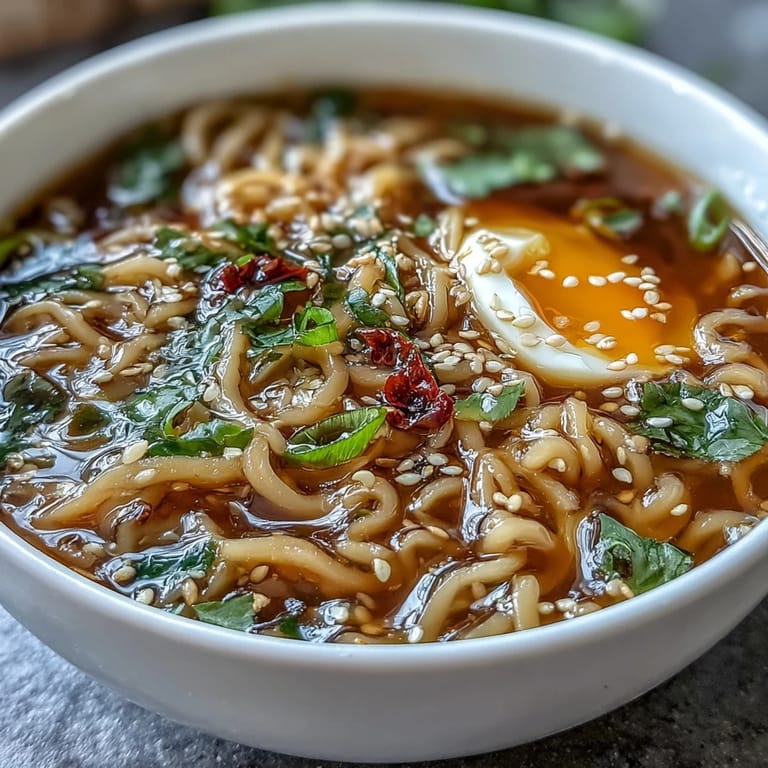
A bare bowl of noodles and broth is technically a meal, but the toppings are where personality happens. That soft-boiled egg yolk running into the hot broth creates a sauce, the chili brings heat, the spring onion brings freshness that cuts through richness, and the sesame seeds add a toasted note that feels intentional. I've made this dozens of ways now, and every adjustment teaches me something about what my body actually wants on any given day.
Customization Without Overthinking
The beauty of this recipe is that it welcomes changes without requiring them—you can add shredded chicken or tofu if you want more protein, use vegetable broth instead of bone broth if that's what you have, or skip the egg entirely if you're avoiding it. Some nights I add a handful of bok choy or mushrooms that cook in the residual heat, other times I keep it exactly as written because simplicity is sometimes the whole point. The bones of this dish stay strong no matter what you add or subtract.
- If you're making this for someone with a soy allergy, coconut aminos swap in seamlessly with no fuss.
- Cold mornings taste different than warm afternoons in this bowl, so let your mood guide your seasonings and toppings.
- Leftover broth keeps in the fridge for a week, which means you can have this meal ready in five minutes on a day when everything feels overwhelming.
 Pin It
 This bowl exists in that perfect space between quick and nourishing, between restraint and satisfaction. Make it tonight and notice how you feel an hour later—that's the real victory.
Questions & Answers
- → How do I prepare shirataki noodles properly?
Drain and rinse shirataki noodles thoroughly under cold water to remove the packaging liquid. Then pour boiling water over them in a sieve to eliminate any natural odor. This quick preparation step ensures the noodles absorb the flavorful broth perfectly.
- → Can I make this vegetarian?
Absolutely. Substitute the bone broth with a high-quality vegetable broth and use tamari or coconut aminos instead of traditional soy sauce. Top with tofu or extra vegetables instead of eggs for a complete plant-based version.
- → How long does the broth need to simmer?
Simmer the broth for about 10 minutes after bringing it to a gentle boil. This allows the ginger, garlic, and seasonings to infuse properly, creating a rich, aromatic base for the noodles.
- → What toppings work best?
Soft-boiled eggs add protein and creaminess, while fresh spring onions, sliced red chili, and herbs like coriander or parsley bring brightness. Toasted sesame seeds add crunch. You can also include shredded chicken, sautéed mushrooms, or bok choy.
- → Can I store leftovers?
Store broth and noodles separately in airtight containers in the refrigerator for up to 3 days. Reheat the broth gently and add the noodles just before serving to prevent them from becoming too soft.
- → Is this suitable for meal prep?
Yes, prepare the broth in advance and store it for up to 5 days. Keep toppings prepped separately. When ready to eat, simply reheat the broth, prepare fresh noodles, and assemble with your desired toppings.