 Pin It
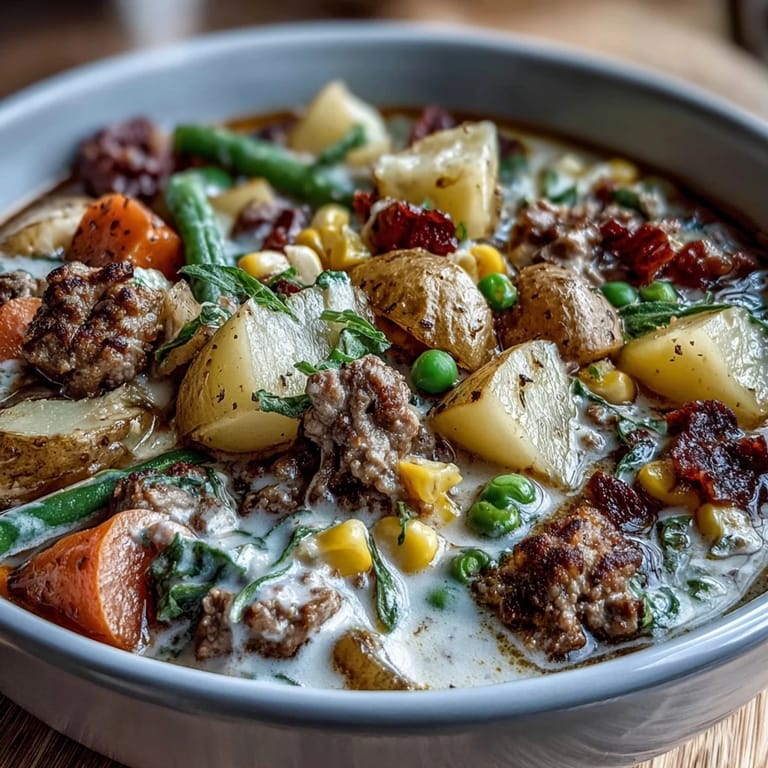
 There's something about a bowl of soup that tastes like someone's been in the kitchen all day, even when you haven't. Years ago, I was craving that deep, beefy comfort of a proper Shepherd's Pie but didn't want to deal with layering and baking, so I threw the whole concept into a pot instead. The result was this soup—beef broth rich with tomato, vegetables soft enough to dissolve on your tongue, and potatoes that thicken everything into something almost creamy. It became the recipe I'd make when the weather turned gray or when I needed to feed a crowd without fussing.
I made this for a dinner party on a November evening when everyone showed up looking tired, and watching people's faces relax over a hot bowl felt like magic. Someone asked for seconds before finishing their first bowl, and another guest requested the recipe that same night. That's when I knew it wasn't just about the ingredients—it was about how a simple, honest soup could turn an ordinary evening into something people actually remembered.
Ingredients
- Ground beef (1 lb, 85% lean): The lean percentage matters here because you don't want a greasy broth, but you still need enough fat for flavor and richness.
- Yellow onion, carrots, and celery (roughly 1 large, 2 medium, 2 stalks): This is your flavor foundation—don't skip the sauté step, because these vegetables need time to soften and release their sweetness into the broth.
- Garlic (2 cloves, minced): Add this after the vegetables start softening, or it'll burn and taste bitter instead of bright.
- Potatoes (2 cups, diced): Keep the pieces small and roughly uniform so they cook evenly and help thicken the soup naturally as they break down.
- Frozen peas and corn (1 cup each): Frozen is genuinely better here than canned—they hold their shape and taste fresher in the finished soup.
- Beef broth (5 cups): Quality broth matters, so use something you'd actually drink on its own, not the box that's been in your cabinet for two years.
- Milk (1 cup): This adds creaminess without heaviness, but add it at the very end so it doesn't curdle.
- Tomato paste (2 tbsp): A small amount goes a long way—it deepens the broth's color and adds umami without making it taste tomatoey.
- Worcestershire sauce (2 tbsp): This is what makes people ask what's in the soup because they can taste something special but can't quite name it.
- Dried thyme, parsley, and rosemary (1 tsp, 1 tsp, and 1/2 tsp): These three together create that classic British comfort-food flavor profile—adjust to your taste, but start here.
- Butter (2 tbsp): Finish with cold butter stirred in at the end for silkiness and richness you can actually taste.
- Fresh parsley (2 tbsp, chopped): A garnish that makes the soup look intentional and adds a fresh note that cuts through all that savory richness.
Tired of Takeout? 🥡
Get 10 meals you can make faster than delivery arrives. Seriously.
One email. No spam. Unsubscribe anytime.
Instructions
- Brown the beef first:
- Heat your pot over medium heat and add the ground beef without any oil—it releases its own fat as it cooks. Break it apart with a spoon as it browns, which takes about 5 to 8 minutes. This is your flavor base, so don't rush it; you want the meat slightly caramelized, not gray and tired.
- Build your aromatic base:
- Once the beef is browned, add the diced onion, carrots, and celery directly to the pot and let them soften for about 5 minutes, stirring occasionally. The vegetables will stick slightly to the bottom of the pot, which is perfect—that's flavor developing.
- Bloom the aromatics:
- Add the minced garlic and tomato paste, stirring constantly for just 1 minute until the whole kitchen smells incredible. This step is quick but essential—it mellows the raw garlic flavor and lets the tomato paste lose its sharpness.
- Build the broth:
- Pour in all the beef broth along with the diced potatoes, Worcestershire sauce, thyme, parsley, rosemary, salt, and pepper. Stir everything together, then bring the whole pot to a boil—you'll see it bubble up suddenly.
- Simmer until vegetables are tender:
- Once it boils, drop the heat down, cover the pot, and let it simmer gently for about 15 minutes until the potatoes are fork-tender and the carrots have lost their raw crunch. Peek in occasionally and give it a stir.
- Add the frozen vegetables and dairy:
- Stir in the corn, peas, milk, and butter, then simmer uncovered for another 5 minutes just to heat everything through. The butter will melt and distribute throughout, and the whole soup will taste a little silkier.
- Taste and adjust:
- Before you serve anything, taste a spoonful and decide if it needs more salt, pepper, or herbs. This is your moment to make it exactly how you like it.
- Serve with intention:
- Ladle into bowls, scatter fresh parsley on top if you're using it, and hand them out while the soup is still steaming. This soup deserves a moment of attention, not something gulped down.
 Pin It
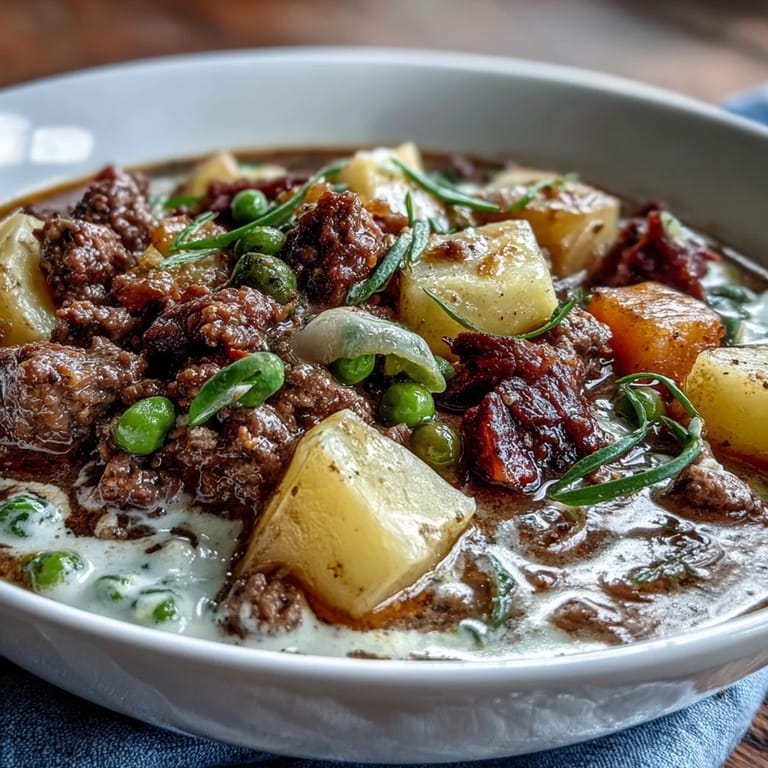
 My neighbor tasted this soup once and started showing up on cold Sundays with her kids, hoping I'd made it. There's something about feeding people something this straightforward and genuine that builds small, quiet connections—no fuss, no pretense, just good food that makes everyone feel a little warmer and safer.
How to Make It Thicker or Thinner
If you like a chunkier, thicker soup, grab a potato masher and gently crush some of the potatoes right in the pot about halfway through cooking—they'll break down and turn the broth into something almost creamy. If you prefer it brothier and more like a traditional soup, just ladle less solids into each bowl and add extra broth to the pot as you serve. Neither approach is wrong; it's just about what your mood is that day.
Variations That Actually Work
Ground lamb instead of beef tastes closer to traditional Shepherd's Pie and feels a bit more elegant, though it costs more and has a stronger flavor some people find polarizing. I've also made this with half beef and half ground pork, which adds a subtle sweetness that rounds out all the herbs. The vegetables are flexible too—swap carrots for parsnips, use regular peas instead of frozen, or throw in some diced mushrooms for earthiness.
Serving Suggestions and Storage
This soup gets better the next day as the flavors meld, so make it ahead without guilt and reheat gently on the stove instead of in the microwave, which can make the vegetables get mushy. It keeps in the fridge for about 4 days and freezes beautifully for up to 3 months, though the potatoes get a bit softer after thawing. Pair it with crusty bread for dipping, a simple green salad to cut through the richness, or serve it on its own when you want something that feels complete and whole.
- Reheat slowly over medium heat instead of blasting it in the microwave, which keeps the texture better.
- If it thickens too much after sitting in the fridge, just add a splash of broth or water when you warm it up.
- Make a double batch on Sunday so you have weeknight dinners handled with minimal effort.
 Pin It
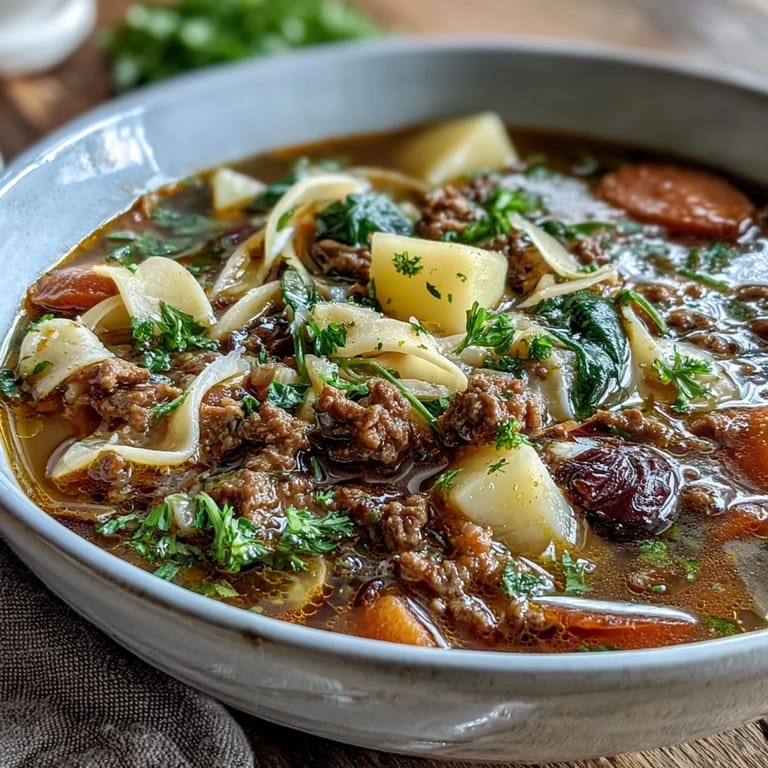
 This soup tastes like home, whichever home you're thinking of—the one you grew up in or the one you're trying to build. It asks nothing complicated of you, just a little attention and some decent ingredients, and gives back warmth and comfort that lingers long after the bowl is empty.
Questions & Answers
- → Can I substitute ground lamb for the beef?
Yes, using ground lamb adds a traditional flavor twist while maintaining the dish's hearty character.
- → How can I thicken the soup?
For a thicker texture, mash some of the potatoes directly in the pot before serving.
- → Is it possible to make this dish gluten-free?
Absolutely. Use gluten-free broth and Worcestershire sauce to keep the dish gluten-free.
- → What is the best way to store leftovers?
Store cooled portions in airtight containers in the refrigerator for up to 3 days.
- → Can I add other vegetables to this soup?
Yes, feel free to include vegetables like green beans or mushrooms based on preference.