 Pin It
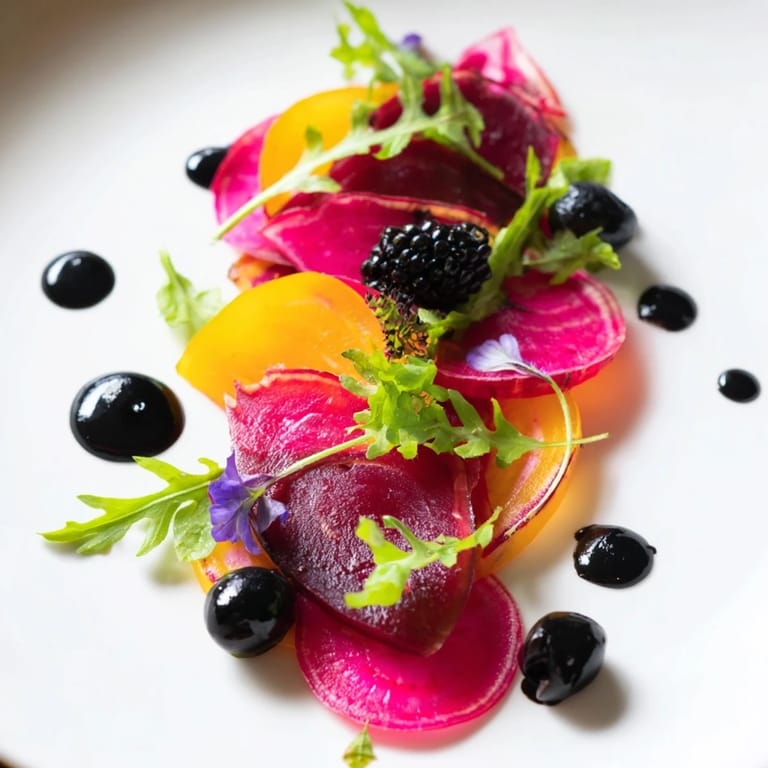
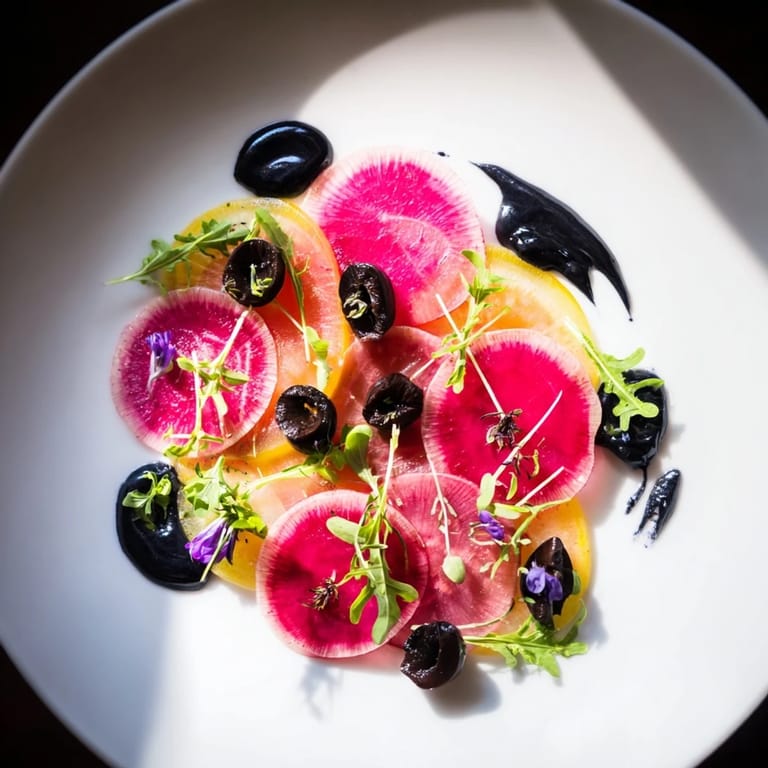
 I discovered this dish while staring at my cutting board one afternoon, watching the late sun catch the edge of a freshly sliced red beet. The golden and crimson layers suddenly looked like a landscape, and I wondered what would happen if I treated plating like painting. That's when the idea of shadow and light on a single plate took shape, and I realized vegetables could tell a visual story if you let them.
I made this for friends who were skeptical about vegetable-focused appetizers, and watching them pause before eating because the plate was too beautiful to disturb was worth every carefully placed olive. That moment when aesthetics became part of the tasting experience changed how I think about simple food.
Ingredients
- Golden beet: The warm yellow tone creates contrast without being too loud, and slicing it thin lets the light pass through slightly at the edges.
- Red beet: Deep crimson depth that grounds the plate and holds its own against the bright elements.
- Watermelon radish: Those unexpected white and pink rings catch the eye and add a playful surprise when guests discover the interior.
- Baby arugula: Peppery green brings freshness and prevents the dish from feeling too heavy or decorative without substance.
- Blackberries: They sit like jewels in shadow, their dark skin deepening the contrast you're building.
- Black olives: More than garnish, they anchor the darker tones and their saltiness balances the sweetness of the beets.
- Black tahini: This is your brush for creating those artistic smears and shadows that tie the concept together visually.
- Extra virgin olive oil: Use something you'd taste on its own, because it carries the entire dressing.
- Lemon juice and honey: Together they create brightness and subtle sweetness that makes the vegetables' natural flavors sing.
- Microgreens: The final touch that adds delicate texture and one more layer of visual interest.
Tired of Takeout? 🥡
Get 10 meals you can make faster than delivery arrives. Seriously.
One email. No spam. Unsubscribe anytime.
Instructions
- Slice everything thin:
- A mandoline is your friend here, but a sharp knife works if you move slowly and let the blade do the work. Thin slices are what create that translucent quality that makes the beets glow.
- Build your base layer:
- Lay the golden and red beet slices in a semi-overlapping pattern, alternating to create a rhythm. Think less about perfection and more about letting the colors talk to each other.
- Add the bright elements:
- Fan the watermelon radish over the beets, then scatter arugula where it feels balanced. This is where the composition starts to feel intentional rather than random.
- Place your shadows:
- Tuck the blackberries and olives into the spaces, positioning them so they create depth. Imagine stage lighting, where shadows make the highlights more dramatic.
- Whisk the dressing:
- Combine olive oil, lemon juice, honey, salt, and pepper until the honey dissolves. Taste it and adjust until it feels bright enough to lift the earthiness of the beets.
- Add the tahini contrast:
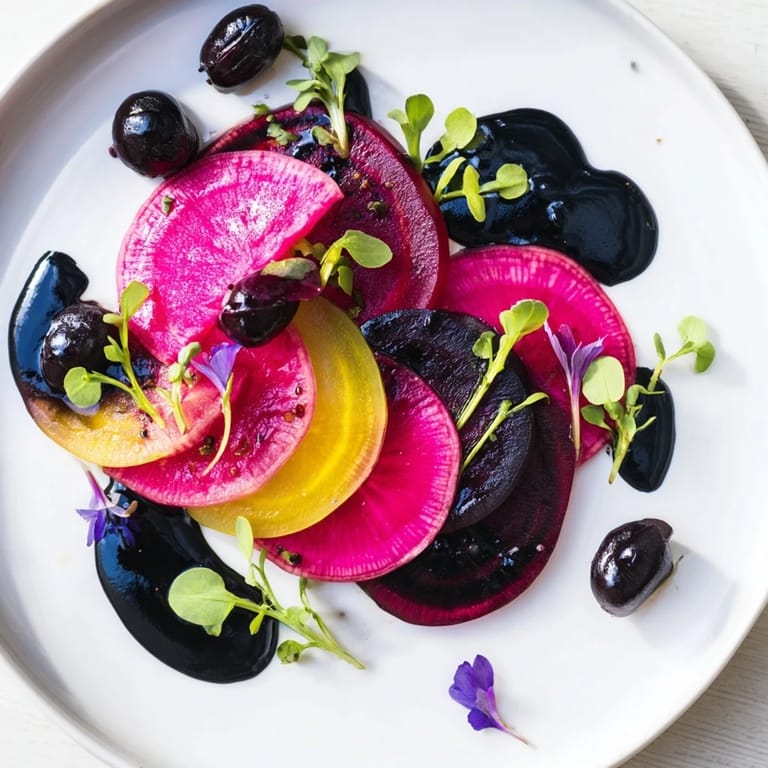
- Spoon small amounts of black tahini around the plate, smearing gently with the back of the spoon to create organic shadow shapes. Restraint matters here, the smears should feel like accents, not coverage.
- Dress and finish:
- Drizzle the dressing evenly, then crown the whole composition with microgreens and edible flowers if you have them. Serve right away before anything wilts.
 Pin It
 I remember one guest asking if this was really something I'd made, as if the visual drama meant it had to be complicated. There's something special about proving that beauty on the plate doesn't require hours at the stove, just intention and a willingness to see vegetables as more than ingredients.
Why Color Contrast Transforms Simple Vegetables
The magic of this dish lives in the conversation between light and dark. Golden beets glow next to red ones, watermelon radish pops against black olives, and arugula creates breathing room so nothing feels crowded. I learned this by accident once when I threw together vegetables without thinking about their visual relationship, and the plate felt flat even though every ingredient was delicious. Now I always pause and ask: does this color have a conversation partner on the plate?
Building Layers Beyond the Visual
This isn't just about pretty colors, it's about creating texture and flavor depth through thoughtful layering. The rawness of the vegetables lets their natural sweetness come through, while the olive oil carries richness and the lemon juice cuts through it all. I discovered that when you're not cooking anything, seasoning and balance become everything, so don't be shy with the dressing or the tahini.
Serving and Pairing Moments
This dish shines as the first course of a longer meal, giving diners something to admire before they eat. It's light enough to leave room for what comes next, but substantial enough in flavor that it doesn't feel like you're just eating decoration. I've served it with cold white wine, warm bread, and quiet conversation, and it seems to belong in all those moments.
- A Sauvignon Blanc cuts through the earthiness of the beets with bright acidity.
- If you prefer red wine, a light Pinot Noir brings out the subtle sweetness without overwhelming the plate.
- Serve everything cold and assemble just before guests arrive, so the textures stay crisp.
 Pin It
 This recipe taught me that sometimes the most memorable meals aren't the ones with the longest ingredient lists, but the ones where every element earns its place. Making this dish is an act of slowing down and noticing how food can be both nourishment and art.
Questions & Answers
- → How do thinly slicing the beets enhance the dish?
Thin slices allow for delicate layering and contrast, creating visual depth and a pleasing texture without overwhelming the palate.
- → What role do black tahini and black olives play?
They add rich, dark accents that produce dramatic shadows and intensify visual appeal while contributing subtle earthy flavors.
- → Can this dish be adapted for a vegan diet?
Yes, replacing honey with agave syrup maintains the balance of sweetness without animal products.
- → What is the best way to achieve the shadow effect?
Strategically placing darker ingredients behind or beneath lighter ones creates striking silhouettes and depth on the plate.
- → What beverages complement this dish?
A crisp Sauvignon Blanc or a light, earthy Pinot Noir pairs well, enhancing the fresh and complex flavors.
- → Are there important allergen considerations?
Yes, tahini contains sesame and olives may contain pits; check ingredients if sensitive to gluten traces.