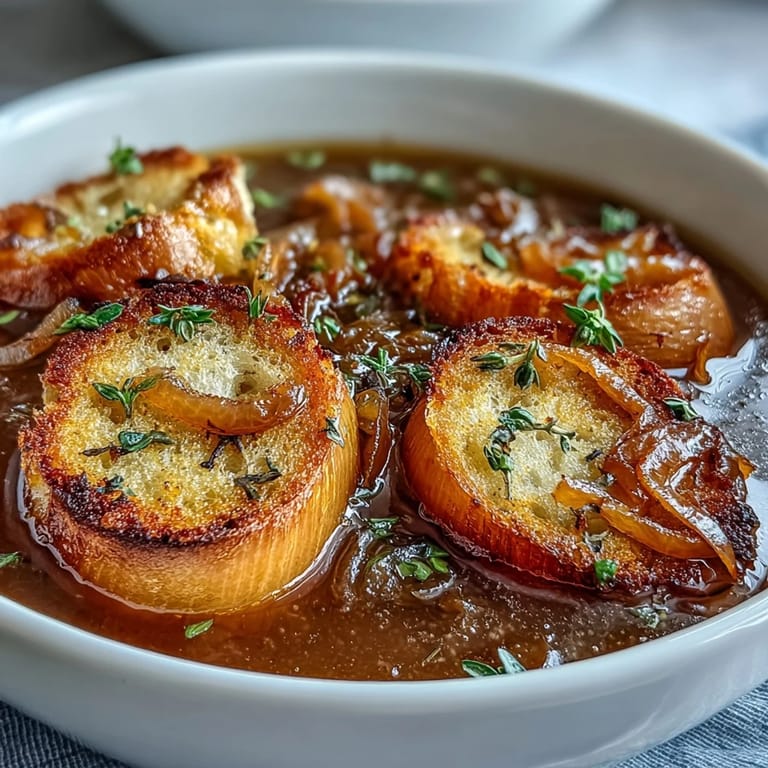
 Pin It
 There's something almost magical about the smell of garlic roasting in the oven—it fills your kitchen with this golden, mellow warmth that makes you forget you're making soup and not something decadent. I stumbled onto this recipe on a gray afternoon when I had three heads of garlic and no real plan, just a hunch that slow heat and time could transform something sharp and pungent into something silky and sweet. My neighbor stopped by mid-roast, lifted the foil packet to peek, and said nothing—just smiled. That's when I knew this was going to be special.
I made this for my partner one evening when we both needed something that didn't require conversation, just presence and good food. We sat at the kitchen table in near silence, just the sound of spoons against bowls and the occasional crunch of crouton. By the end, the soup was gone and we were both smiling in that quiet way that means everything's okay. That's when a recipe stops being instructions and becomes a memory.
Ingredients
- Yellow onions: Use large ones and slice them thin so they caramelize evenly—the thinner they are, the more surface area catches the heat and turns golden.
- Whole garlic heads: You'll roast these whole, which mellows them into something almost sweet; don't bother peeling beforehand.
- Olive oil and butter: The combination gives you richness from butter and a subtle fruitiness from oil—use good quality if you can.
- Leek, celery, and carrot: These form the aromatic base; don't skip them even though they soften into the soup.
- Dry white wine: Cheap wine works fine here because the acidity does the job, not the flavor profile.
- Vegetable broth: Homemade is wonderful, but store-bought is honest and reliable.
- Soy sauce: Optional but it adds a savory depth that makes people ask what that mysterious flavor is.
- Fresh thyme and bay leaf: These infuse the broth with something complex without being obvious about it.
- Day-old baguette: Stale bread is actually what you want here—it crisps better than fresh and won't get soggy as fast.
- Fresh parsley for croutons: Chopped fine so it toasts into the bread rather than sitting on top.
Tired of Takeout? 🥡
Get 10 meals you can make faster than delivery arrives. Seriously.
One email. No spam. Unsubscribe anytime.
Instructions
- Roast the garlic until it's golden and surrendered:
- Slice the tops off both garlic heads, drizzle the exposed cloves with olive oil, wrap them tight in foil, and slide them into a 400°F oven for 40 minutes. You'll know they're done when they're soft enough that you can squeeze them out like toothpaste and they've taken on a pale golden color.
- Caramelize the onions with patience:
- While garlic roasts, heat olive oil and butter in a large pot over medium-low heat, then add your thinly sliced onions, leek, celery, and carrot. Stir them often over the next 25 to 30 minutes—this is the part where you can't rush, and honestly shouldn't want to, because you're coaxing out their natural sugars and watching them turn from pale to deep amber.
- Deglaze and build flavor:
- Pour in the white wine and scrape the bottom of the pot with a wooden spoon, working up all those caramelized bits that are stuck there. Let it simmer until the wine reduces by half, which takes about 5 minutes and smells absolutely incredible.
- Bring it all together:
- Squeeze the roasted garlic from its skins into the pot, add your vegetable broth, the optional soy sauce, thyme sprigs, bay leaf, and oregano. Bring everything to a boil, then lower the heat and let it simmer gently uncovered for 25 minutes while you move on to the croutons.
- Toast the croutons until golden and crisp:
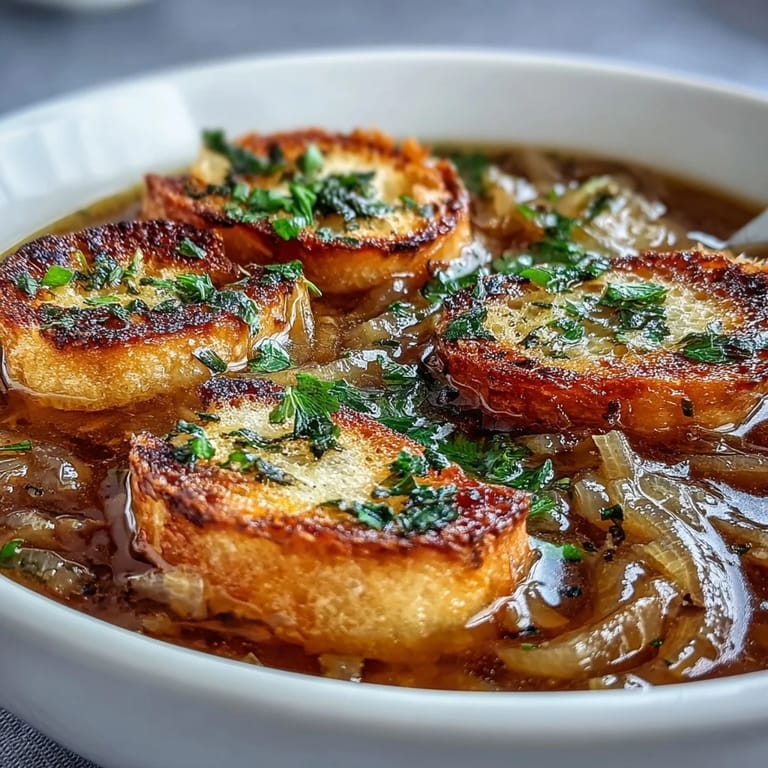
- Toss your bread cubes with olive oil, fresh parsley, dried thyme, garlic powder, and salt, then spread them on a baking sheet. Bake at 400°F for 10 to 12 minutes, stirring halfway through, until they're golden and make a satisfying crunch when you bite one.
- Finish and adjust:
- Remove the thyme sprigs and bay leaf from your soup, then taste and add more salt and pepper as needed. If you like a smoother texture, use an immersion blender to blend part of it or all of it—I usually keep it partially chunky.
- Serve with ceremony:
- Ladle the soup into bowls and pile a generous handful of warm croutons on top, then garnish with fresh parsley if you have it.
 Pin It
 This soup has become my go-to when I need to remember that simple ingredients, given time and attention, become something extraordinary. There's a quiet pride in serving something this good from things as humble as onions and garlic.
The Magic of Slow Roasting
Roasting garlic transforms it entirely—the heat softens those pungent compounds and coaxes out natural sweetness you didn't know was there. The first time I tasted roasted garlic straight from the skin, I was surprised how gentle and almost creamy it becomes, nothing like the sharp bite of raw garlic. If you've only ever used garlic raw or cooked quickly, this soup will show you what you've been missing.
Why Caramelization Takes Time
There's a temptation to turn up the heat and rush through caramelizing onions, but resist it—high heat creates steam, and steam prevents browning. Medium-low heat lets the moisture escape slowly, concentrating the sugars and allowing them to brown gradually. I've made both versions, and the rushed one tastes like onion soup; the patient one tastes like something worth remembering.
Customizing Without Losing the Soul
This soup is forgiving in ways that matter, and flexible in ways that let you make it your own. You can stir in grated Gruyère or Parmesan for a classic French finish, swap shallots for some of the onions if you want something sweeter, or skip the butter entirely for a vegan version that's still silky and rich. There are three quick thoughts to keep close: first, the croutons are what give this soup personality, so don't skimp on them; second, a splash of dry white wine at the table (like Sauvignon Blanc) echoes the wine in the pot and elevates the whole experience; third, this soup tastes even better the next day when flavors have settled and deepened.
- Add the soy sauce if you want depth without anyone being able to identify what it is.
- Make extra croutons because they disappear faster than you expect.
- This soup freezes beautifully if you make it ahead—just freeze without the croutons and add them fresh when you reheat.
 Pin It
 This soup taught me that the best dishes aren't always the most complicated—they're the ones made with intention and a willingness to let flavors develop at their own pace. Make it whenever you need something warm, honest, and deeply satisfying.
Questions & Answers
- → How do you achieve the deep flavor in this soup?
Slow-roasting garlic and caramelizing onions over low heat helps develop rich, sweet, and complex flavors that build the soup’s depth.
- → What herbs complement the soup best?
Fresh thyme, bay leaf, and dried oregano are used to infuse aromatic herbal notes that balance the sweetness of the vegetables.
- → Can the soup be blended for a smoother texture?
Yes, part or all of the soup can be blended with an immersion blender to create a creamy and velvety consistency.
- → How are the herb croutons prepared?
Day-old baguette cubes are tossed with olive oil, garlic powder, fresh parsley, thyme, and salt, then baked until golden and crisp.
- → Are there vegan adaptations for this dish?
Omitting butter and using only olive oil makes this dish suitable for vegans without compromising flavor.
- → What white wine pairs well with this soup?
A dry white wine like Sauvignon Blanc complements the soup’s vegetal and herbal elements beautifully.