 Pin It
 The smell of garlic hitting hot oil always pulls me straight into the moment. One Thursday evening, I stood at the stove with a pile of vegetables, leftover pork from Sunday, and a packet of noodles I'd bought on a whim. I tossed everything into the wok without much of a plan, and what came out was better than anything I'd ordered in weeks. That's when I realized stir-fry isn't about perfection; it's about heat, rhythm, and trusting your instincts.
I made this for a friend who'd just moved into a new apartment with a tiny kitchen and no dining table. We sat on the floor with bowls balanced on our knees, slurping noodles and laughing about how good something so simple could taste. She kept asking what the secret was, and I told her there wasn't one, just high heat and a little confidence. That night, this dish became our go-to for quick comfort, no matter how chaotic the week got.
Ingredients
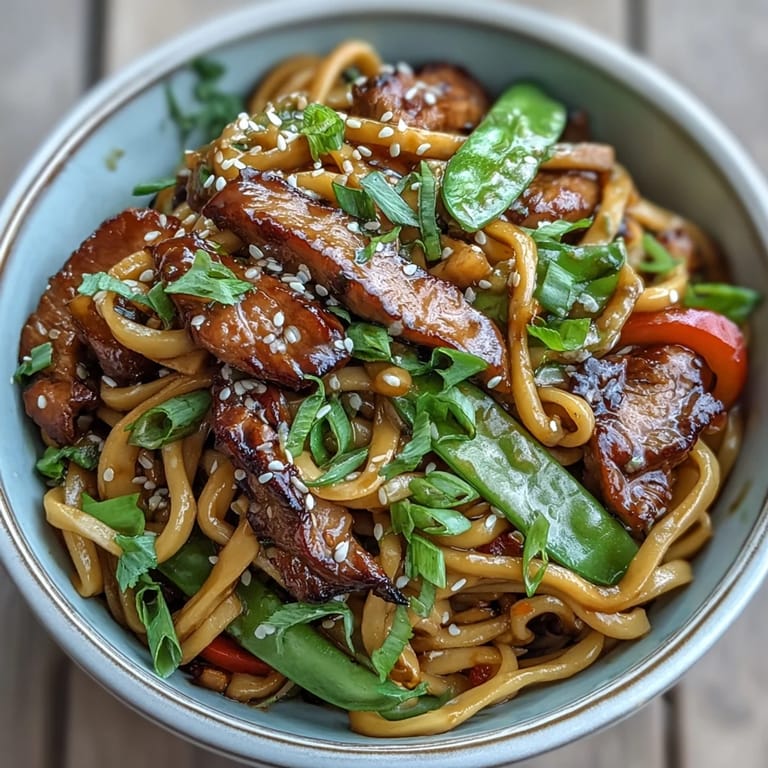
- Pork loin or tenderloin: Slicing it thin means it cooks fast and stays tender, and marinating it even briefly makes a noticeable difference in flavor.
- Soy sauce: This is the backbone of the marinade and the sauce, bringing salty depth that ties everything together.
- Cornstarch: A small amount in the marinade helps the pork brown beautifully and keeps it from drying out.
- Egg noodles or rice noodles: Use whichever you prefer; egg noodles have more chew, while rice noodles stay light and silky.
- Red bell pepper: Adds sweetness and a pop of color that makes the dish look as good as it tastes.
- Carrot: Julienne it thin so it cooks quickly and adds a subtle crunch.
- Sugar snap peas: These stay crisp and sweet even after a few minutes in the wok.
- Spring onions: Toss them in at the end so they stay bright and fresh.
- Garlic and ginger: The aromatic base that fills your kitchen with that unmistakable stir-fry smell.
- Oyster sauce: It adds a rich, slightly sweet umami that you can't quite replicate with anything else.
- Hoisin sauce: A touch of this brings a hint of sweetness and complexity to the sauce.
- Sesame oil: Just a teaspoon at the end gives the whole dish a toasted, nutty finish.
- Brown sugar: Balances the salty and savory notes with a whisper of caramel.
- Vegetable oil: A neutral oil with a high smoke point is essential for proper stir-frying.
- Sesame seeds and coriander: Optional, but they add texture and a fresh herbal note that makes the dish feel complete.
Tired of Takeout? 🥡
Get 10 meals you can make faster than delivery arrives. Seriously.
One email. No spam. Unsubscribe anytime.
Instructions
- Marinate the Pork:
- Toss the thinly sliced pork with soy sauce and cornstarch in a bowl, making sure every piece is coated. Let it sit for 10 minutes while you prep everything else.
- Cook the Noodles:
- Boil the noodles according to the package directions, then drain them and set aside. A quick rinse under cold water stops them from clumping.
- Mix the Sauce:
- In a small bowl, whisk together soy sauce, oyster sauce, hoisin sauce, sesame oil, brown sugar, and water. Keep it within reach of the stove.
- Stir-Fry the Pork:
- Heat a tablespoon of oil in a wok over high heat until it shimmers, then add the pork in a single layer. Let it sear for a minute before tossing, cooking for 2 to 3 minutes total until browned and just cooked through, then remove it to a plate.
- Cook the Vegetables:
- Add the remaining oil to the wok, then toss in garlic, ginger, bell pepper, carrot, and sugar snap peas. Stir-fry for 3 to 4 minutes, keeping everything moving so nothing burns.
- Combine Everything:
- Return the pork to the wok, add the noodles and sauce, and toss everything together for 2 to 3 minutes. The noodles should be glossy and coated, the pork warmed through.
- Finish and Serve:
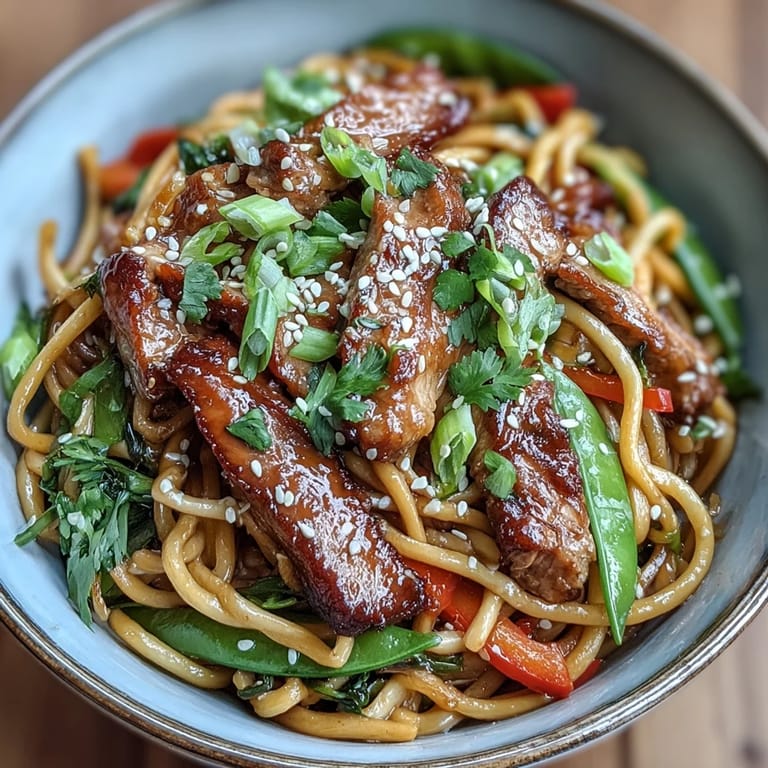
- Toss in the spring onions, give it one last stir, and take the wok off the heat. Serve immediately with sesame seeds and coriander or chili on top if you like.
 Pin It
 I remember serving this to my dad, who's usually skeptical of anything I cook that isn't his own recipe. He took one bite, paused, and then went back for seconds without saying a word. Later, he asked me to write down the sauce proportions, which is the highest compliment he's ever given. That quiet approval meant more than any elaborate praise ever could.
Making It Your Own
This recipe is endlessly flexible, and I've played with it more times than I can count. Swap the pork for chicken thighs, shrimp, or crispy tofu, and it works just as well. I've added mushrooms, baby corn, and bok choy when I had them on hand, and each version felt like a new discovery. The sauce stays the same, but the dish changes with your mood and whatever's in the fridge.
Storing and Reheating
Leftovers keep well in the fridge for up to three days, though the noodles can soak up some of the sauce as they sit. When I reheat it, I add a splash of water or soy sauce to a hot pan and toss everything until it's warmed through and glossy again. It's one of those rare dishes that's almost as good the next day, especially if you're eating it straight from the container at your desk.
Serving Suggestions
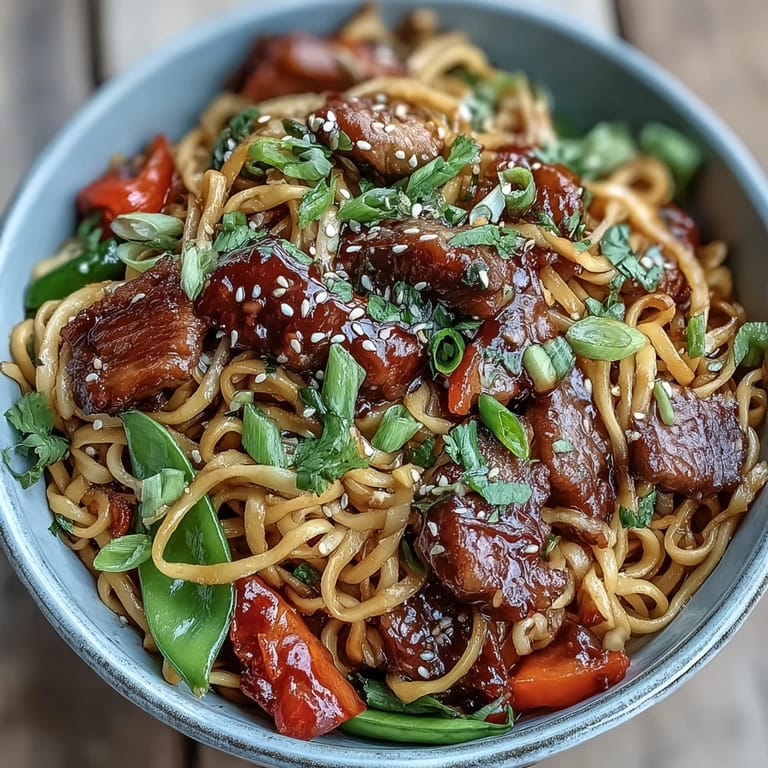
I usually serve this on its own because it's filling enough, but sometimes I'll add a side of pickled vegetables or a simple cucumber salad for contrast. A cold Riesling or a light lager cuts through the richness beautifully, though I've also had it with iced green tea on warmer nights. However you serve it, make sure you eat it hot, right out of the wok.
- Garnish with extra chili if you want heat that builds with every bite.
- Double the sauce if you like your noodles extra saucy and rich.
- Use a mix of noodles and spiralized zucchini for a lighter, veggie-forward version.
 Pin It
 This dish has saved more weeknights than I can count, turning hunger and exhaustion into something warm and satisfying. I hope it does the same for you.
Questions & Answers
- → Can I use a different protein instead of pork?
Yes, chicken breast, shrimp, or firm tofu work wonderfully as substitutes. Adjust cooking times accordingly—chicken needs 4-5 minutes, shrimp 2-3 minutes, and tofu 3-4 minutes until golden.
- → What type of noodles work best for this stir-fry?
Egg noodles or rice noodles are ideal. You can also use udon, soba, or even spaghetti in a pinch. Cook according to package directions and drain well before adding to the wok.
- → How do I prevent the vegetables from becoming soggy?
Keep the heat high and stir-fry quickly. Cut vegetables uniformly so they cook evenly, and avoid overcrowding the wok. Cook in batches if necessary to maintain high temperature.
- → Can I make this dish gluten-free?
Absolutely. Use tamari instead of soy sauce, gluten-free noodles like rice noodles, and check that your oyster sauce is gluten-free or substitute with a gluten-free alternative.
- → How should I store and reheat leftovers?
Store in an airtight container in the refrigerator for up to 3 days. Reheat in a wok or skillet over medium-high heat, adding a splash of water or broth to refresh the noodles.
- → What vegetables can I add or substitute?
Mushrooms, baby corn, bok choy, broccoli, or snow peas are excellent additions. Feel free to use whatever fresh vegetables you have on hand for variety.