 Pin It
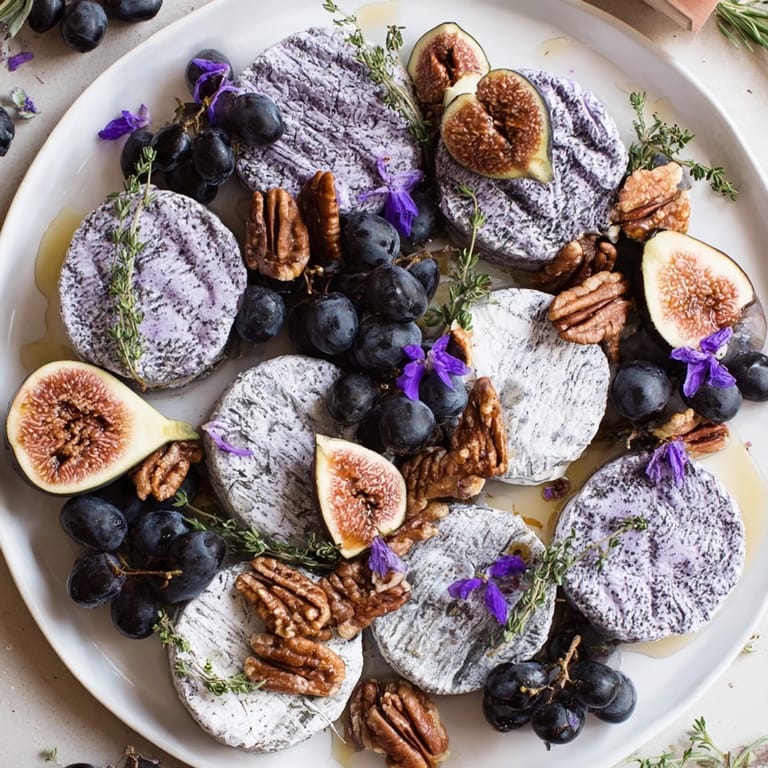
 A friend once brought a lavender-themed cheese board to a dinner party, and I watched how the soft purple rounds of goat cheese seemed to make everyone pause before reaching for anything else on the table. There was something about that color, that delicate floral coating, paired with the silvery ash of a perfectly ripe brie, that felt less like appetizers and more like edible art. I went home that night determined to recreate that moment, but on my own terms—building something that felt both sophisticated and entirely approachable, a board where texture and taste mattered as much as the visual story.
I made this board for my sister's book club one September evening, and I remember the kitchen filling with the scent of thyme as I arranged everything. Someone asked if the flowers were real, and when I said yes, the whole energy of the gathering seemed to shift—suddenly cheese and crackers felt like a small luxury. My sister took a photo, and I caught myself smiling not because the board looked beautiful, but because I'd created something that made people linger and talk longer over food.
Ingredients
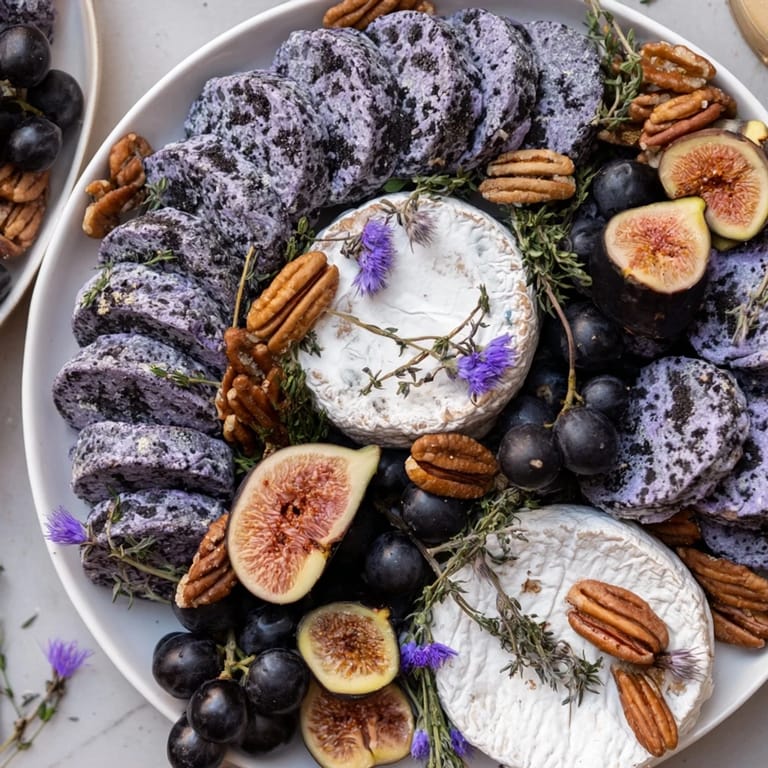
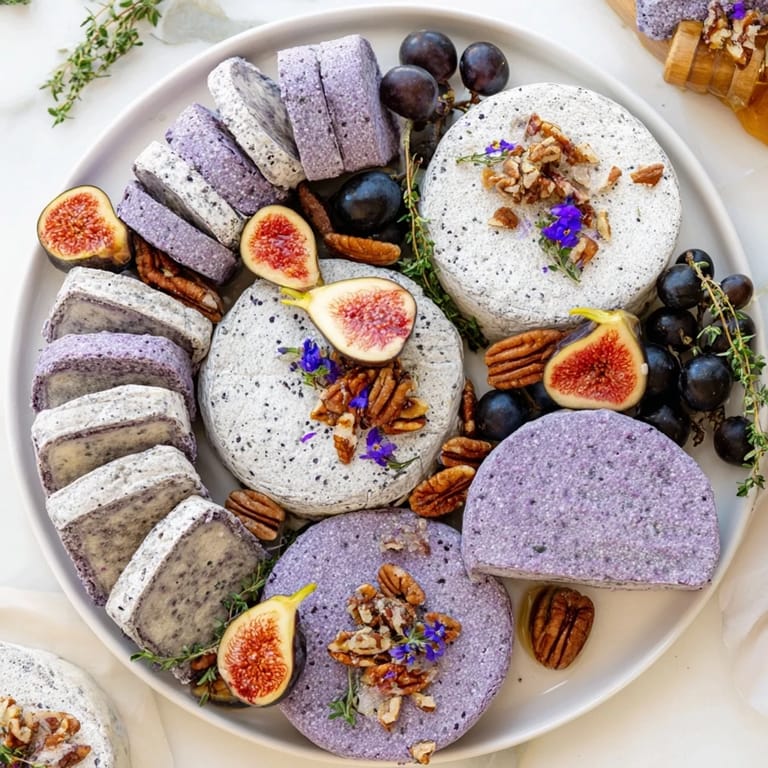
- Lavender-coated goat cheese: The star of the board, with that floral coating providing both visual drama and subtle flavor that melts on your tongue without overwhelming.
- Ash-rinded brie: Creamy and earthy, it plays beautifully against the lavender's brightness and adds sophistication through its gentle tang.
- Red or black grapes: Cut them in half so they're easier to eat with cheese, and their natural sweetness balances any sharpness.
- Fresh or dried figs: These add a jammy sweetness and chewy texture that keeps people reaching for just one more bite.
- Candied walnuts or pecans: The crunch and subtle sweetness create contrast, and they're sturdy enough to hold up toppings without crumbling.
- Lavender honey: Drizzle it over the goat cheese for an extra layer of floral harmony, though regular honey works beautifully too.
- Edible flowers: Source these from trusted suppliers—they're the finishing touch that makes someone pause and say 'how thoughtful.'
- Fresh thyme sprigs: More than garnish, they release their aromatic oils when brushed against, adding sensory depth to the experience.
- Toasted baguette slices and charcoal crackers: The bread is your vehicle, and charcoal crackers add visual intrigue and a slightly earthy taste that complements everything.
Tired of Takeout? 🥡
Get 10 meals you can make faster than delivery arrives. Seriously.
One email. No spam. Unsubscribe anytime.
Instructions
- Set your stage:
- Start with a large board or platter that gives you breathing room, because crowding cheese boards is like whispering at a party—everything gets muffled. You want each element to have its own little territory so flavors and textures can actually shine.
- Position your star players:
- Arrange the lavender goat cheese and ash brie so they're the focal points, maybe slightly off-center so the eye travels naturally. Think of them as the opening lines of a story you're telling with food.
- Build in rhythm:
- Place grapes and figs in small clusters, creating visual breaks and giving people natural stopping points as they build their bites. You're not just feeding people; you're guiding them through a gentle sequence of flavors.
- Add the crunch:
- Scatter the candied nuts throughout, treating them almost like punctuation marks that create texture interest and prevent any one area from feeling heavy.
- Honey moment:
- Drizzle lavender honey directly over the goat cheese in a thin, elegant thread, then leave a small bowl of extra honey nearby so people can add more if they want without guilt.
- Crown it with color:
- Distribute edible flowers and thyme sprigs across the board just before serving—they wilt quickly and taste better fresh, and their scent becomes part of the eating experience.
- Ground it with bread:
- Arrange the toasted baguette slices and charcoal crackers around the perimeter, leaving them accessible but not commanding so much attention they overshadow the cheeses.
- Serve and let them play:
- Step back and let your guests build their own combinations—the best bites are the ones people discover for themselves.
 Pin It
 What I remember most vividly from that September evening is how quiet the table became when people started eating—not uncomfortable silence, but the kind that happens when food is genuinely delicious and thoughtfully made. My sister came back to the kitchen and said, 'You made people happy,' which felt like the highest compliment a cheese board could receive.
The Color Language of Cheese Boards
Before I made this board, I never thought much about why certain color combinations feel calming or luxurious. The lavender and ash tones create an almost monochromatic palette that feels intentional rather than accidental, like you've curated something rather than just assembled leftovers. Once you notice this, you start seeing color everywhere—the way the deep purple of red grapes echoes the lavender coating, how edible flowers bridge the gap between those soft purples and the charcoal of the crackers. It's the visual coherence that makes someone feel they've entered a thoughtfully composed moment, even if it took you fifteen minutes to create.
Pairing Wine with a Cheese Board
The lavender notes in this board are surprisingly forgiving with wine, and that opens up more options than you'd expect. A chilled Provence rosé is the obvious choice—it echoes the color story and has enough acidity to cut through the richness of the brie. But a floral white like Gewürztraminer is magical too, matching the lavender honey and creating this moment where you can't quite tell where the cheese ends and the wine begins. I've also had success with a dry riesling or even a light-bodied sauvignon blanc, anything with enough brightness to dance with those floral notes without overpowering the delicate flavors.
Adapting for Your Crowd
The beauty of this board is how easily it adapts to who's sitting around your table. Not everyone loves lavender—I learned this when my friend's husband took one look at the goat cheese and asked if it was 'actually food'—so keep regular goat cheese nearby or skip the coated variety entirely. Gluten-free? Swap the baguette for gluten-free crackers and the board works beautifully. Preference for less floral? Use regular honey instead of lavender and dial back the edible flowers. You could add purple endive leaves or thinly sliced purple radishes to extend the color story, or swap in dried apricots and honeycomb for something warmer and more earthy.
- Purple endive leaves add bitterness that cuts richness and extends the color palette naturally.
- Honeycomb drizzled over brie creates a luxe moment that costs almost nothing.
- A small bowl of fig jam on the side gives people another flavor anchor without requiring you to add it to every surface.
 Pin It
 A cheese board is one of the only dishes where elegance and ease live in the same moment—you get to feel like you've done something special while actually having done something simple. That's the real magic here.
Questions & Answers
- → What types of cheese are used in the Lavender Haze platter?
Lavender-coated goat cheese sliced into rounds and ash-rinded brie cut into wedges create a soft, floral cheese combination.
- → How does lavender honey influence the flavor profile?
Lavender honey adds delicate floral sweetness that enhances the mild tang of the goat cheese and complements the nutty brie.
- → Can the platter be made gluten-free?
Yes. Substitute the baguette slices with gluten-free crackers to accommodate gluten-sensitive guests.
- → What garnishes add to the platter’s visual appeal?
Edible flowers such as violets or pansies and fresh thyme sprigs provide bursts of color and subtle aromatic notes.
- → What nuts work well for this cheese board?
Candied walnuts or pecans offer a crunchy texture and sweet contrast when scattered among the fruits and cheeses.
- → Which beverages pair best with this cheese selection?
Chilled Provence rosé or floral white wines like Gewürztraminer highlight the cheese’s delicate floral and nutty qualities.