 Pin It
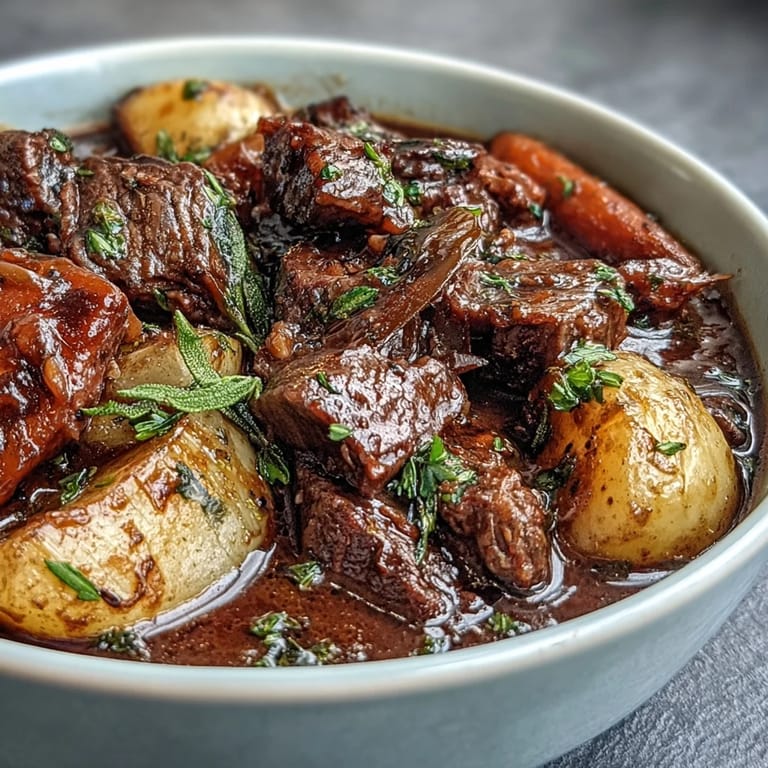
 There's something about the sound of beef hitting a hot skillet that signals the start of something good. Years ago, I was stuck in my apartment during the first real cold snap of the season, and instead of ordering takeout like usual, I decided to actually make beef stew from scratch. Eight hours later, the kitchen smelled like warmth itself—like thyme and caramelized meat and slow-cooked comfort. My neighbors could probably smell it too, and honestly, I didn't mind.
I made this for my partner the first winter we lived together, and I remember being nervous that it wouldn't turn out right. But when they came home and took that first spoonful, their whole face just relaxed. That's when I realized this stew had become my go-to dish for those moments when you want to show someone you care without making a big production of it.
Ingredients
- Beef chuck (2 lbs, cut into 1.5-inch cubes): This cut becomes silky and rich during the long braise—don't be tempted by leaner cuts, as they'll dry out while you're not looking.
- Carrots (3 large, cut into 1-inch pieces): They sweeten as they cook, balancing the savory depth of the broth and wine.
- Parsnips (2, peeled and sliced): These add an earthy sweetness that makes people ask what that subtle flavor is.
- Yukon Gold potatoes (2 large, chopped into chunks): They hold their shape and turn creamy inside while staying intact, which matters more than you'd think.
- Yellow onion (1 large, diced): The foundation that breaks down and flavors everything around it.
- Celery stalks (3, sliced): These provide backbone to the broth without screaming celery in your face.
- Garlic (3 cloves, minced): Mince it fine so it melts into the sauce rather than lingering as chunks.
- Tomato paste (2 tbsp): A small amount deepens the color and adds umami without tasting like tomato.
- Worcestershire sauce (1 tbsp): This is the secret that makes people wonder what makes your stew taste so complete.
- Bay leaf (1): Don't skip this, and don't forget to fish it out before serving—a bay leaf between the teeth is an unfortunate surprise.
- Dried thyme and rosemary (1 tsp each): Dried herbs actually work better here than fresh because they release their oils slowly over eight hours.
- Beef broth (4 cups): Check the label for gluten if that matters to you—some broths sneak it in.
- Dry red wine (1 cup): The alcohol cooks off and leaves behind a complexity that makes people pause and ask what's in here.
- Cornstarch (2 tbsp) mixed with cold water: This thickens the stew at the end without making it gluey or cloudy.
- Salt and black pepper (1/2 tsp each for the beef, plus more to taste): Season as you go, not just at the end.
Tired of Takeout? 🥡
Get 10 meals you can make faster than delivery arrives. Seriously.
One email. No spam. Unsubscribe anytime.
Instructions
- Season and sear the beef:
- Pat your beef cubes dry with paper towels—moisture is the enemy of browning. Season them with salt and pepper, then sear them in batches in a hot skillet until all sides develop a golden crust, about three minutes per batch, which takes longer than you think but is absolutely worth it.
- Build the base in your slow cooker:
- Add your seared beef, then layer in all the vegetables and aromatics, ending with the garlic, tomato paste, and herbs. This isn't random—you're building a flavor foundation that will develop over hours.
- Add your liquids:
- Pour in the beef broth and wine, stirring gently to distribute the tomato paste throughout. The wine might seem optional, but it's doing important work, adding acidity and depth that makes the broth taste alive rather than flat.
- Let time do the work:
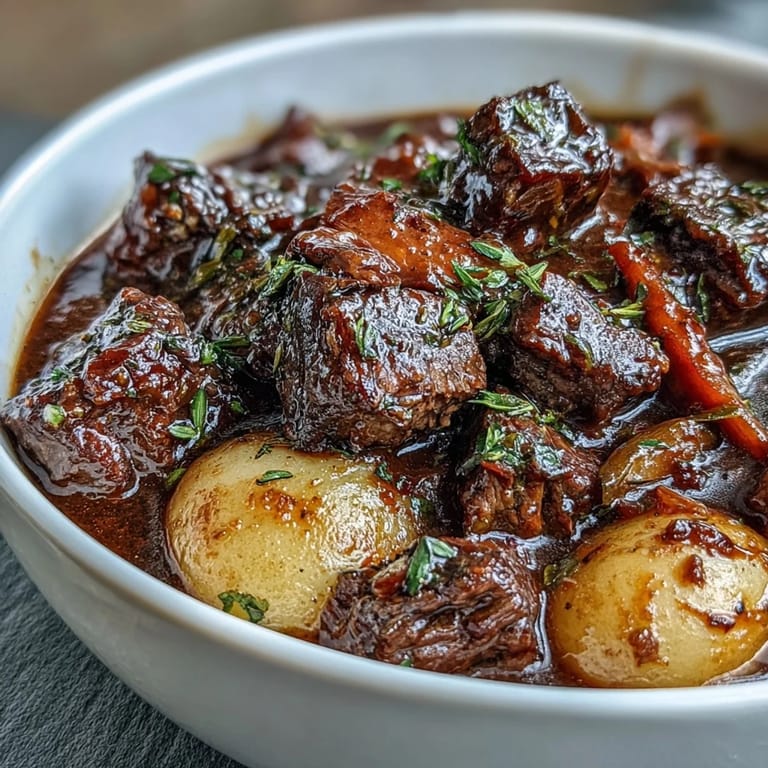
- Cover and cook on low for eight hours, resisting the urge to lift the lid and peek every twenty minutes like I do. The low, slow heat transforms tough beef into something that barely needs your teeth to eat it.
- Thicken at the finish:
- Mix your cornstarch and cold water into a slurry in a small bowl, then stir it into the stew and cook uncovered on high for fifteen minutes. You'll watch it transform from brothy to luxuriously thick, which is satisfying in a way that probably shouldn't matter but does.
- Final taste and adjust:
- Remove the bay leaf, then taste. Sometimes you need a pinch more salt, sometimes a crack more pepper—trust your palate here, not the recipe.
 Pin It
 My favorite version of this happened on a Sunday when I had leftover stew and realized it tasted even better the next day after the flavors had settled and deepened overnight. That's when I understood why my grandmother always made stew on Saturday—she wasn't just being practical, she was being smart.
When to Make This
This is the stew that earns its place at your table when the weather turns cold enough that you want something warm waiting for you at the end of the day. It's equally at home as the centerpiece of a casual Sunday dinner or as comfort food after one of those weeks where everything felt a little harder than it should. There's no special occasion required—just the need for something that tastes like being taken care of.
Variations and Swaps
I've made this stew at least fifty different ways, and honestly, that's kind of the point. The base is forgiving enough that you can play around without losing what makes it work. Add mushrooms in the last hour of cooking and they'll turn silky and absorb all the broth, or toss in frozen peas at the very end for brightness and a textural contrast. Sometimes I use sweet potatoes instead of Yukon Golds, which shifts the whole flavor profile toward something warmer and slightly sweeter—your preference here will probably tell you something about your mood that day.
Serving and Storage
Serve this in deep bowls with crusty bread for soaking up every last drop, or over mashed potatoes if you want to turn it into something even more indulgent. It keeps beautifully in the refrigerator for up to four days, and actually improves as it sits because the flavors continue to marry and deepen—which means you're not just getting dinner, you're getting tomorrow's dinner too.
- Store leftovers in an airtight container in the refrigerator, where it'll taste even better the next day.
- You can freeze this for up to three months, making it a clever meal to have waiting for those days when cooking feels impossible.
- Reheat gently on the stovetop, adding a splash of broth if it's thickened too much as it cools.
 Pin It
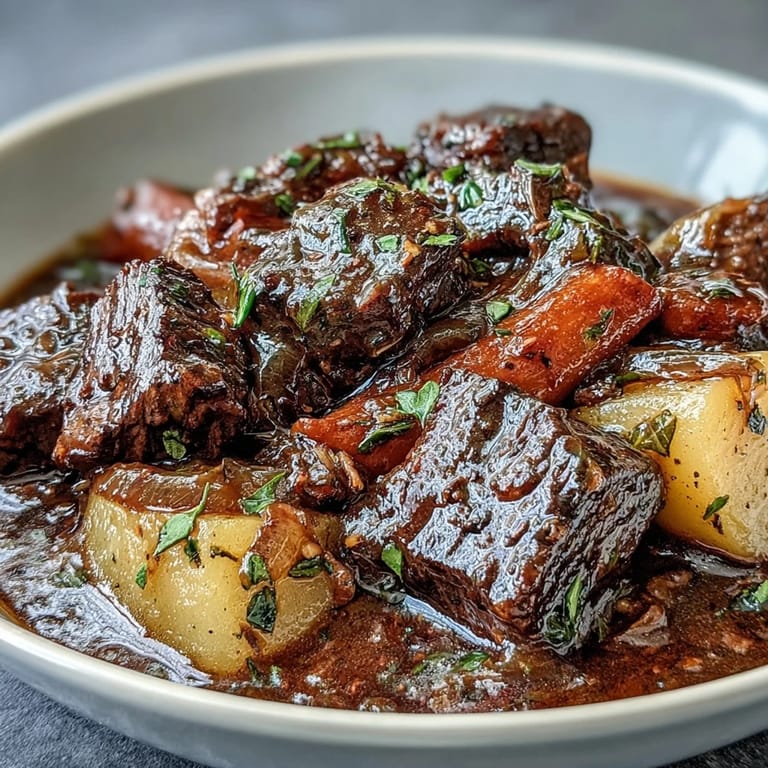
 This stew has become my kitchen's version of an old friend—reliable, familiar, and always welcome. Make it once and you'll understand why.
Questions & Answers
- → How can I ensure the beef stays tender?
Slow cooking at low heat allows the beef to break down gently, making it tender and flavorful. Searing before simmering also locks in juices.
- → Can I substitute the root vegetables?
Yes, sweet potatoes or turnips can replace some root vegetables for varied flavors and textures.
- → What thickening options are recommended?
A simple slurry of cornstarch and cold water stirred in near the end adds a smooth, hearty consistency.
- → Is it possible to make this without alcohol?
Absolutely. Replace the red wine with additional beef broth to maintain depth without alcohol.
- → How can I add more flavor to the stew?
Incorporating mushrooms or peas during the last hour of cooking adds richness and variety to the dish.