 Pin It
 My neighbor knocked on the kitchen door one October afternoon with a basket of apples from her orchard, and suddenly I was transported back to county fairs and autumn carnivals. She mentioned wanting to try making candy apples together, and I realized I'd never actually made them from scratch before, only admired them from carnival booths. Within an hour, our kitchen smelled like caramelized sugar and possibility, and I understood why this simple treat has remained a classic for generations.
I made these for my daughter's Halloween party last year, and watching ten-year-olds carefully bite into their apples while red syrup dripped down their hands was hilarious chaos. One kid declared it the best thing he'd ever eaten, another said it tasted like a fair, and a third somehow got candy in her hair despite eating carefully. That moment reminded me that food doesn't need to be complicated to create genuine joy.
Ingredients
- Apples: Use firm varieties like Granny Smith or Gala, and make sure they're completely dry before inserting sticks, or the coating will slide right off your work.
- Granulated sugar: This is your base for the hard candy shell, and it needs to be pure white sugar to get that jewel-tone red color.
- Light corn syrup: This prevents crystallization and keeps your candy smooth and glossy instead of grainy and dull.
- Water: Helps dissolve the sugar evenly, though you want minimal stirring once heat is applied.
- Red food coloring: Gel coloring creates a deeper, more vibrant red than liquid, and you need less of it, so it won't thin out your syrup.
- Wooden sticks: Handles for dipping and eating, and they need to be sturdy enough to support the weight of the candy coating.
Tired of Takeout? 🥡
Get 10 meals you can make faster than delivery arrives. Seriously.
One email. No spam. Unsubscribe anytime.
Instructions
- Set your stage:
- Line a baking sheet with parchment paper or give it a light spray of nonstick cooking spray so your finished apples don't stick. This is also your moment to grab all your tools within arm's reach, because once that candy reaches temperature, you'll be moving fast.
- Stick the apples:
- Push a wooden stick firmly into the stem end of each apple, twisting gently if needed so it's anchored solid. Set them aside where they won't roll away.
- Combine and heat your sugar mixture:
- In a heavy-bottomed saucepan, mix the sugar, corn syrup, and water together, stirring just until combined. Place it over medium-high heat and let it come to a boil without stirring anymore—stirring can cause crystallization and ruin your candy.
- Monitor the temperature climb:
- Clip a candy thermometer to the side of the pan and watch it creep toward 300°F. The mixture will bubble and gradually turn from cloudy to clear and golden as the water evaporates, which takes about 15 to 20 minutes.
- Add color and move quickly:
- The moment your thermometer reads 300°F, pull the pan off the heat and stir in your red food coloring until it's evenly distributed. Work with speed and care here—this syrup is dangerously hot and will cause serious burns if it touches skin.
- Dip with intention:
- Tilt the pan slightly and dip each apple, rotating it to coat all sides, then let the excess drip off for a few seconds before placing it on your prepared sheet. If the candy starts to thicken too much during dipping, set the pan back on low heat for just 30 seconds to loosen it up.
- Let them set:
- Walk away and let the apples cool completely at room temperature for about 15 minutes until the candy shell hardens completely and loses its glossy sheen.
 Pin It
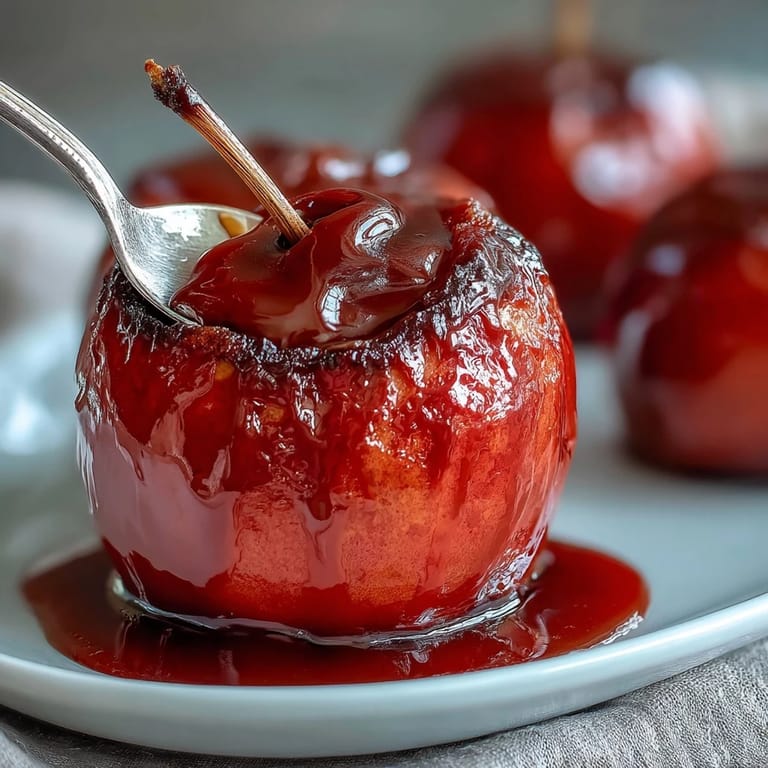
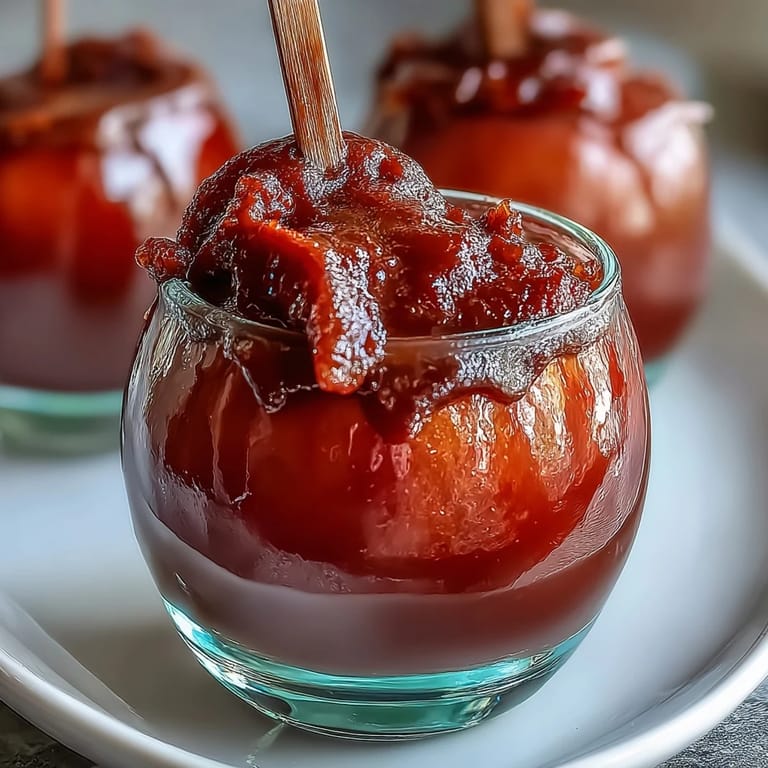
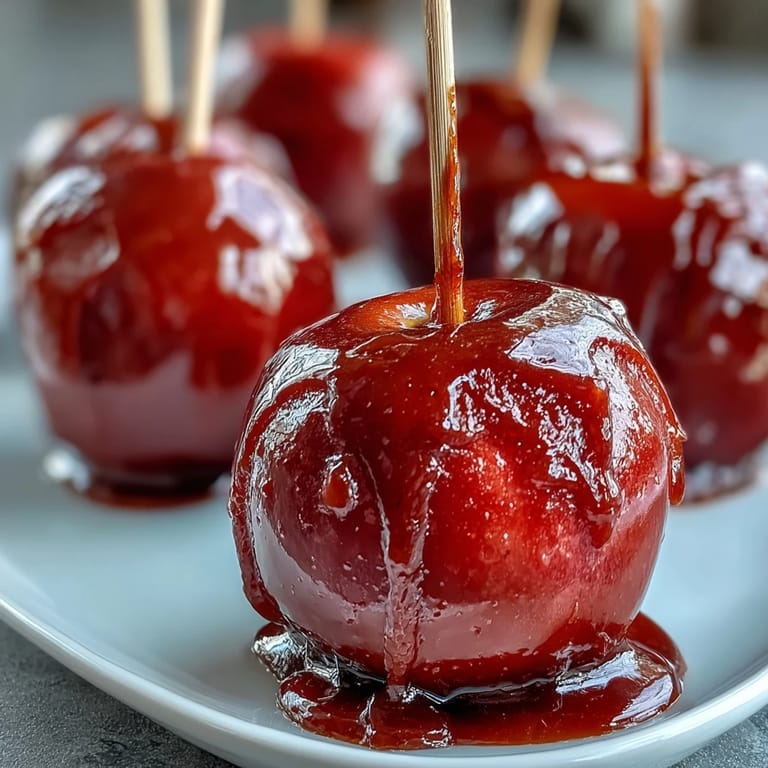
 There was a moment when I lifted the first apple from the syrup and it emerged like a ruby, perfectly coated and gleaming under the kitchen light, when I truly understood why people have been making these for over a hundred years. It's not just candy on an apple; it's a small magic trick you pulled off with your own hands.
Timing Your Temperature
The difference between a perfect candy apple and a sticky mess comes down to those final degrees on the thermometer. I learned this the hard way by eyeballing it the first time, thinking I could tell by the color and bubble pattern, and ended up with apples that were still gooey hours later. Now I'm religious about checking that thermometer, and every batch turns out with a satisfying snap.
Elevating Beyond the Basics
While the classic red candy apple is perfect as-is, there's something fun about customizing them for different occasions or moods. Roll them in crushed nuts, sprinkles, or even crushed candy while the shell is still warm and tacky, and suddenly you've got something that looks like it came from a specialty candy shop. My favorite discovery was rolling half of them in chopped pecans for a Thanksgiving dessert table, and they disappeared first.
Storing and Serving Your Apples
These are absolutely best eaten within a few hours of making them when the candy shell is crispy and the apple is still fresh and firm. After that, condensation can start breaking down the candy coating, and the apple begins to soften from the inside out. If you're making them ahead for a party, dip them no more than a couple of hours before guests arrive, and keep them in a cool spot away from humidity.
- Store finished apples in a single layer on parchment paper at room temperature, never in the refrigerator where moisture will ruin the shell.
- If someone asks for leftovers the next day, tell them the truth: they're better fresh, and offer to make a new batch instead.
- For party planning, know that you can make the syrup ahead and reheat it gently when you're ready to dip, which saves you stress on the day-of.
 Pin It
 Making candy apples is one of those rare recipes where the process feels as rewarding as the result, and it's something you'll want to make again and again. Pull out the candy thermometer, grab some apples, and join a tradition that's delighted people for generations.
Questions & Answers
- → What apples work best for this candy coating?
Firm apples like Granny Smith or Gala are ideal as their tartness balances the sweet coating and their firmness holds up well to dipping.
- → How do I know when the candy syrup is ready?
Boil the syrup until it reaches the hard crack stage at 300°F (149°C) for a crisp, hard shell after cooling.
- → Can I add toppings to the candy shell?
Yes, rolling freshly coated apples in chopped nuts or sprinkles before the candy hardens adds extra texture and flavor.
- → What precautions should I take when working with hot syrup?
Handle carefully since the syrup is extremely hot and can cause burns; use heatproof utensils and avoid stirring once boiling.
- → How should I store these candy-coated apples?
Store them at room temperature on parchment or a nonstick surface and consume within a few hours to maintain texture.