 Pin It
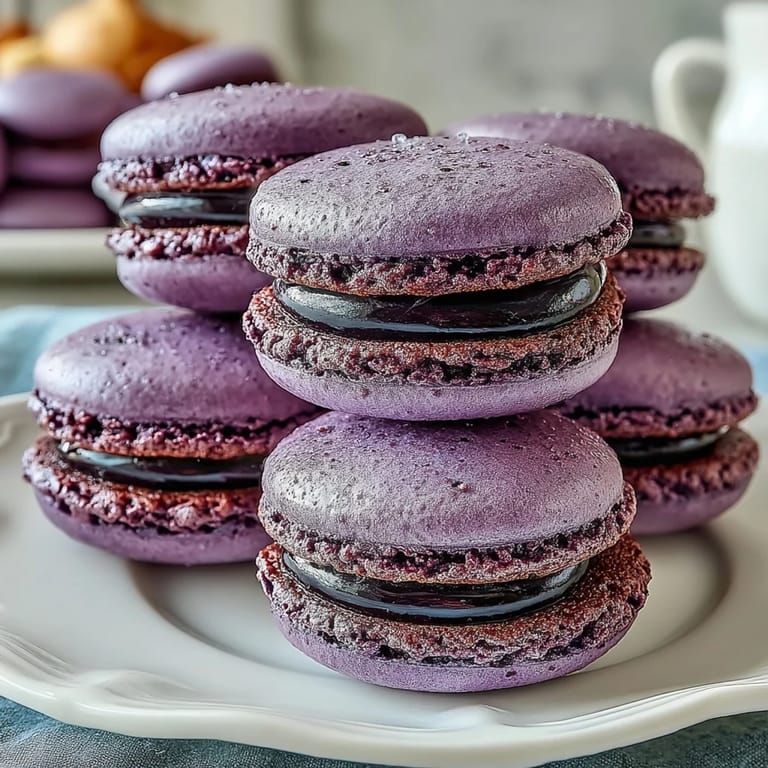
 The first time I attempted macarons, I was standing in my tiny kitchen at midnight, convinced I could master these delicate French cookies before a dinner party the next evening. Spoiler: I couldn't, but that failure taught me more than any successful batch ever could. Years later, when I finally cracked the technique, it was the blackcurrant filling that sealed the deal—that tart, elegant flavor transformed what could have been just another pretty cookie into something truly memorable. Now, whenever I make these shells, I'm transported back to that frantic night, except this time, everything clicks into place.
I'll never forget bringing a box of these to my neighbor Sarah, who had just moved in. She opened that container with the skepticism of someone expecting store-bought shortcuts, and the moment she bit into one, her whole face changed—a genuine, surprised smile that made three hours of piping feel completely worth it. She still mentions it whenever we chat, and now every time I make them, I think about how something so small can actually matter to people in ways you don't expect.
Ingredients
- Egg whites, aged: Using eggs that have sat in the fridge for a day or two creates a more stable meringue—I learned this after my first batch collapsed like a failed soufflé.
- Granulated sugar: This is what builds the glossy peaks; don't rush the beating or you'll end up with grainy meringue.
- Powdered sugar and almond flour: Sifting these together is non-negotiable if you want smooth shells without gritty texture.
- Blackcurrant purée: Strain it carefully to remove seeds, or your ganache will have an unpleasant grittiness that undermines all your work.
- White chocolate: Quality matters here more than you'd think—cheap white chocolate can taste waxy and flat.
- Unsalted butter and lemon juice: These bring balance to the filling, cutting through the sweetness so it doesn't become cloying.
Tired of Takeout? 🥡
Get 10 meals you can make faster than delivery arrives. Seriously.
One email. No spam. Unsubscribe anytime.
Instructions
- Sift your dry ingredients like your life depends on it:
- Pulse the almond flour and powdered sugar in a food processor until they're finer than they look, then sift the whole thing into a bowl, pressing gently to break up any stubborn clumps. This step saves you from grainy, lumpy shells later.
- Beat those egg whites until they're glossy and proud:
- Start on medium speed with a pinch of salt, gradually add your sugar, and keep going until stiff peaks form—they should look like clouds that could hold their shape forever. This is where patience pays off.
- Add color with intention:
- If using gel food coloring, add just a tiny drop and fold it in gently so you get even tinting without overdoing the liquid content.
- Fold with a gentle hand and a watching eye:
- Add the almond mixture in three batches, folding with a rubber spatula using a motion that cuts down the center, sweeps along the bottom, and folds up and over. You're done when the batter flows in thick ribbons and you can draw a figure-8 without it breaking—this is an art, not a science.
- Pipe with confidence and precision:
- Use a piping bag with a 1 cm round tip and pipe circles about 3.5 cm in diameter, spacing them so they don't touch when they spread slightly. The motion should be smooth, not hesitant.
- Tap and pop those hidden air bubbles:
- Bang the baking sheet firmly on the counter a few times, then use a toothpick to puncture any bubbles you can see on the surface. This prevents your shells from cracking open in the oven.
- Wait for the skin to form—this is the secret many people skip:
- Let the shells sit at room temperature for 30–45 minutes until they're no longer tacky and have developed a slight papery skin. This makes all the difference in getting those famous feet.
- Bake low and slow, rotating halfway:
- Use 150°C (300°F) and bake one tray at a time for 13–15 minutes, turning the tray halfway through so they bake evenly. You'll know they're done when they lift cleanly off the parchment.
- Make your ganache while shells cool:
- Heat the blackcurrant purée until it simmers, pour it over chopped white chocolate, let it sit for a minute, then stir until smooth. Add butter and lemon juice, then cool until it's thick enough to pipe but still creamy.
- Match and fill with care:
- Pair shells by size, pipe a small amount of ganache onto one shell, and gently press the partner shell on top with a slight twist. You're not trying to squeeze out ganache; just enough to taste it in every bite.
- Age your macarons for flavors to marry:
- Refrigerate in an airtight container for at least 24 hours—this allows the shells to soften slightly and the filling to set properly. Bring them to room temperature before serving so the filling becomes silky.
 Pin It
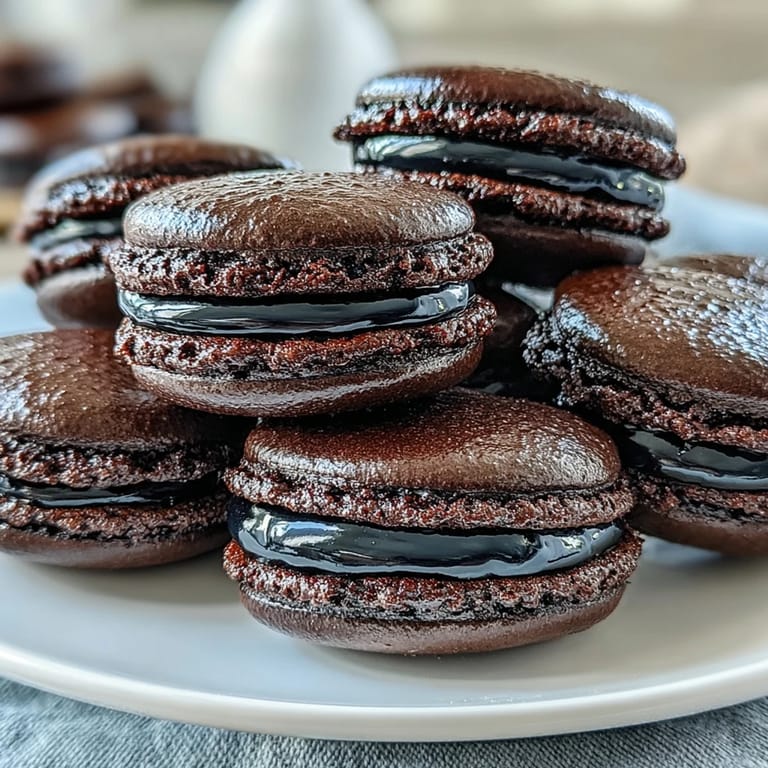
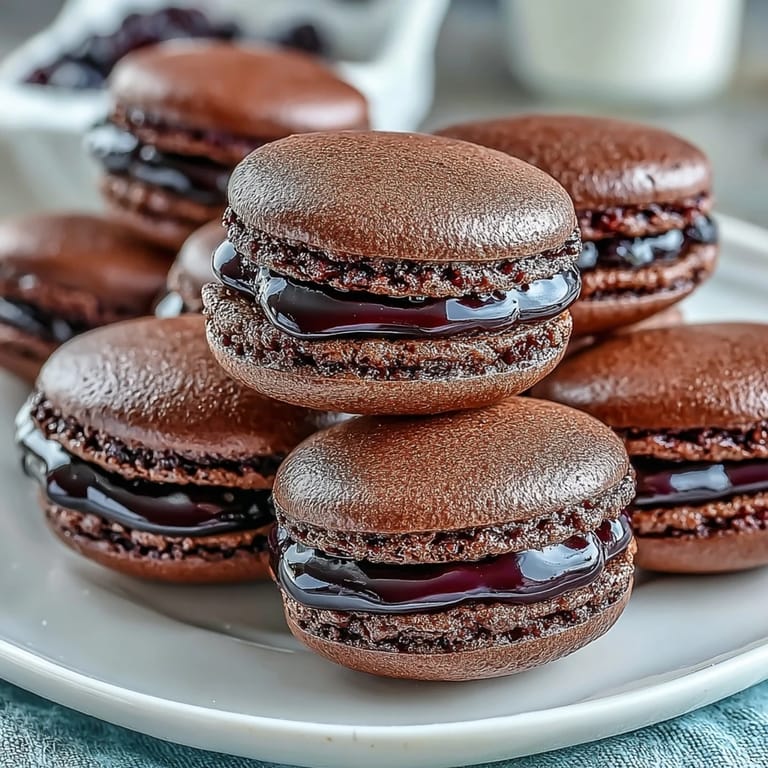
 There's something magical about the moment when you pull a tray of perfect macarons from the oven and see those delicate feet—the little ruffled edges that separate a macaron from any other almond cookie. It's a small thing, but it means you've understood the technique, respected the process, and been rewarded for your patience.
Getting the Meringue Right
Meringue is honestly the foundation of everything, and I've learned that aging your egg whites really does make a difference—it stabilizes them in a way that seems almost impossible until you try it. The first time I skipped this step thinking it was some fancy optional thing, my meringue broke down halfway through folding, and I had to start over. Now, I always plan ahead, knowing that 24–48 hours in the fridge is an investment in success. Room temperature and grease-free bowls matter too; even a tiny speck of yolk or oil will sabotage your peaks faster than you'd believe.
The Blackcurrant-White Chocolate Balance
This filling works because of contrast—the tartness of blackcurrant against the sweetness of white chocolate, with lemon juice threading through both like a clarifying note. I've experimented with cassis purée when blackcurrants weren't available, and it's a perfectly valid substitute, though the flavor is slightly more boozy and complex. The butter softens everything into something almost mousse-like when it cools, creating a texture that's neither too firm nor too runny. If your ganache is too thick, you can gently warm it; if it's too loose, let it cool longer in the fridge, stirring occasionally to maintain a pipeable consistency.
Timing, Storage, and the 24-Hour Trick
Macarons are perhaps the only cookie where you're actively encouraged not to eat them immediately—the 24-hour rest in an airtight container allows the shells to soften slightly and the flavors to blend into something more refined than they are fresh from the oven. I've learned to serve them at room temperature rather than straight from the fridge; the filling becomes silky and the shell loses its brittleness. They keep for about two days, and while they're technically fine after that, the texture starts changing in ways that aren't quite as magical. Store them in a cool, dry place away from direct sunlight, and they'll develop that soft, slightly chewy quality that makes people wonder how you got them so perfect.
- Make the ganache while your shells cool so you're not rushing at the end.
- If you want to get fancy, brush cooled shells with a blackcurrant liqueur and edible glitter before assembling for extra shine.
- Always bring macarons to room temperature before serving—cold shells are tough, not elegant.
 Pin It
 Making macarons is less about following steps and more about understanding why each step matters—once you get there, you'll find yourself making them again and again, tweaking, experimenting, and sharing them with people in your life. They're the kind of dessert that makes someone feel genuinely special, and that's really the whole point.
Questions & Answers
- → Why must I age the egg whites?
Aged egg whites have lost some moisture through evaporation, which creates a more stable meringue with better volume. This helps achieve those perfectly smooth shells with proper feet during baking.
- → How do I know when the batter is properly folded?
The batter should flow in thick ribbons from your spatula and be able to form a figure-8 without breaking. Test by dropping a small amount onto a plate—if the peak smooths out within 30 seconds, it's ready.
- → Can I substitute fresh blackcurrants for purée?
Yes, blend fresh or frozen blackcurrants and strain thoroughly to remove seeds. Simmer the purée briefly to concentrate flavor before combining with white chocolate for the ganache.
- → Why is the resting period before baking important?
Resting allows a skin to form on the shell surface, which prevents cracking and helps develop the signature frilly feet during baking. The shells should no longer feel tacky before going into the oven.
- → How should I store the finished macarons?
Keep assembled macarons in an airtight container in the refrigerator for up to 5 days. They actually improve after 24-48 hours as flavors meld and texture becomes more tender. Bring to room temperature before serving.
- → What causes hollow shells?
Hollow shells typically result from under-mixed batter, over-beating the egg whites, or oven temperature that's too low. Ensure proper ribbon consistency and use an oven thermometer for accurate temperature.