 Pin It
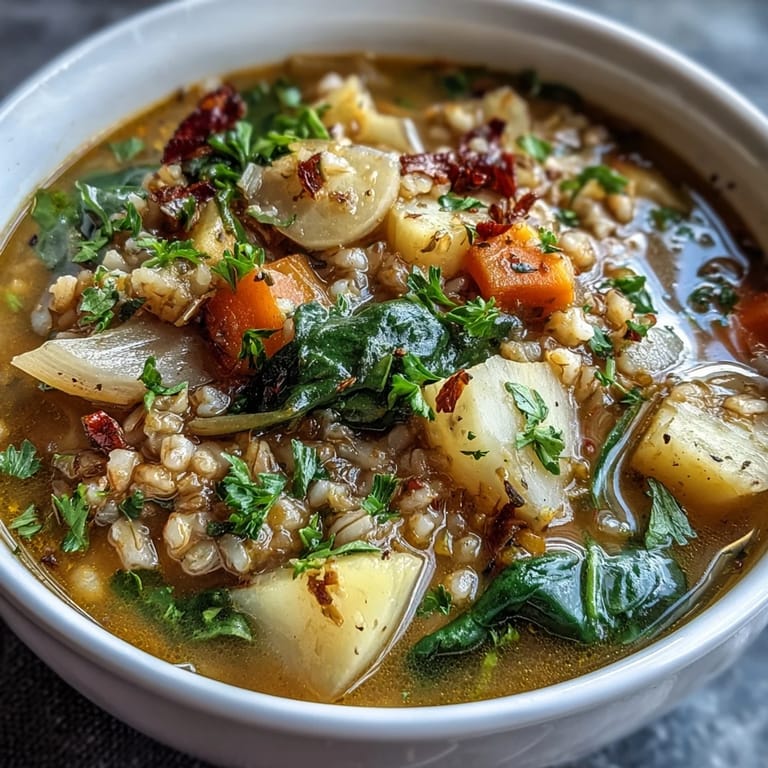
 There's something about the way March smells in the kitchen when you're caught between seasons, not quite ready to let go of winter's heavy soups but eager for something brighter. I discovered this barley and vegetable soup during one of those in-between weeks when my farmer's market haul looked confused, full of both storage vegetables and the first tender greens poking through. One afternoon, while chopping a pile of root vegetables that seemed almost apologetic in their earthiness, I realized I wasn't making a winter soup or a spring one, but something that honored both, and that felt honest somehow.
My partner came home from work on a particularly gray afternoon to find the kitchen filled with that gentle, woody aroma of simmering herbs and vegetables, and without asking, sat down at the table with a bowl while still wearing their coat. That single moment, watching them tear into crusty bread and soup with the kind of focus that meant real comfort, made me understand why this recipe has stayed in my regular rotation.
Ingredients
- Leeks: Use only the white and light green parts, as they're milder and sweeter; slice them carefully in half lengthwise first, then cut into half-moons to catch any hidden soil between layers.
- Carrots and parsnips: The sweetness of these root vegetables builds the soup's backbone, so don't rush the dicing, as uniform pieces cook evenly.
- Rutabaga: This underrated vegetable brings an earthy, slightly peppery note that anchors the soup beautifully; if you can't find it, turnips work just as well.
- Pearl barley: Rinse it first to remove some of the starch, which keeps the broth from becoming cloudy and gives the barley a better texture.
- Green cabbage: Added late in cooking, it brings a fresh crunch that hasn't been cooked into oblivion, balancing the soft root vegetables.
- Baby spinach: Stir it in at the very end so it wilts just enough to soften but keeps its vibrant color and subtle mineral taste.
- Vegetable broth: Low-sodium is crucial here, because the soup reduces slightly as it simmers and you don't want it turning into brine by the time you taste it.
- Olive oil: A tablespoon seems modest, but it's enough to coat the pot and start building flavor without making the soup feel heavy.
- Bay leaf, thyme, and marjoram: These three work together like an old folk song, each one quiet but essential to the overall melody.
Tired of Takeout? 🥡
Get 10 meals you can make faster than delivery arrives. Seriously.
One email. No spam. Unsubscribe anytime.
Instructions
- Sauté your foundation:
- Heat the olive oil over medium heat and add the leek, carrots, parsnips, rutabaga, and celery all at once, stirring occasionally so they soften evenly without browning, about 5 to 7 minutes. You'll notice the vegetables start releasing their natural moisture, and the kitchen begins to smell like something worth staying home for.
- Build the aromatics:
- Add the minced garlic and stir constantly for just a minute, until the raw edge disappears and the smell shifts to something deeper and more inviting. Don't let it sit unattended or it'll burn and turn bitter.
- Introduce the barley and broth:
- Stir in the rinsed pearl barley so it gets coated in the oil, then pour in all the vegetable broth at once, add the bay leaf, thyme, and marjoram, and bring everything to a boil. Once it's bubbling actively, you'll know the broth is pulling all the goodness from the vegetables.
- Let it simmer gently:
- Reduce the heat to low, cover the pot, and let it cook for 35 minutes, stirring every so often so nothing sticks to the bottom and the flavors meld throughout. The barley will gradually soften and absorb the broth, and the root vegetables will turn tender enough to break with a spoon.
- Add the greens:
- Stir in the shredded cabbage and chopped spinach, leave the lid off, and let it simmer for another 5 to 7 minutes just until the greens have wilted and the cabbage has softened slightly but still has a hint of structure. This is the moment the soup transforms from heavy to balanced.
- Taste and adjust:
- Remove the bay leaf, then taste the soup and season generously with salt and pepper, tasting as you go because the broth's saltiness varies depending on the brand you chose. This is your only chance to fix the seasoning, so don't be shy.
- Serve with intention:
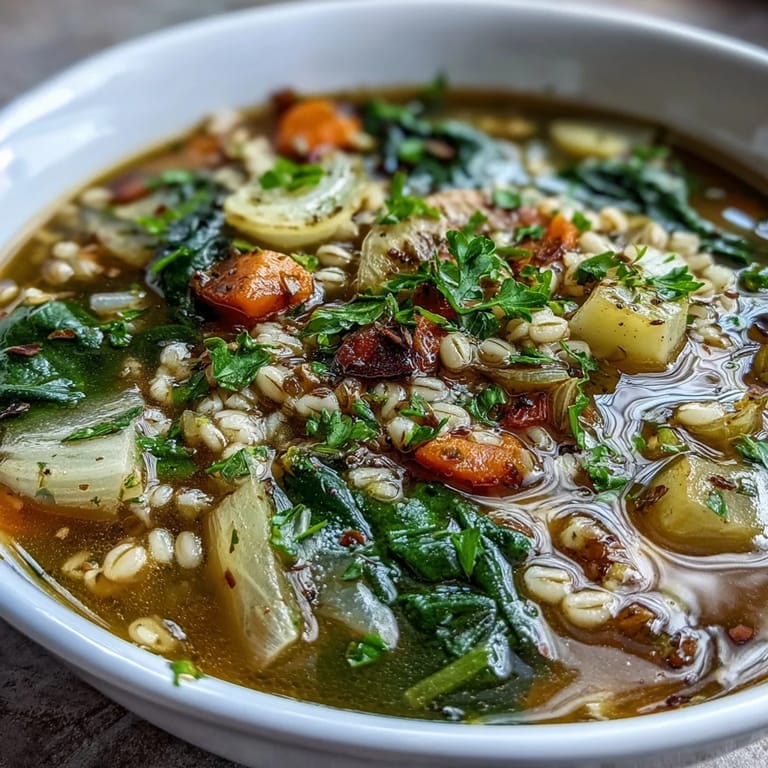
- Ladle the soup into bowls, scatter fresh parsley across the top, and serve immediately while the broth is still steaming and the vegetables are at their most tender. A slice of crusty bread alongside is non-negotiable.
 Pin It
 On a particularly cold March evening, a friend who rarely eats vegetables without complaint asked for a second bowl, then asked for the recipe. Watching someone discover that they actually love vegetables, hidden in something warm and honest, reminded me that good cooking isn't about impressing anyone, it's about quietly changing minds.
The Beauty of Seasonal Transition
This soup exists in that lovely in-between space where winter's storage vegetables and spring's fresh greens share the same bowl without competing. The barley acts like a gentle mediator, its mild nuttiness keeping the earthy roots and bright spinach from overpowering each other. I've learned over time that the best comfort food isn't about perfection, it's about balance, and this recipe teaches you that lesson with every spoonful.
Building Depth Without Meat
One quiet afternoon, I was wondering why vegetarian soups sometimes felt thin compared to their meat-based cousins, then realized it wasn't about what was missing, but what I could add instead. The combination of sautéed vegetables releasing their own juices, barley developing a subtle sweetness as it cooks, and layered herbs creates a richness that doesn't need any animal products to feel complete and satisfying.
Ways to Make It Your Own
The magic of this soup is that it's sturdy enough to handle your own additions without falling apart, and flexible enough to work with whatever you have on hand or whatever you're craving that day. I've stirred in white beans for protein, swapped the rutabaga for potatoes when I was in a hurry, and drizzled finishing oil or lemon juice depending on my mood. Here are the tweaks that have worked best for me.
- If you want to add protein, cooked white beans or chickpeas go in with the greens and warm through in seconds without overshadowing the vegetables.
- A squeeze of fresh lemon juice or a grating of Parmesan cheese at the table brightens the flavors and adds complexity without much effort.
- Leftover soup reheats beautifully on the stove or in the microwave, and tastes even deeper and more developed the next day after the flavors have had time to know each other better.
 Pin It
 There's real wisdom in eating seasonally, in letting your cooking follow what the earth is actually producing rather than fighting against it. This soup taught me that, and now whenever I smell that particular blend of thyme and simmering vegetables, I'm reminded that sometimes the most nourishing meals are the ones that taste like where and when you are.
Questions & Answers
- → What vegetables can I use in this soup?
Use a mix of winter and early spring vegetables like leek, carrots, parsnips, rutabaga, cabbage, spinach, and celery to build a flavorful base.
- → How do I cook barley properly for the soup?
Rinse the pearl barley first, then simmer it in the broth with vegetables until tender, usually about 35 minutes.
- → Can I make this soup vegan and gluten-free?
The soup is vegan but contains barley, which has gluten. For gluten-free options, substitute barley with quinoa or rice.
- → What herbs enhance the flavor in this dish?
Dried thyme, marjoram, and a bay leaf infuse the broth with aromatic depth, complemented by fresh parsley garnish.
- → Can I add protein to this meal?
Yes, stir in cooked white beans or chickpeas with the greens towards the end for added protein and texture.
- → How can I brighten the flavors before serving?
A drizzle of lemon juice or a sprinkle of grated Parmesan can lift and enhance the overall taste just before serving.