 Pin It
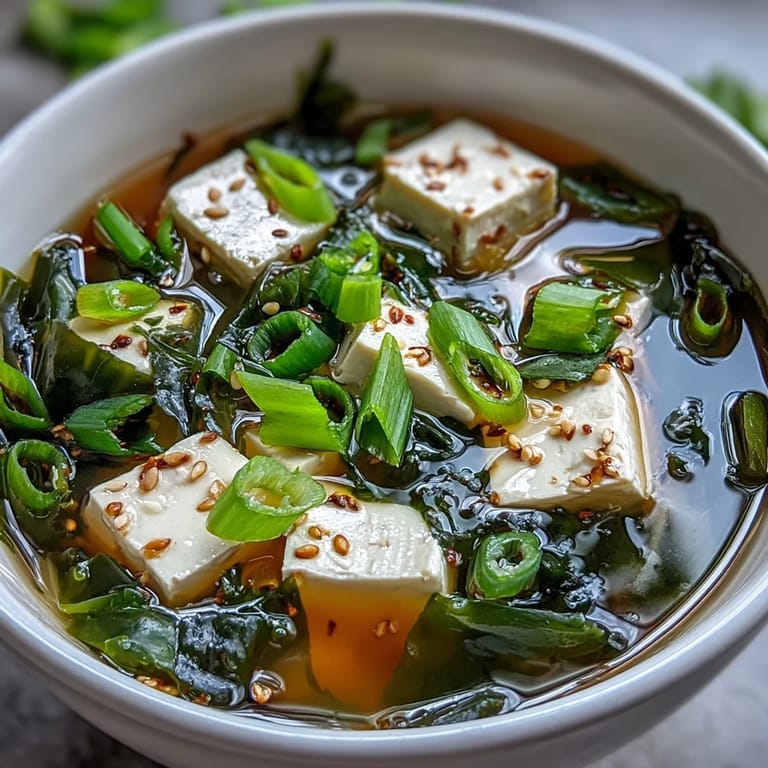
 There's something almost meditative about watching wakame unfurl in cold water—those dark ribbons suddenly coming alive after being dried for months. I discovered this soup during a quiet morning in my kitchen when I wanted something that felt both nourishing and effortless, the kind of dish that doesn't demand much from you but gives back everything. The dashi broth simmers so gently that you can hear it breathing, and within minutes you're holding a bowl of something that tastes like it took hours to prepare.
My neighbor once peeked into my kitchen as steam was rising from this pot and asked what smelled so clean and calm. That's when I realized this soup has a way of filling a space with something peaceful—it's not showy or aggressive, just quietly good. I've made it countless times since for people recovering from colds or for mornings when everything feels overwhelming.
Ingredients
- Dried wakame seaweed: Eight grams might seem tiny, but this sea vegetable expands beautifully and carries minerals your body actually craves—I learned to respect how much it transforms when hydrated.
- Dashi stock: Use vegetarian dashi if you're plant-based, and if you can make it fresh from kombu and bonito flakes, your soup will taste like someone who cares made it.
- Silken or firm tofu: Silken creates a creamier texture that dissolves slightly into the broth, while firm holds its shape—choose based on the mood you want.
- Scallions: Slice them thinly so they release their brightness as garnish, adding a fresh contrast to the umami-rich broth.
- White miso paste: This is the backbone of flavor, but never boil it or you'll lose its living enzymes and gentle complexity.
- Soy sauce: A teaspoon is all you need to deepen everything without overpowering the delicate broth.
- Sesame oil: Optional but worth the extra step—a few drops add a toasted richness that lingers on your tongue.
Tired of Takeout? 🥡
Get 10 meals you can make faster than delivery arrives. Seriously.
One email. No spam. Unsubscribe anytime.
Instructions
- Rehydrate the wakame:
- Place the dried wakame in a small bowl of cold water and let it sit for 5 minutes—you'll watch it transform from brittle strips into tender, glossy ribbons. Once it's soft, drain it gently in a colander and set aside.
- Heat your dashi gently:
- Pour the dashi into a medium saucepan and bring it to a gentle simmer over medium heat, not a rolling boil. You want to hear soft bubbles breaking the surface, not an aggressive roar.
- Add tofu and wakame:
- Drop the cubed tofu and drained wakame into the simmering broth and let them warm through for 2 to 3 minutes. The broth will start to taste more like itself as these ingredients release their essence into it.
- Bloom the miso:
- In a separate small bowl, scoop out a ladle of hot broth and whisk the white miso paste into it until completely smooth and creamy. This prevents the miso from clumping and ensures it distributes evenly through the soup.
- Stir and season:
- Pour the miso mixture back into the pot and stir gently, then add the soy sauce and sesame oil if using. Let it heat for just 1 more minute without boiling, so everything stays silky and alive.
- Finish and serve:
- Ladle the soup into bowls and garnish generously with sliced scallions, their green brightness making each spoonful feel fresh and intentional.
 Pin It
 I once served this to a friend who was going through a difficult time, and she told me later that something about the simplicity made her feel seen. It wasn't fancy or complicated, just honest and warm—exactly what she needed in that moment. That's when I understood this soup is about more than nutrition; it's about showing up for people with something genuine.
The Magic of Simplicity
The beauty of wakame soup is that it doesn't hide behind complex techniques or long ingredient lists. Every element has a purpose, and restraint is what makes it special. I've tried adding extra vegetables, different broths, and various toppings, but the cleanest version—just wakame, tofu, and dashi—remains the one I return to most often.
Building Umami Without Meat
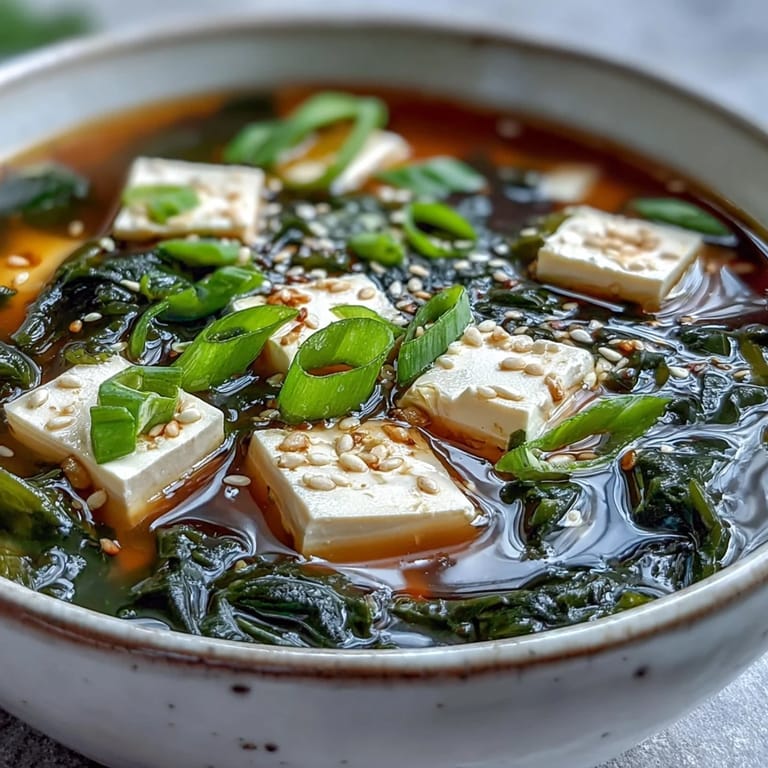
The depth in this soup comes entirely from umami-rich ingredients: the dashi broth carries that savory foundation, the miso adds fermented complexity, and the wakame brings mineral salinity that makes your mouth water. Together they create something that feels substantial and satisfying, proving you don't need meat or heavy cream to make a bowl feel nourishing and complete.
Making It Work for Your Kitchen
This recipe is wonderfully adaptable to what you have on hand, though the core should stay true. You can steep dried shiitake mushrooms in your water to add depth, or fold in spinach at the very end for color and iron.
- If you can't find good dashi, kombu and shiitake broth makes a beautiful vegetarian alternative that tastes nothing like a compromise.
- Firm tofu works better than silken if you want cubes that hold their shape, while silken creates a creamier mouthfeel that some people prefer.
- Scallions are essential as garnish—they're your final note of freshness that keeps the whole bowl from feeling heavy.
 Pin It
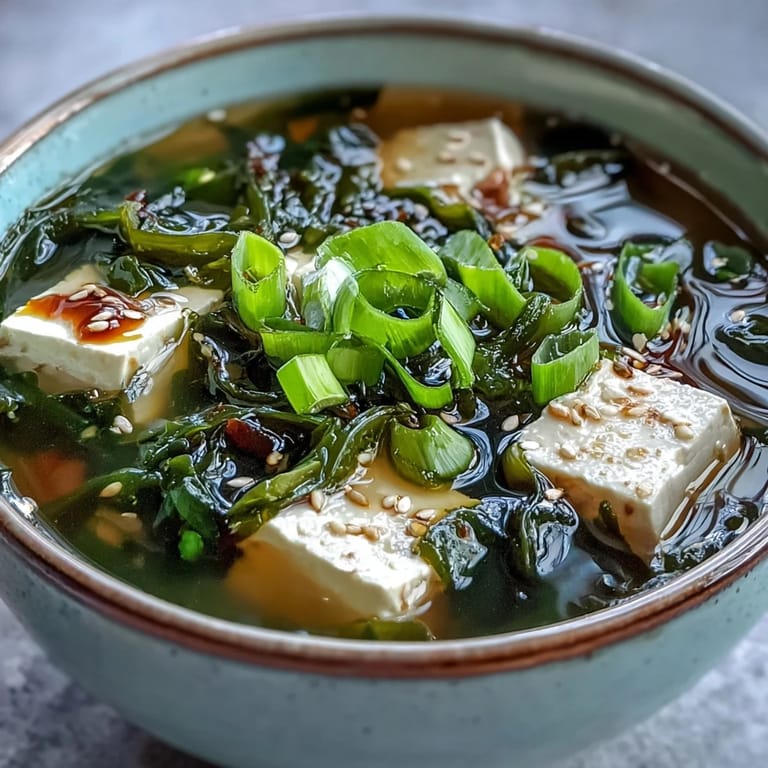
 This soup has become my go-to for mornings when I want to start slow and thoughtfully. It's proof that you don't need hours in the kitchen or fancy equipment to make something that matters.
Questions & Answers
- → What is wakame?
Wakame is a nutritious edible seaweed commonly used in Japanese cuisine. It has a mild, slightly sweet flavor and tender texture when rehydrated. Rich in iodine, calcium, and magnesium, it's a staple ingredient in miso soup and seaweed salads.
- → Can I make this vegan?
Yes, simply use kombu and shiitake mushroom dashi instead of traditional fish-based dashi stock. Ensure your miso paste is made without fish-based additives, though most white miso varieties are naturally vegan.
- → Why shouldn't I boil the miso?
Boiling miso paste destroys its beneficial probiotics and enzymes, while also creating a grainy texture. Always dissolve miso in a separate bowl with some hot broth first, then stir it into the soup after removing it from direct heat.
- → How do I store leftovers?
Store cooled soup in an airtight container in the refrigerator for up to 2-3 days. The wakame will continue to absorb liquid, so you may need to add more water or dashi when reheating. Reheat gently without boiling to preserve the miso's benefits.
- → What can I add for extra nutrition?
Sliced mushrooms, diced carrots, baby spinach, or shelled edamame make excellent additions. Add these vegetables during the simmering step so they cook through. For extra protein, add cooked shrimp or shredded chicken if not following a vegetarian diet.
- → Is this soup gluten-free?
The soup is naturally gluten-free when using gluten-free soy sauce and ensuring your dashi stock contains no wheat-based additives. Traditional dashi made from bonito flakes and kombu is gluten-free, but always check commercial dashi powder labels.