 Pin It
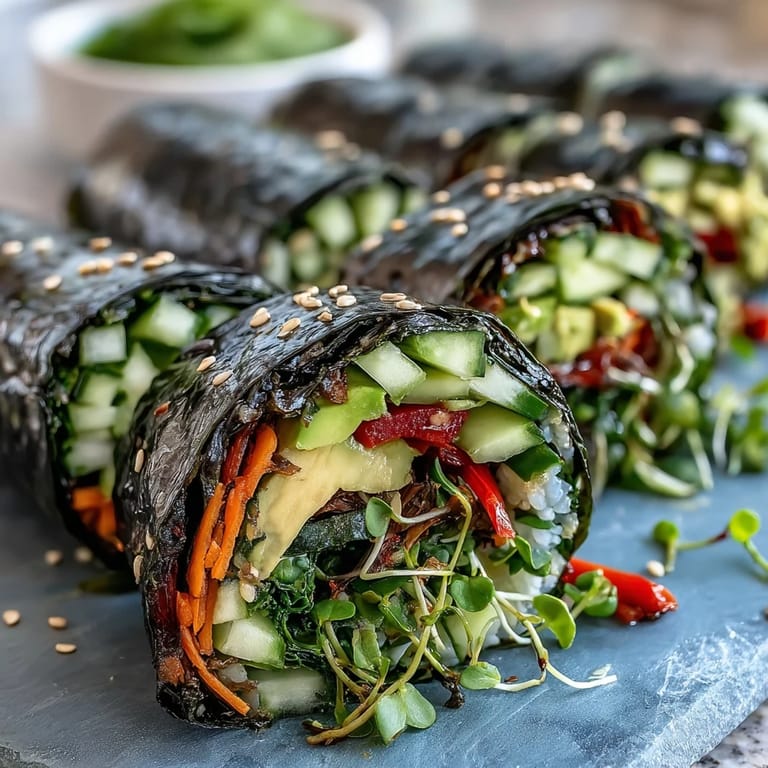
 My first attempt at making sushi rolls happened on a Tuesday evening when a friend texted that she was craving something fresh but didn't want to spend an hour in the kitchen. I had nori sheets tucked in my pantry and a perfectly ripe avocado on the counter, so I figured, why not try? What struck me most wasn't the rolling itself, but how satisfying it felt to slice through those neat little cylinders and see the rainbow of vegetables inside. That night taught me that restaurant-quality food doesn't always require restaurant-level skill—sometimes it just needs good ingredients and a little patience.
I made these for a potluck once and watched people pick them up with skepticism, then immediately reach for a second one. What surprised me most was overhearing someone say the sprouts added a peppery bite that made everything taste alive. That moment shifted how I think about fresh ingredients—they're not just nutritious, they're the actual stars of the show.
Ingredients
- Nori sheets: These roasted seaweed sheets are your edible wrapper, and the quality matters more than you'd think—cheaper ones taste papery and bitter, so splurge a little here.
- Cucumber: Julienne it into thin matchsticks so it stays crisp and doesn't make your rolls soggy with water.
- Avocado: Choose one that yields slightly to pressure but isn't mushy, and slice it just before rolling to prevent browning.
- Mixed sprouts: Alfalfa, radish, and broccoli sprouts each bring their own personality—radish gives heat, broccoli adds earthiness.
- Carrot: Raw and julienned, it brings a subtle sweetness and that satisfying crunch that makes people keep eating.
- Red bell pepper: Adds color and a gentle sweetness without overpowering the delicate vegetables around it.
- Sushi rice (optional): The rice vinegar tossed through it prevents everything from tasting bland and adds a gentle tang.
- Toasted sesame seeds: These tiny seeds are flavor bombs—toast them yourself if you can because the difference is real.
- Soy sauce or tamari: For dipping, and honestly, the quality of your dipping sauce determines whether people think you're a hero or just competent.
Tired of Takeout? 🥡
Get 10 meals you can make faster than delivery arrives. Seriously.
One email. No spam. Unsubscribe anytime.
Instructions
- Prepare your rice (if using):
- Toss the cooled sushi rice with rice vinegar, stirring gently so you don't mash the grains into paste. The vinegar should make the rice glisten slightly and smell fragrant rather than sour.
- Set up your rolling station:
- Lay your bamboo mat flat with the slats running horizontally, then place a nori sheet shiny side down on top. You want your workspace organized because once you start rolling, you can't pause to hunt for the next cucumber slice.
- Layer your base:
- Wet your fingers slightly, then spread a thin layer of rice over the lower two-thirds of the nori, leaving that crucial 2 centimeter border at the top—this is what will seal your roll. Think of it like you're frosting a cake, not building a brick wall.
- Arrange your fillings:
- Place a thin line of each vegetable across the center of the rice, then sprinkle sesame seeds over everything. The key is restraint here—overstuffing is the enemy of a clean, satisfying bite.
- Roll with intention:
- Using the mat, lift the bottom edge of the nori and roll it tightly over the fillings, keeping gentle but firm pressure. When you reach the top border, dab it lightly with water and press gently so it seals and holds everything together.
- Make your remaining rolls:
- Repeat with the other nori sheets and fillings until you've got eight rolls waiting to be sliced.
- Slice with precision:
- Using a sharp knife dipped briefly in water, slice each roll into eight pieces with one smooth motion rather than sawing back and forth. A wet knife is the difference between neat rounds and squished disaster.
- Serve immediately:
- Arrange your rolls on a plate with small bowls of soy sauce, pickled ginger, and wasabi within arm's reach for dipping.
 Pin It
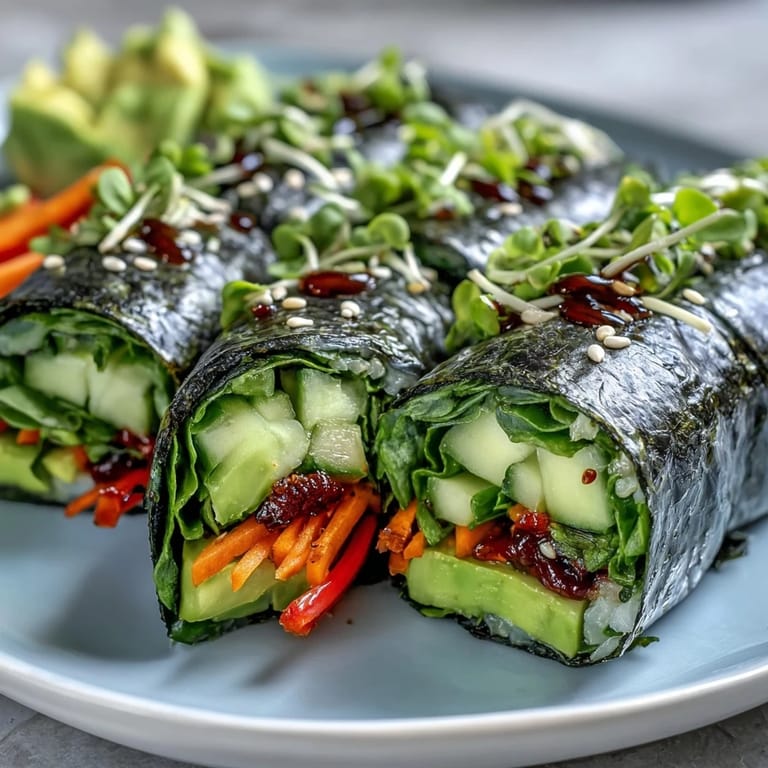
 My mom tried these once and said they tasted like I'd opened a little window into Japanese simplicity in our kitchen. That comment stuck with me because it captured something true—there's an honesty to this dish that no fancy technique can manufacture.
Grain-Free Variations That Work
When I stopped eating rice, I thought I'd have to abandon these rolls entirely, but then I realized the vegetables were doing most of the work anyway. Increasing cucumber, carrot, and bell pepper gave me rolls that felt just as substantial, with a different kind of lightness that made sense in warmer months. The sprouts became even more important, their peppery bite creating the complexity that rice would have provided.
Adding Protein Without Complication
One evening I sliced some marinated tofu strips and worked them into a batch of rolls, and suddenly these became a complete meal rather than just an appetizer. The tofu stayed tender against the crisp vegetables, and I realized you don't need fancy additions to make something heartier—just thoughtful choices. Marinated mushrooms work beautifully too, adding an umami depth that makes the whole experience feel more sophisticated.
Making These Part of Your Regular Kitchen Rhythm
The beauty of this recipe is that it becomes easier and faster every time you make it, until eventually you're rolling these things almost without thinking. I started keeping bamboo mats in my kitchen specifically because I found myself making these rolls at least twice a month, and it felt silly to dig one out each time. Now they're my answer to 'I need something healthy but impressive for unexpected guests' and also my answer to 'it's hot outside and I don't want to cook.'
- Keep your nori in an airtight container away from humidity, because nothing ruins the experience faster than soggy seaweed.
- Prepare all your vegetables before you touch the nori, because once you start rolling you'll want to move quickly while everything is fresh.
- If a roll cracks or falls apart during slicing, don't panic—broken rolls taste identical to perfect ones and look wonderful piled into a bowl.
 Pin It
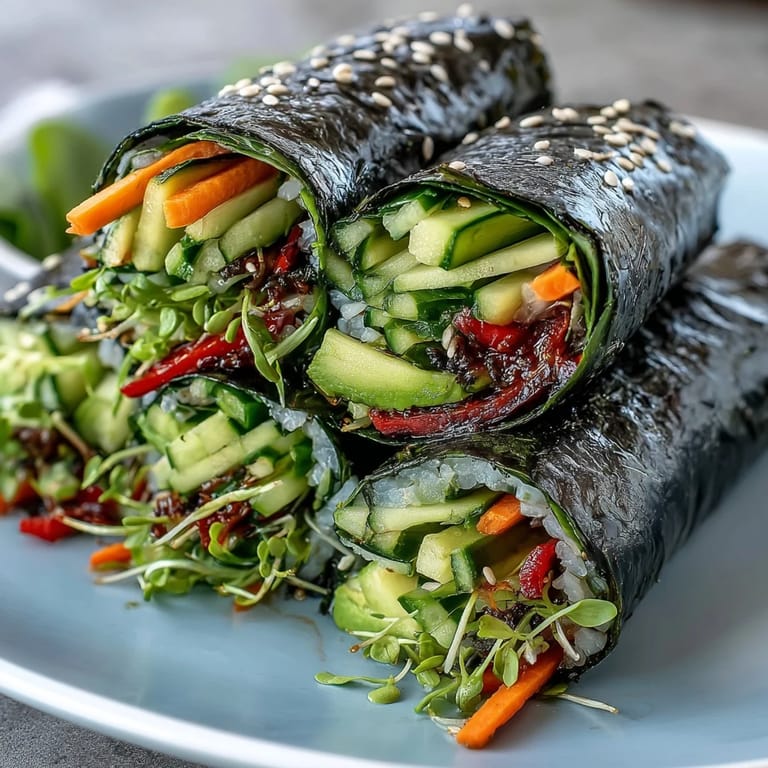
 These rolls remind me that some of the most satisfying meals don't require an oven or a stove, just attention and fresh ingredients. They're my proof that homemade food can be quick, healthy, and genuinely delicious all at the same time.
Questions & Answers
- → Do I need special equipment to make these rolls?
A bamboo sushi rolling mat is ideal but not essential. A clean kitchen towel works just as well for rolling. The key is rolling tightly and evenly to keep everything secure inside the nori wrapper.
- → Can I make these ahead of time?
These are best enjoyed fresh within 2-3 hours of preparation. The nori can become soggy if stored too long. If making ahead, prepare all the vegetables in advance and assemble just before serving.
- → What vegetables work best in nori rolls?
Julienne-cut vegetables like cucumber, carrot, and bell pepper provide excellent crunch. Avocado adds creaminess, while sprouts contribute fresh texture. You can also include thinly sliced radishes, cooked sweet potato, or marinated tofu.
- → How do I prevent the nori from tearing?
Handle nori sheets gently and keep them dry until use. When rolling, apply even pressure and don't overfill. If the nori won't seal, dab a small amount of water along the top edge to help it stick.
- → What's the best way to slice the rolls?
Use a very sharp knife and dampen the blade with water between cuts. This prevents sticking and ensures clean slices. Cut with a gentle sawing motion rather than pressing down hard.
- → Are these completely grain-free?
Yes, simply omit the sushi rice for a completely grain-free version. The vegetables provide plenty of substance, and the nori offers satisfying texture. The result is lighter and lower in carbohydrates while still being filling.