 Pin It
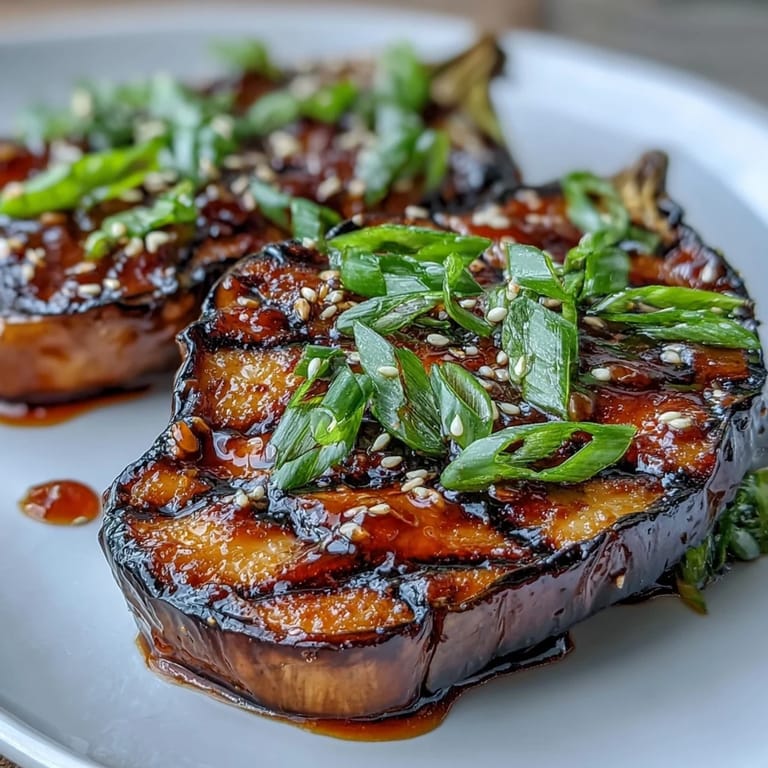
 My neighbor handed me a perfectly halved Japanese eggplant one summer evening, still warm from her garden, and said, "Trust me on this one." I had no idea what to do with it, so I looked up a quick miso glaze recipe and the moment that glossy, caramelized surface came out of the broiler, I understood the quiet confidence in her voice. The flesh turned silky and almost buttery, the miso glaze catching at the edges with deep umami richness that made me want to cancel all my plans and just sit with this one vegetable. That night taught me that sometimes the simplest dishes hold the most flavor.
I served this to friends who were skeptical about eggplant, convinced it would be mushy or boring, and watched their faces shift when they took that first bite. One person asked if I'd somehow made eggplant "fancy," and I realized right then that this dish has a quiet magic—it doesn't shout, but it makes people pause and actually taste what they're eating. That's when food becomes memorable.
Ingredients
- Japanese eggplants (2 medium): These are thinner and sweeter than their globe cousins, with fewer seeds and thinner skin that doesn't need peeling—they caramelize gorgeously under heat.
- White miso paste (3 tbsp): The star that gives this everything umami and gentle sweetness; don't skip it or substitute with dark miso or you'll lose the delicate balance.
- Mirin (1 tbsp): This sweet rice wine adds shine and a subtle caramel note—if you can't find it, a pinch more sugar works in a pinch, but mirin really does make a difference.
- Sake (1 tbsp): The rice wine cuts through the richness and adds depth; regular sake from any grocery store is fine, and yes, the alcohol cooks off.
- Sugar (1 tbsp): Just enough to balance the miso's saltiness and help the glaze caramelize under the broiler.
- Sesame oil (1 tbsp): Use the toasted kind for flavor—this little bit is what makes the glaze glossy and reminds you you're eating something special.
- Toasted sesame seeds (1 tbsp): The finishing touch that adds texture and nuttiness; toast them yourself if you have time, the smell alone is worth it.
- Green onions (2, thinly sliced): They stay bright and fresh against all that caramelized warmth, adding a sharp green note that keeps the dish from feeling heavy.
Tired of Takeout? 🥡
Get 10 meals you can make faster than delivery arrives. Seriously.
One email. No spam. Unsubscribe anytime.
Instructions
- Heat your oven and prep the pan:
- Set the oven to 400°F and line a baking sheet with parchment paper so cleanup is effortless and nothing sticks. This small step means you can focus on the actual cooking instead of scrubbing later.
- Halve and score the eggplants:
- Slice each eggplant in half lengthwise, then use a sharp knife to score the flesh in a crosshatch pattern without cutting through the skin—this helps the heat penetrate and creates little pockets where the glaze will pool. The flesh should look like a grid, almost like you're tenderizing it with every cut.
- Oil and roast:
- Brush the cut sides lightly with sesame oil, place them cut-side up on your prepared sheet, and roast for 20–25 minutes until the flesh is golden and yields easily to a fork. You'll know it's ready when the eggplant smells sweet and the edges start to curl slightly inward.
- Make the glaze while eggplants roast:
- In a small bowl, whisk together the miso paste, mirin, sake, sugar, and remaining sesame oil until completely smooth—no lumps, no streaks. The mixture should look silky and slightly thick, like a loose paste.
- Glaze and broil:
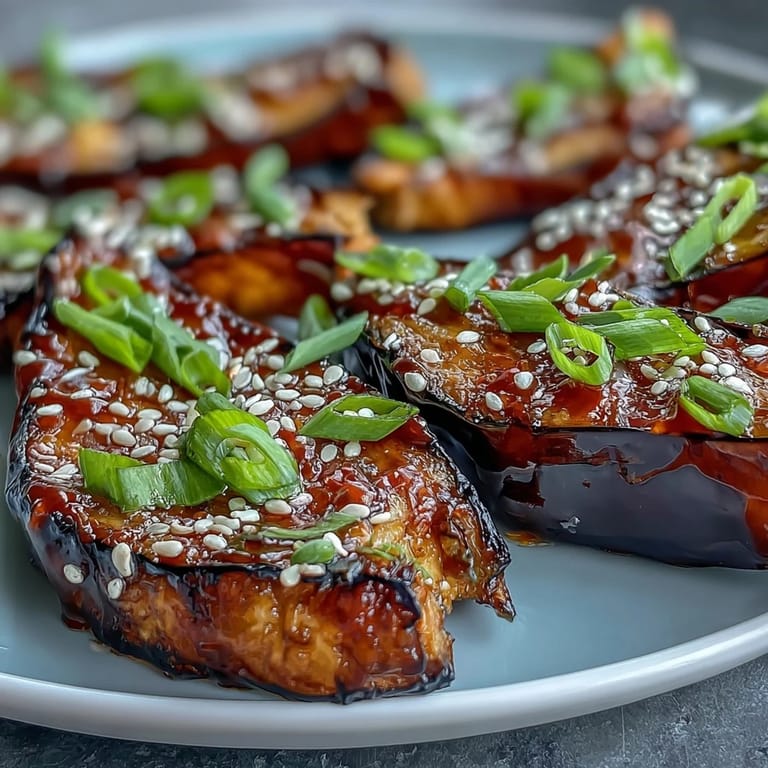
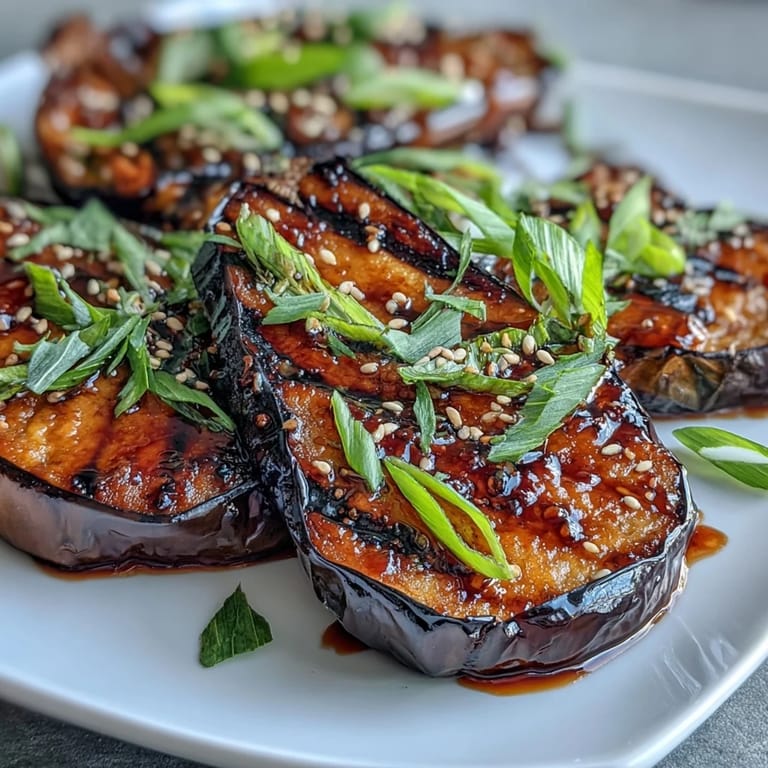
- Spread a generous layer of miso glaze over each roasted eggplant half, then switch your oven to broil and return the sheet to the upper rack. Watch it closely for 2–3 minutes as the glaze bubbles and darkens at the edges—this is where the magic happens, but it can char in a blink if you're not paying attention.
- Finish with flourish:
- The moment it comes out of the broiler, sprinkle with toasted sesame seeds and green onions while everything is still warm. Serve immediately while the glaze is still slightly sticky.
 Pin It
 There was a moment when my eggplant-skeptical friend went back for a second piece, and she quietly said, "I've been wrong my whole life," which made me laugh and also feel oddly proud of a vegetable. Food that changes someone's mind about something they thought they didn't like—that's the kind of meal worth making again and again.
Why the Miso Glaze Is Everything
The miso glaze works because it's building on what eggplant already wants to do: caramelize and absorb flavors. The white miso brings umami that makes the vegetable taste more like itself, while mirin and sake add sweetness and depth that keeps it from tasting one-note. The crosshatch scoring means the glaze doesn't just sit on top—it seeps into the flesh, flavoring it from within. By the time it hits the broiler, you've got a foundation that only needs a few minutes of high heat to become something that tastes like it took hours.
What To Serve Alongside This
Steamed white rice is the natural pairing, letting each grain catch a bit of the glaze that drips down. But this also works beautifully as part of a larger Japanese-inspired meal with miso soup, pickled vegetables, and grilled fish. I've also served it at room temperature as a side dish for potlucks, and it holds up beautifully—the flavors actually deepen as it cools.
Variations and Swaps You Can Try
The miso glaze is flexible enough to play with without losing its soul. Some cooks add a teaspoon of grated ginger or a squeeze of fresh lemon juice for brightness, while others stir in a touch of sriracha if they want heat. You can substitute honey or maple syrup for the sugar if you want a different kind of sweetness, or use dark miso if that's what you have on hand—just know it'll be earthier and slightly more assertive. The core method stays the same: roast until tender, glaze generously, broil until it catches and caramelizes.
- Try adding fresh ginger or a pinch of red pepper flakes to the glaze for subtle depth or gentle heat.
- Dark miso works in a pinch but will taste more intense and less delicate than the white miso version.
- Experiment with different garnishes like toasted nori strips, ground sesame, or a sprinkle of furikake if you have it on hand.
 Pin It
 This recipe proved to me that you don't need fancy techniques or obscure ingredients to make something memorable—just good judgment about heat, a glaze that knows what it's doing, and enough attention to catch the moment when everything comes together. Make it once, and you'll understand why my neighbor was so confident handing me that eggplant.
Questions & Answers
- → Can I use regular eggplant instead of Japanese?
Yes, though Japanese eggplants have thinner skin and a more delicate texture. If using regular globe eggplants, slice them lengthwise and adjust roasting time by 5-10 minutes longer.
- → What can I substitute for mirin?
You can replace mirin with equal parts dry sherry plus a pinch of sugar, or use a combination of white wine and honey. The flavor profile will shift slightly but still work well.
- → How do I store leftovers?
Store cooled eggplant in an airtight container in the refrigerator for up to 3 days. Reheat in a 350°F oven for 10 minutes or enjoy cold—the flavors actually deepen overnight.
- → Is this dish gluten-free?
It can be made gluten-free by ensuring your miso paste, sake, and mirin are certified gluten-free varieties. Traditional miso and Japanese condiments often contain barley or wheat.
- → Why score the eggplant flesh?
Scoring creates a crosshatch pattern that allows the miso glaze to penetrate deeper into the flesh while helping the eggplant cook more evenly and absorb flavors during roasting.