 Pin It
 My neighbor knocked on my door three weeks after I'd moved in, casserole dish in hand, and asked if I wanted to throw a housewarming thing. I panicked—I didn't even know where my good plates were—but then realized a charcuterie board was exactly the kind of beautiful, effortless thing that says welcome without requiring me to actually cook anything. Turns out, the best way to break in a new kitchen isn't with a complicated recipe; it's with a board that lets good ingredients speak for themselves.
I remember standing in front of my board that first gathering, watching people cluster around it like it was the most natural thing in the world. My coworker reached for the prosciutto, my vegetarian friend went straight for the hummus, and my uncle started making little cheddar-and-fig combinations that honestly sounded weird but looked delicious. That's when I realized this board wasn't just food—it was permission for everyone to eat exactly what they wanted without apology or explanation.
Ingredients
- Prosciutto: Buy it sliced thin from the deli counter and let it come to room temperature before arranging—it tears less and tastes better.
- Salami: Choose a variety with good marbling; it holds its shape better and adds visual interest than uniform slices.
- Smoked ham: A crowd-pleaser that bridges the gap between adventurous and familiar for hesitant eaters.
- Chorizo slices: The one ingredient that people either reach for immediately or skip entirely—respect that.
- Brie: Let it sit out for at least 30 minutes before serving so it softens into that creamy, spreadable state that makes people happy.
- Aged cheddar: The sharpness cuts through the richness of the cured meats and makes you taste everything more clearly.
- Gouda: Slightly sweet, slightly smoky—it's the bridge ingredient that makes sense next to both the meats and the dried fruit.
- Blue cheese: Use it sparingly because it's bold, but don't skip it because someone will absolutely want it.
- Hummus: Buy quality or make it yourself; the chickpea flavor should be bright, not muddy.
- Tzatziki: Cool and herbaceous, it's the ingredient that prevents the board from feeling heavy after you've eaten a few salty bites.
- Roasted red pepper dip: Sweet, slightly smoky, and infinitely more interesting than plain ranch.
- Assorted crackers: Mix textures—wafer-thin water crackers, hearty multigrain, maybe something with seeds for crunch.
- Baguette: Slice it no more than two hours before serving or it'll dry out and stop being fun to eat.
- Breadsticks: They take up visual space without much effort and give people with smaller appetites an option.
- Red and green grapes: The sweetness and juice are essential for resetting the palate between salty items.
- Cherry tomatoes: Fresh, bright, and they look like little jewels scattered across the board—never underestimate visual appeal.
- Cucumber slices: Cool and hydrating, they're the quiet hero that keeps you from feeling parched after eating aged cheese.
- Bell pepper: Raw and sweet, it adds color and a satisfying crunch that nothing else quite replaces.
- Baby carrots: They're actually delicious raw and their natural sweetness plays beautifully with the savory elements.
- Mixed nuts: Toast them lightly if you have time; it wakes up their flavor and makes them taste intentional instead of like an afterthought.
- Olives: Pit them ahead of time because nobody wants to do that at a party, and the salty brine flavor anchors the whole board.
- Dried apricots: Chewy and naturally sweet, they're the bridge between the cheese course and dessert.
- Dried figs: Pair them with blue cheese and you've created something restaurant-quality without trying.
- Fresh herbs: Rosemary and thyme aren't just pretty—they release fragrance when people brush past them and smell like intentionality.
Tired of Takeout? 🥡
Get 10 meals you can make faster than delivery arrives. Seriously.
One email. No spam. Unsubscribe anytime.
Instructions
- Start with the foundation:
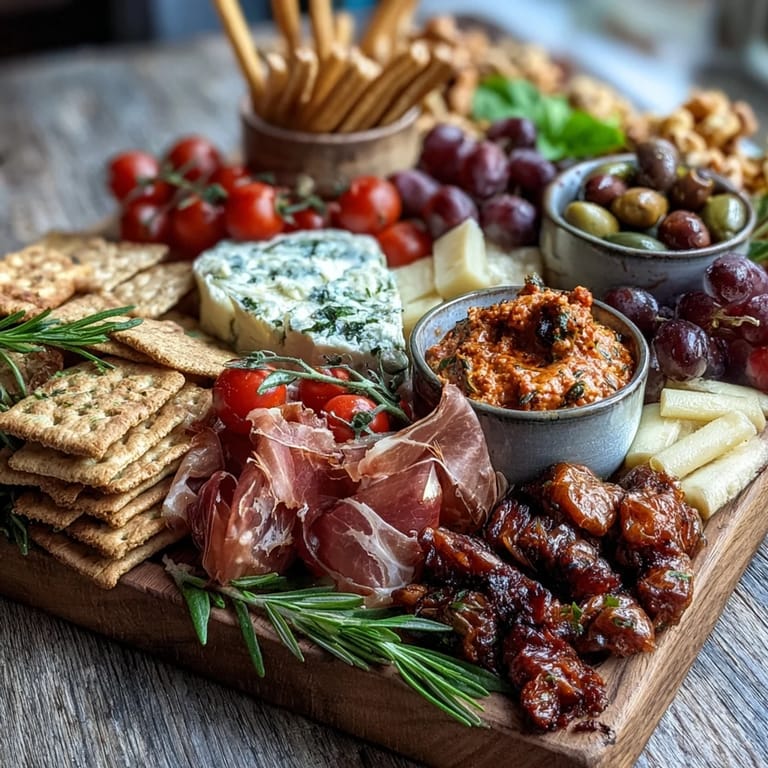
- Arrange your cured meats first by laying them in loose, casual folds across roughly one third of your board. Don't be precious or geometric about it—the rumpled, abundant look is exactly the point.
- Place cheeses strategically:
- Nestle your cheese selections around the meats, spacing them so someone can easily grab a piece of brie without having to reach past three other things. Group similar textures together—crumbled blue in one spot, sliced gouda in another—so the eye can follow a natural path.
- Settle in your dips:
- Spoon each dip into a small bowl and position them at different points on the board so people don't bottleneck around one corner. Leave a small spoon or spreading knife in each one and watch how people relax knowing they have easy access.
- Fan out your carbs:
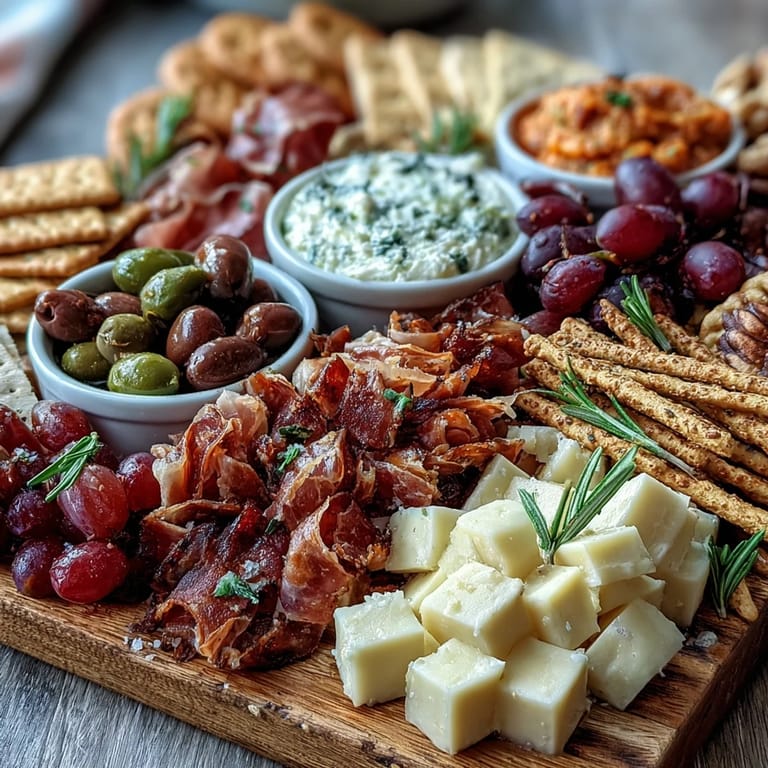
- Create separate sections for crackers, baguette slices, and breadsticks so someone hunting for a gluten-free option or preferring heartier bread can spot it immediately. Stand some of them upright for visual drama.
- Fill the negative space with produce:
- Tuck grapes, tomatoes, cucumbers, peppers, and carrots into the gaps between cheeses and meats—they add color, hydration, and the suggestion that this is somehow healthy. Let them sprawl a little; contained and tidy looks more like a school cafeteria.
- Scatter the finishing touches:
- Distribute nuts, olives, and dried fruit in small clusters around the board so there's always something interesting within arm's reach no matter where someone approaches from. These small bites are what make people feel like they've discovered something.
- Garnish with intention:
- Tuck fresh rosemary sprigs and thyme around the board—not just for show, but because these herbs actually smell incredible and make people understand this was made with care. They'll crush them in their fingers as they reach for things, and their kitchen will smell amazing.
- Serve and replenish:
- Put the board out and then step back; let people eat and mill around it. Keep an eye on what disappears first—that tells you what to emphasize next time.
 Pin It
 That first housewarming stretched into the evening, and at some point I stopped worrying about whether I'd done it right. People were happy, the board looked beautiful even as it got depleted, and I realized I'd created a way to celebrate that didn't require me to perform or stress. It became the kind of thing I'd pull together whenever I wanted people around without the weight of a full meal.
Building a Board That Actually Gets Eaten
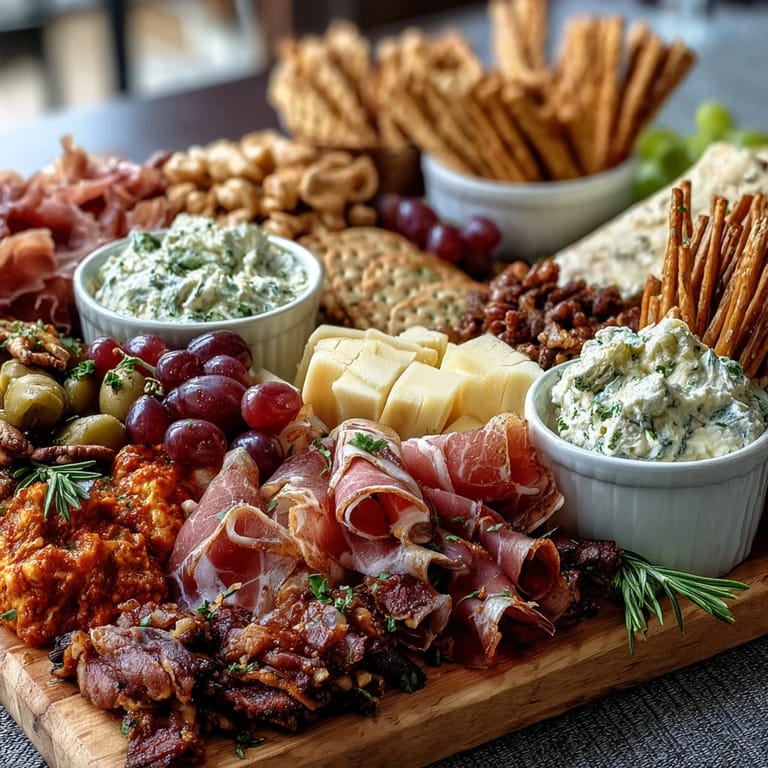
The secret isn't including more—it's including variety and not overthinking the balance. I used to stress about having the perfect ratio of meat to cheese to fruit until I realized people just want options. If you have three types of cheese, two or three types of meat, and loads of different textures, you're already ahead. The dips are what make it feel elevated without requiring any actual cooking skill, and the fresh elements are what keep people from feeling too heavy after they've eaten three pieces of prosciutto and a block of brie.
Adapting for Your Crowd
I've made this board for vegetarians by simply loading up on extra cheeses, nuts, and creative dips instead of apologizing for missing meats. For people avoiding gluten, I'll swap in gluten-free crackers or add extra fresh vegetables as vehicles instead. The beauty of this format is that nobody feels like they're eating a restricted version—they're just eating what appeals to them. The board is forgiving that way; it lets everyone win without requiring you to make multiple versions of anything.
Timing and Make-Ahead Magic
You can assemble this board up to four hours before guests arrive if you cover the cheese and meats loosely with plastic wrap. The crackers and fresh produce do better if you add them closer to serving time so they don't get stale or soggy, but honestly, even if a cracker has been sitting for a couple hours, nobody actually cares. What matters is that you can have everything ready and just pull the board out when people arrive, which means you get to actually enjoy having guests instead of stressing in the kitchen.
- Buy pre-sliced meats and cheeses from the deli counter to save yourself 15 minutes of knife work and decision-making.
- Fill your dips the morning of but keep them covered until serving so they don't dry out or absorb weird fridge smells.
- If you're worried about something, make the board one size smaller and know that people will eat more slowly anyway because they're distracted by conversation.
 Pin It
 A charcuterie board is as much about giving yourself permission to celebrate without stress as it is about feeding people. It became my new answer to the question I used to dread: what are you making?
Questions & Answers
- → What types of cheeses work best on this board?
Soft cheeses like brie and crumbled blue cheese complement firmer varieties such as aged cheddar and gouda, providing a balanced flavor and texture profile.
- → Can the cured meats be substituted?
Yes, feel free to swap meats like salami or chorizo with other preferred cured varieties to suit dietary needs or taste preferences.
- → How should dips be presented?
Serve dips in small bowls nestled among the other items to allow easy access and maintain a tidy presentation.
- → What are good accompaniments for this board?
Assorted crackers, sliced baguette, and breadsticks add crunch and help balance the rich meats and cheeses on the board.
- → How can fresh produce enhance the board?
Including grapes, cherry tomatoes, cucumber slices, and bell peppers introduces fresh, juicy elements that brighten the overall flavor.
- → Are there options for guests with dietary restrictions?
Gluten-free crackers can replace regular ones, and meat or cheese selections can be adjusted to accommodate vegetarian or other dietary preferences.